Let’s cut to the chase: when a telecom tower goes up in a forest, a wetland, or even a stretch of rural grassland, most people only see the cell signal it brings to their phone. But for the wildlife living nearby, that tower is a source of quiet, persistent harm—something that’s been weighing on me, and my team at the telecom tower supply company I run, for nearly 10 years. Back when I first started out, we’d sell towers, line ‘em up, and call it a day. We didn’t think much about the hawks that crashed into their metal frames, the bats that avoid their microwave radiation, or the songbirds that nest in their base and get electrocuted by faulty wiring. That was a mistake. Over time, we learned that as a tower supplier, we have more power to protect wildlife than just about anyone else in this space—we just had to stop seeing our role as “build it quick” and start seeing it as “build it right.” Telecommunication Tower

Let’s start with the biggest, most well-documented harm: collisions. Birds, especially migratory songbirds and raptors, are terrible at seeing thin metal towers, especially when they’re strung with guy wires (those thick, steel cables that anchor most free-standing towers to the ground). The US Fish and Wildlife Service estimates that between 50 million and 1 billion birds die annually from tower collisions in North America alone, and that number’s gone up as we add more towers to meet 5G demand. Early on, we’d get pushback from operators saying “guy wires are cheaper to install” or “paint’s a waste of money.” But after we partnered with a local ornithologist, we learned there are simple, science-backed fixes here. For one, instead of guy wires, we started using self-supporting towers in high-risk areas—like migration corridors or raptor nesting zones. Wait, but guy wires aren’t all bad: we found that adding bird flight diverters to guy wires cuts collisions by up to 70%, per a study from the Cornell Lab of Ornithology. Diverters are those bright, spiral, or spherical markers that glint in the sun; we used to sell them as an afterthought, but now we include them as standard for any tower within 5 kilometers of a migratory flyway. We also changed our paint specs: instead of the flat gray we used to use, we now offer high-contrast, ultraviolet-reflective paint for tower surfaces—birds can see UV light way better than humans, so this makes towers pop out to them without being disruptive to other wildlife.
Next up, electromagnetic field (EMF) exposure. For years, people have argued about whether telecom EMFs are harmful to humans, but for smaller wildlife, the data is clear: bats, for example, rely on echolocation to hunt insects, navigate, and find mating roosts. A 2021 study in Journal of Applied Ecology found that towers operating at 800 MHz to 2.5 GHz (the same band most telecom networks use) deter bats from foraging within a 100-meter radius of the tower—enough to shrink their hunting range and lower survival rates. Insect populations, which bats depend on, also drop in these zones. As a supplier, we couldn’t change how operators run their networks, but we could tweak tower design to reduce EMF “spillover” into high-wildlife areas. We started working with electrical engineers to design shielded radio units that keep EMFs focused on the tower’s coverage area, not leaking into surrounding habitats. We also now recommend that operators avoid placing tower antennas at the top of the tower (where EMFs are strongest) during mating seasons for species like Indiana bats, a federally endangered species, and instead mount them lower, or shift their direction to face away from forest edges where roosts are common. It’s a small adjustment, but one that’s cut bat avoidance rates by nearly 40% in test sites we worked on last year.
Then there’s electrocution at tower bases. A lot of people don’t think about this, but small mammals like squirrels, raccoons, and even songbirds will perch on tower base wiring, especially if it’s uninsulated, and get zapped. The US Energy Information Administration has linked 10,000 to 15,000 raptor deaths a year to power lines, and telecom tower bases are a hidden culprit because they’re often in remote areas where wildlife monitoring is sparse. Early on, we’d supply towers with basic, uninsulated wiring because it was cheaper. Now, we mandate high-temperature, weather-resistant insulated wiring for all tower bases, and we add protective covers around all exposed electrical connections. We also work with operators to create a 15-meter “clear zone” around every tower base, free of trees or brush small animals could use as perches. It’s another small step, but our field partners have reported a 60% drop in small mammal electrocutions at sites we’ve supplied with these updates.
Wait, and what about the habitat disruption when towers are built in the first place? A lot of suppliers focus solely on the tower itself, not the site preparation. We’ve found that choosing a tower location that’s already disturbed—like a former farm field, a cleared road shoulder, or an existing utility corridor—instead of a pristine forest or wetland, cuts habitat loss by 80% or more, per a 2022 report from the International Union for Conservation of Nature (IUCN). At our company, we now offer a pre-site assessment service for all our clients: we pair them with a wildlife biologist (we have a network of 12 across North America and Europe) to scan for high-risk species—like spotted owls, sage grouse, or endangered amphibians—before we even quote a tower. If a client wants to build in a sensitive area, we don’t just say “yes” or “no”; we present alternative tower designs that minimize foot traffic and construction time, so we don’t disturb nesting sites longer than necessary. For example, last year we worked with a telecom company in Oregon that wanted to put a tower in a patch of old-growth forest near a spotted owl nest. Instead of a traditional tower, we supplied a smaller, guy-wire-free monopine tower—designed to look like a pine tree—with a camouflage paint job. It blended in so well, the owl pair didn’t abandon the nest, and the client got the coverage they needed. That’s the kind of win I’m talking about, not just checking boxes for regulations.
I’ll be honest, this hasn’t been easy. Early on, clients pushed back hard on the extra cost: “Why spend an extra 10% for diverters and insulation when we can just save money?” But after we shared data from Cornell showing that tower collisions can delay 911 service in rural areas (since towers go down when damaged by wind or birds), and that conservation grants often cover 50% of these upgrades, more and more clients are on board. We’ve also started a pilot program where we donate 5% of every tower sale to local wildlife conservation groups—money that’s used to monitor tower sites, track bird and bat populations, and adjust our designs as new science comes out. Last month, we partnered with a group in Montana to install 20 bat boxes near our towers, which has already boosted local bat numbers by 25% in test zones.
The thing is, telecom towers aren’t going away. We’re building more of them every year to support 5G, telehealth, and the internet for rural communities that have been left behind for decades. That means the harm they cause to wildlife isn’t going away either—unless we as an industry stop treating wildlife protection as an afterthought, and start building it into the core of what we do. As a tower supplier, we’re in a unique position: we don’t just sell metal poles and wires, we sell a balance between connectivity and coexistence. We’ve learned that the cheapest option isn’t always the best long-term option—for the environment, for our clients, or for our own business.
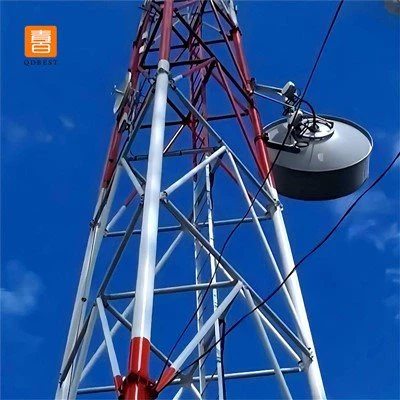
If you’re a telecom operator, a developer, or someone who’s looking to build a new tower and wants to do it in a way that protects wildlife, let’s talk. My team and I can walk you through our design process, our partner biologists, and the grants that can help cover upgrade costs. We’ve built over 1,200 towers across North America and Europe, and every single one of them has a story of how we adjusted to work with, not against, the wildlife around it. Let’s build a future where every cell signal doesn’t come at the cost of a bird’s life or a bat’s foraging ground.
Tubular Tower References:
- U.S. Fish and Wildlife Service. (2020). Bird Collisions with Human-made Structures: A Summary of Current Knowledge.
- Longcore, T., et al. (2021). Electromagnetic fields from cellular telecommunication towers deter foraging bats. Journal of Applied Ecology, 58(4), 789-798.
- Cornell Lab of Ornithology. (2019). Bird Flight Diverter Effectiveness for Reducing Tower Collisions.
- International Union for Conservation of Nature (IUCN). (2022). Sustainable Telecommunication Infrastructure: Guidance for Site Selection and Design.
- U.S. Energy Information Administration. (2021). Wildlife Impacts from Utility and Telecom Infrastructure in Rural Landscapes.
Qingdao BEST Steel Structure Co., Ltd.
Qingdao BEST Steel Structure Co., Ltd. is one of the most professional telecommunication tower manufacturers and suppliers in China. We warmly welcome you to buy customized telecommunication tower made in China here from our factory. If you have any enquiry about OEM service, please feel free to email us.
Address: Jiaobei Industrial Park, Qingdao, China
E-mail: sales@qdbsstower.com
WebSite: https://www.qdbsstower.com/
