Polyester TPU, or thermoplastic polyurethane, is a versatile and widely used material in various industries due to its excellent mechanical properties, chemical resistance, and processability. As a leading supplier of polyester TPU, I am often asked about its chemical structure. In this blog post, I will delve into the chemical structure of polyester TPU, explaining its components, synthesis, and how it contributes to the material’s unique properties. Polyester TPU
Components of Polyester TPU
The chemical structure of polyester TPU is composed of three main components: a polyester polyol, a diisocyanate, and a chain extender. Each of these components plays a crucial role in determining the final properties of the TPU.
Polyester Polyol
Polyester polyols are the soft segments of the TPU. They are typically prepared by the condensation reaction between a dicarboxylic acid and a diol. Common dicarboxylic acids used in the synthesis of polyester polyols include adipic acid, phthalic anhydride, and isophthalic acid. Diols such as ethylene glycol, 1,4 – butanediol, and neopentyl glycol are often employed.
The choice of dicarboxylic acid and diol affects the properties of the polyester polyol. For example, adipic acid – based polyester polyols provide good flexibility, low – temperature performance, and abrasion resistance. In contrast, phthalic anhydride – based polyester polyols offer higher hardness and better chemical resistance.
The molecular weight of the polyester polyol also influences the properties of the TPU. Higher molecular weight polyols result in a more flexible TPU with lower hardness, while lower molecular weight polyols lead to a harder and stiffer TPU.
Diisocyanate
Diisocyanates are the hard segments of the TPU. They react with the hydroxyl groups of the polyester polyol and the chain extender to form urethane linkages. Commonly used diisocyanates in the synthesis of polyester TPU include diphenylmethane 4,4′ – diisocyanate (MDI) and toluene diisocyanate (TDI).
MDI – based TPU is the most widely used type due to its excellent mechanical properties, high melting point, and good processability. TDI – based TPU, on the other hand, offers better elasticity and lower cost, but it has some environmental and health concerns associated with its synthesis.
Chain Extender
Chain extenders are small molecules with two hydroxyl or amino groups. They react with the diisocyanate to extend the polymer chain and increase the molecular weight of the TPU. The most commonly used chain extender in polyester TPU is 1,4 – butanediol (BDO).
The use of a chain extender is essential for controlling the hardness and mechanical properties of the TPU. By varying the ratio of the chain extender to the polyester polyol, the hardness of the TPU can be adjusted from very soft to very hard.
Synthesis of Polyester TPU
The synthesis of polyester TPU typically involves two main steps: the prepolymer method and the one – shot method.
Prepolymer Method
In the prepolymer method, the polyester polyol is first reacted with an excess of diisocyanate to form a prepolymer. The prepolymer contains isocyanate – terminated chains. In the second step, the prepolymer is reacted with a chain extender to form the final TPU.
The prepolymer method allows for better control of the reaction parameters and the final properties of the TPU. It is particularly suitable for the production of high – performance TPU with precise specifications.
One – Shot Method
In the one – shot method, all the components (polyester polyol, diisocyanate, and chain extender) are mixed together and reacted simultaneously. This method is simpler and more cost – effective than the prepolymer method, but it offers less control over the reaction kinetics and the final properties of the TPU.
How the Chemical Structure Contributes to the Properties of Polyester TPU
The unique chemical structure of polyester TPU, with its alternating hard and soft segments, gives rise to its excellent properties.
Mechanical Properties
The hard segments, formed by the diisocyanate and the chain extender, provide the TPU with high strength, stiffness, and abrasion resistance. The soft segments, composed of the polyester polyol, contribute to the flexibility, elasticity, and low – temperature performance of the TPU.
The phase separation between the hard and soft segments also plays an important role in the mechanical properties of the TPU. The hard segments form physical cross – links, which act as a reinforcing filler in the soft matrix, enhancing the overall strength and modulus of the material.
Chemical Resistance
Polyester TPU exhibits good chemical resistance due to the presence of the polyester polyol and the urethane linkages. The polyester polyol provides resistance to many organic solvents, oils, and greases. The urethane linkages are also relatively stable and resistant to hydrolysis and oxidation.
However, the chemical resistance of polyester TPU can be further improved by modifying the chemical structure. For example, using a more hydrophobic polyester polyol or incorporating special additives can enhance the resistance to water and chemicals.
Processability
The thermoplastic nature of polyester TPU makes it easy to process. It can be processed by various methods, such as injection molding, extrusion, blow molding, and calendering. The melting point of polyester TPU can be adjusted by changing the ratio of the hard and soft segments, allowing for a wide range of processing temperatures.
Our Polyester TPU Products
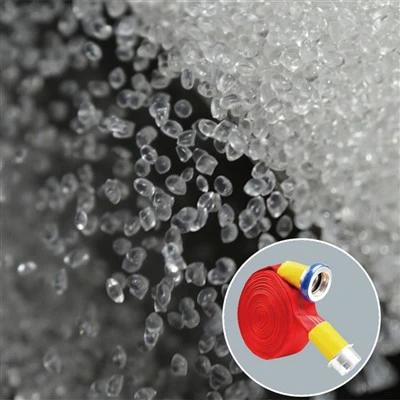
As a supplier of polyester TPU, we offer a wide range of products with different chemical structures and properties to meet the diverse needs of our customers. Our products are used in various applications, including automotive parts, footwear, industrial hoses, and medical devices.
We have a team of experienced chemists and engineers who are dedicated to developing and producing high – quality polyester TPU. We use the latest technology and strict quality control measures to ensure that our products meet the highest standards.
Contact Us for Procurement
Polyether TPU If you are interested in our polyester TPU products or have any questions about their chemical structure and properties, please feel free to contact us. Our sales team is ready to provide you with detailed information and solutions tailored to your specific requirements. We look forward to the opportunity to serve you and establish a long – term business relationship.
References
- "Thermoplastic Polyurethanes: Properties, Processing, and Applications" by Frederick L. Buchert
- "Polyurethane Handbook" by Gunter Oertel
Singbon New Materials(Shandong) Co., Ltd.
With abundant experience, we are one of the most reliable polyester TPU manufacturers and suppliers in China. We warmly welcome you to wholesale advanced polyester TPU at low price from our factory. If you have any enquiry about quotation and free sample, please feel free to email us.
Address: Qixia Cuiping Industrial Park Yantai City, Shandong Province, China.
E-mail: DBG1@singbonpu.com
WebSite: https://www.tpusingbon.com/
