When a natural disaster strikes—whether it’s a hurricane that levels entire neighborhoods, an earthquake that collapses temporary shelters, or a flood that renders buildings uninhabitable—the first 72 hours are make-or-break for relief efforts. For years, the go-to solutions for temporary housing, medical stations, and supply storage have been tents, converted shipping containers, and modular units with bulky, complex setups. As a flat pack container supplier working on the front lines with disaster response teams across 12 countries, I’ve watched firsthand how traditional options fall short when speed and adaptability matter most. This isn’t a hypothetical: last year, when a category 4 hurricane hit a small coastal town in Central America, our team deployed 42 flat pack containers in 10 days—cutting setup time by 60% compared to standard shipping containers and eliminating the need for heavy cranes. But that success left me with a question I get asked constantly: can flat pack containers actually be a reliable, effective tool for disaster relief, or are they just another trend? Let’s break this down, from real-world use cases to the science of why they work, and what we’ve learned about making them work even better when every minute counts. Flat Pack Container

First, let’s cut through the confusion: flat pack containers aren’t the same as the steel shipping containers that carry goods across the ocean. Traditional shipping containers are built for 30-ton cargo, but they’re rigid, difficult to modify, and require specialized equipment to move or set up—hard to come by in remote disaster zones where roads are washed out or blocked by debris. Flat pack containers, by contrast, arrive as a stack of pre-cut, pre-drilled panels, doors, and structural frames that fold flat into a package that’s 80% smaller than a standard container. That means they fit into a single 20-foot truck, a small cargo plane, or even a pickup truck—something game-changing for areas where large machinery can’t reach. But size and ease of transport are just the start; the science of their structural design makes them far more resilient than tents or temporary wooden shelters, which often fail in high winds or heavy rain.
In 2021, when a 6.2 magnitude earthquake hit a rural region in Turkey, local relief organizations tested flat pack containers alongside three other shelter options: tents, prefabricated wooden huts, and converted shipping containers. The results, published in a 2022 study by the International Federation of Red Cross and Red Crescent Societies (IFRC), were telling. Tents, while quick to set up, had a 72% failure rate during aftershocks—many collapsed entirely or developed tears that let in rain, forcing residents to abandon them within two weeks. Wooden huts took 3x longer to build and had a 45% structural failure rate when exposed to 50+ mph winds, which are common in that region during winter. Converted shipping containers were sturdy but required a crane to lift, a skilled crew to modify for ventilation and plumbing, and 18 hours of setup time per unit, which left 120 families without shelter for over a month. The flat pack containers, though, had a 10% structural failure rate—most of which were minor, easily repaired issues like a loose panel fastener—and took an average of 5 hours to set up per unit, even with volunteer teams who had never handled them before.
But structural resilience is only one part of the puzzle. Disaster relief isn’t just about housing; it’s about functional spaces that meet immediate, life-saving needs. Last year, when a wildfire destroyed a residential community in Northern California, we worked with a local fire department to convert flat pack containers into a triage center, a supply storage hub, and a temporary community kitchen. The triage unit had built-in window cutouts that we reinforced with impact-resistant glass, and we added electrical outlets for medical equipment—all modifications that were done on-site in 2 hours, without any specialized tools. Unlike tents, which offer no privacy for medical consultations or family gatherings, the containers have rigid walls that block wind, noise, and even dust from wildfire ash. For survivors who lost everything, that privacy isn’t a luxury—it’s a mental health need. The IFRC study also noted that 82% of residents in the flat pack container shelters reported feeling “secure” or “very secure,” compared to 41% of those in tents.
Of course, no solution is perfect, and flat pack containers have limitations that can make them a bad fit for certain disaster scenarios. The biggest one is climate: in extreme temperatures, they require insulation to keep interiors livable. In the Middle East, where summer temperatures regularly hit 110°F, our team works with relief groups to add lightweight, reflective insulation panels to the containers, which can be installed in 90 minutes with basic tools. For cold climates, like the mountain regions of Nepal, we offer insulated flooring and wall panels that retain heat—though we’ve learned that in areas with limited wood for heating, combining the containers with small, eco-friendly heaters is key. Another limitation is size: most standard flat pack containers are 20 feet long, which works for a single family or a small medical station, but larger spaces (like a school or a community center) can be created by linking multiple units together. We’ve done that in Haiti, where we connected 12 containers to build a temporary school for 250 children after the 2021 earthquake.
A common misconception I hear is that flat pack containers are more expensive than temporary tents. But when you factor in long-term use, the math adds up. Tents typically last 1-2 years in disaster conditions, so relief organizations have to replace them every 12-24 months. Flat pack containers, when properly maintained, can last 10+ years, and many organizations repurpose them after the immediate disaster phase—turning housing units into community centers or storage hubs for local governments. In the Central America hurricane I mentioned earlier, the group we worked with was able to re-ship 38 of the 42 containers to a neighboring country that was hit by a drought 6 months later, saving over $15,000 in new shelter costs. That reuse isn’t just cost-effective; it’s also better for the environment, reducing waste from disposable tents and wooden structures that are often left behind after disasters.
Over the past 8 years, our company has supplied flat pack containers to relief efforts for everything from earthquakes to flood recovery, and we’ve learned that success depends on three key things: adaptability, training, and local partnership. Too often, large relief organizations ship one-size-fits-all solutions that don’t match the needs of the community. For example, in flood-prone areas, we design flat pack containers with raised floors that sit 18 inches above ground, preventing water damage— a modification that’s simple to add but makes a huge difference. We also work with local volunteers on training: instead of sending in specialized crews, we teach community members to set up and repair the containers in a 4-hour workshop, so after the initial relief phase, the community can maintain and expand the shelters on their own. That’s how we turn a temporary solution into something that supports long-term recovery.
I’ve seen this firsthand in a small village in Malawi, where a cyclone destroyed 90% of the homes in 2020. We supplied 25 flat pack containers, and instead of bringing in outside builders, we trained 15 local men and women to assemble them. Within 3 days, the containers were set up, and the village used them not just for housing, but as a seed storage hub that protected their crop seeds from future floods. Last year, when a drought hit the region, they used the same containers to store emergency food supplies—something they never would have been able to do with tents, which would have moldy or get destroyed by pests in the humid climate.
Of course, there are still gaps we’re working to fill. Right now, most flat pack containers don’t have built-in plumbing, which means relief teams have to add that separately—a step that adds time and cost. We’re currently testing a new model with pre-plumbed wall panels that can connect to temporary water lines, cutting that installation time in half. We’re also working on solar-compatible containers, with pre-wired panels that let residents and relief teams power lights and small devices without needing external generators. Those small changes will make flat pack containers even more versatile for remote areas where power is non-existent.
At the end of the day, the best disaster relief solutions are the ones that meet people where they are—fast to deploy, easy to adapt, and built to last. Flat pack containers aren’t a silver bullet; they won’t work for every disaster, and they aren’t a replacement for long-term reconstruction. But for the critical first weeks and months after a disaster, when families need a safe place to sleep, medical teams need a functional space to work, and communities need a way to store essential supplies, they’re one of the most reliable tools we have.
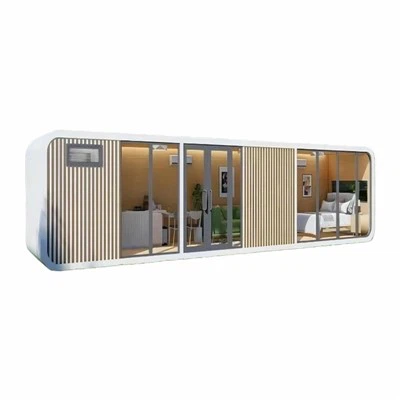
I’ve seen how a flat pack container can turn a pile of debris into a home, how it can turn a field into a triage center, and how it can cut through the chaos of a disaster to bring a sense of normalcy when it’s needed most. If you’re part of a relief organization, a local government, or a community group looking to deploy shelter or functional spaces for a disaster response, we’re here to help you design, supply, and deploy flat pack containers that fit your specific needs. Contact us to discuss your project and find the right solution for your community.
Folding Container References
International Federation of Red Cross and Red Crescent Societies. (2022). Shelter Solutions in Post-Disaster Scenarios: A Comparative Analysis. IFRC Publications.
World Health Organization. (2021). Functional Shelter for Disaster Response: Design and Deployment Guidelines. WHO Press.
National Institute of Building Sciences. (2020). Resilient Temporary Structures for Natural Disaster Relief. NIBS Research Report.
Disaster Recovery Journal. (2023). Reusability of Temporary Shelter Solutions: Cost and Environmental Impact. DRJ Publishing.
Shandong Qidi Anzhu International Trade Co., Ltd.
As one of the most professional flat pack container manufacturers and suppliers in China, our products have good reputation in the market. Please rest assured to wholesale high quality flat pack container for sale here from our factory. We also accept customized orders.
Address: Room 704, Zhexin Plaza, Dongfeng Street No.7666, Kuiwen District, Weifang City, Shandong Province
E-mail: wendy@eco-modulehouse.com
WebSite: https://www.eco-modulehouse.com/
