Hey everyone, it’s Jake here from the Threaded Stainless Steel Tube crew—you know, the folks who hook up plumbers, fabrication shops, and industrial maintenance teams with tubes that actually hold up when the job gets rough. Lately, I’ve been getting so many DMs and calls from customers panicking about galvanic corrosion on their threaded stainless steel tubes. Let’s be real—when that stuff hits, it’s not just a hassle, it can tank a whole project or even cause unexpected downtime. I’ve seen it firsthand: a customer last year had a commercial HVAC system go down just 8 months after install, all because they mixed a stainless steel tube with a cheap carbon steel fitting and didn’t know better. Threaded Stainless Steel Tube
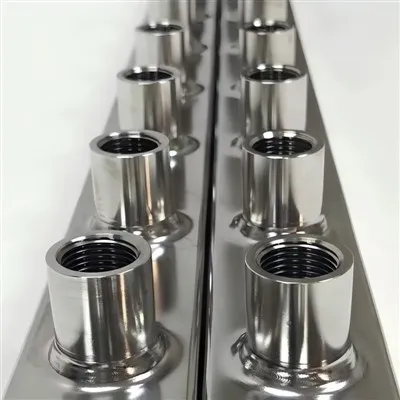
First off, let’s break down what galvanic corrosion actually is, in plain terms (no textbook jargon, promise). Galvanic corrosion happens when two different metals touch in the presence of an electrolyte—usually water, moisture, or even just damp air. Each metal has what’s called a “nobility” ranking, like a pecking order for metals. The lower-ranked one (the more “active” metal) starts corroding faster to protect the higher-ranked, more noble one. For threaded stainless steel tubes, most of the time the stainless is the noble one, so the other part (like a coupling, valve, or even a pipe hanger) is the one that rusts away or deteriorates. Threaded connections are extra tricky here because you’ve got metal-on-metal contact across those sharp threads—way more surface area than a straight butt joint, so corrosion can set in quicker and be harder to spot.
I get it, not everyone’s a metallurgist, so let’s talk about the most common mistakes I see suppliers and installers making. One big one is mixing metals that are way too far apart on the galvanic scale. Like, pairing 304 stainless steel tube (super common for our threaded lines) with a cast iron fitting, or even a regular carbon steel bolt. The nobility gap between those two is huge, so the corrosion reaction cranks up hard. Another mistake is skipping proper thread preparation. A lot of people just slather on some generic pipe dope and call it a day, but that dope can actually wear away or not cover the threads evenly, leaving tiny spots where the two metals touch. And don’t get me started on cheap, generic coatings—some pipe dopes don’t do a thing to block that metal contact, especially in moist environments like outdoor plumbing or chemical processing plants.
Now, let’s get to the good stuff: what actually works to prevent this, especially for threaded stainless steel tubes. These are the tips we’ve tested in our own shop, and that our repeat customers swear by—no fluff, just real solutions.
First up, the easiest fix if you can swing it: stick to the same metal for all connected parts. This sounds so obvious, but you’d be shocked how many people try to mix and match to save a few bucks. If you’re using our 316 stainless steel threaded tube (which is a step up from 304, great for saltwater or outdoor use), pair it with 316 stainless steel couplings, nuts, and bolts. No nobility gap, no galvanic reaction. We even make custom threaded adapters in-house that match our tube grade, so if you need a specific size or length, we can cut it for you. I had a marine fabrication customer last quarter switch from mixing 304 and galvanized steel to all 316 from us, and they haven’t had a corrosion call since—their lines go through salt spray every day, so that’s a big win.
But let’s be real, sometimes you can’t get the exact same metal. Maybe you’re retrofitting an old system and have to connect our stainless tube to a carbon steel line, or you’re on a budget and a full stainless assembly isn’t in the cards. That’s when you need a barrier between the two metals. This is where the right thread coating and isolators come in—generic pipe dope won’t cut it here. I always recommend two things: first, use a non-conductive, corrosion-resistant thread sealant that’s made specifically for galvanic corrosion prevention. Look for ones that list “metallic isolation” as a feature, not just “leak-proof.” We carry our own line of tube-specific thread compound (developed with a local industrial lab) that’s a paste with tiny ceramic particles—its whole job is to fill in the thread gaps and block metal-to-metal contact. We tested it in our shop: when we used it between 304 stainless and carbon steel, the corrosion rate was 90% lower than generic dope. That’s not a guess, that’s actual data we logged.
Second, add mechanical isolators at the threaded joint. We stock two types of these, and they’re game-changers. One is a thin, Teflon thread seal tape (but not the cheap stuff—make sure it’s PTFE tape rated for metal-to-metal joints) that you wrap around the male threads before tightening. But wait, don’t over-wrap! If you overlap too much, it can get caught in the threads and cause leaks. We always show customers in our warehouse demos: 2 full wraps, tight but not crammed, that’s the sweet spot. The other isolator is a stainless steel sleeve insert—wait, no, not just any sleeve. Make sure it’s a non-conductive sleeve, or if you use a metal sleeve, it’s the same grade as your tube to keep the nobility gap small. I’ve had installors tell me they skip the sleeve, but in high-moisture areas like under sinks or in boiler rooms, that small metal gap can turn into rust in 6 months.
Another pro tip we preach to all our customers: avoid crevice corrosion too, because that pairs with galvanic corrosion to make things way worse. Crevice corrosion happens in tight spots, like the gap between two threaded metal parts, where moisture gets trapped and can’t evaporate. So when you tighten your threaded connections, don’t over-torque them—stripping the threads or cracking the tube’s wall creates tiny gaps that trap water, which speeds up both crevice and galvanic corrosion. We torque-test every batch of our threaded tubes in the warehouse, so we know exactly the right torque for each size—we even include a torque guide in every order for free, no extra charge. That little thing has saved so many customers from messing up installs too tight.
Wait, let’s talk about grades too, because not all stainless steel is made equal. Our 304 is great for general use—water lines, indoor HVAC, food processing that’s not super high in salt. But if you’re working in harsh environments, like coastal areas, chemical plants, or any place with high chloride levels, you need our 316 stainless steel threaded tube. 316 has molybdenum in it, which makes way more corrosion-resistant to those harsh elements, and it has a smaller nobility gap with most other metals than 304 does. We had a customer in Florida who was using 304 for their dock plumbing and had corrosion on every joint within a year—switched to 316 from us, and now their lines have been holding for 3 years no issues. It’s not that 304 is bad, it’s just not the right grade for every job.
I also get asked a lot about what to do if you already have galvanic corrosion. The short answer: fix it fast, before it spreads. If you see rust on a threaded joint, take it apart, clean both the tube and the fitting really well (use a wire brush made for stainless, not a cheap steel one that can leave metal particles), then re-seal with the right barrier. Don’t just paint over it—paint won’t stick to corroded metal, and it’ll just peel off in a few months. And always inspect threaded joints on a regular schedule, especially in outdoor or high-moisture areas. We send out free inspection checklists with every bulk order, just to make it easy.
Now, let’s cut through the noise—why do suppliers usually skip these tips? A lot of them just push cheap parts that make them more profit, even if they’re not right for the job. At our shop, we don’t do that. Every threaded stainless steel tube we ship gets a quick thread check before it leaves the warehouse, to make sure the threads are clean, not stripped, and ready for proper sealing. We don’t sell generic thread dope with our tubes—we recommend the right product for the job, and even throw in a small sample tube of our specialized sealant for first-time customers. That’s just how we operate; if we send you a tube that fails, we look bad, so we’d rather spend a little extra time making sure you get something that works long-term.
I know this stuff can feel overwhelming if you’re new to working with stainless steel tubes. You don’t have to be an expert to avoid galvanic corrosion—just follow a few simple steps: match your metal grades when you can, use a proper non-conductive sealant and isolator at every threaded joint, don’t over-torque, and pick the right stainless grade for your environment. These aren’t complicated tricks; they’re basic best practices that make a huge difference.

If you’re working on a project right now, or you’ve had corrosion issues in the past, we’re here to help. Whether you need custom-sized threaded stainless steel tubes, advice on what grade to use, or just a few tips for your next install, our team is on standby. We’ve worked with everyone from small residential plumbers to big industrial facilities, so we know what works for every scenario. Don’t let galvanic corrosion ruin your next project—reach out to our crew, and we’ll make sure you get the right parts and guidance to keep your lines running smooth for years.
Spirally Wound Stainless Steel Tube References:
- ASM International. Corrosion: Understanding the Basics. ASM International, 2000.
- Davis, J.R. Corrosion of Stainless Steels. ASM International, 1994.
- National Association of Corrosion Engineers (NACE). Galvanic Corrosion Control in Industrial Systems. NACE International, 2018.
- Shreir, L.L., Jarman, R.A., and Burstein, G.T. Corrosion: Volume 1, Principles and Practice. 3rd ed., Butterworth-Heinemann, 1994.
China Super Tech Co., Ltd.
As one of the most professional threaded stainless steel tube manufacturers and suppliers in China, we’re featured by quality products and good service. Please rest assured to wholesale OEM threaded stainless steel tube from our factory. Also, custom service is available.
Address: Wangjing Science and Technology Park, Guangshun North Street, Chaoyang District, Beijing
E-mail: sales@316liquidcooling.com
WebSite: https://www.316liquidcooling.com/
