If you’ve ever called a printing press machinery supplier to ask, “How much does one of your presses weigh?” you know it’s not a straightforward answer. For years, I’ve fielded that question dozens of times a week, and I’ll tell you right now—there’s no single number I can rattle off. Weight of printing press machinery depends on way more than just the size of the machine sitting in our warehouse. Let’s break this down, not as a stuffy engineer’s spec sheet, but as someone who’s spent 12 years helping print shops move presses into new facilities, avoid unexpected freight fees, and budget for the full cost of a new press. Printing Press Machinery

First, we have to start with the basic type of press, because that’s the biggest driver of weight. The two most common categories for commercial print shops are offset lithography presses (the workhorses for high-volume, consistent runs—think business cards, magazines, catalogs) and digital presses, which are popular for short runs, variable data, and quick turnarounds. Offset presses are heavier, full stop. A small, entry-level offset press for a startup print shop, say a 12-inch web-fed or 18-inch sheet-fed, usually weighs between 1,800 and 3,500 pounds. That’s about the weight of a small car or two full-sized refrigerators. But move up to a mid-range sheet-fed offset, the kind a shop with a few years of steady growth will invest in, and you’re looking at 8,000 to 15,000 pounds. That’s like the weight of a standard moving truck. The big, industrial web offset presses that print newspapers or 100,000-copy catalogs? Those can tip the scales at 50,000 to 100,000 pounds—think about a fully loaded semi-truck, and you’re in the ballpark.
Digital presses are far lighter, and that’s why so many newer shops lean into them. A basic single-color digital press for small runs only weighs 300 to 800 pounds. Even a high-end digital press with variable data capabilities, which can handle full-color custom jobs, comes in at 2,000 to 5,000 pounds. That makes them much easier to maneuver into a shop, no heavy rigging required, which is a huge plus for smaller spaces or shops that don’t have a dedicated freight dock. But here’s the catch: even within the same press type, weight can vary by manufacturer and model. A 18-inch sheet-fed offset from one brand might be 1,000 pounds heavier than a competing model, just because of the materials used in the frame or the number of integrated features. I always tell customers to check two spec sheets side by side, not just the “base press” weight, but the weight of any add-ons they’re planning to buy.
Speaking of add-ons—that’s the second biggest factor people miss when they ask about weight. A lot of new print shops only think about the press itself, but the ancillary equipment that comes with it adds hundreds or thousands of pounds. Let’s list the most common ones. For offset presses, you have the feeders and delivery units. A standard feeder for a sheet-fed press is about 1,000 pounds on its own. The delivery, which stacks the printed pages once they come off the press, is another 1,500 to 2,500 pounds. If you get an automated setup that adjusts paper size or counts pages without a worker, add another 500 to 1,000 pounds. Then there’s the drying system—offset presses use ink that needs to dry quickly, so a basic gas dryer is 800 pounds, and a high-speed UV dryer (used for shiny, durable prints) can be 2,000 pounds. For digital presses, add-on options like finishing units (cutters, folders, binders) are just as heavy. A automatic folder for a digital press can weigh 1,200 pounds, and a small perfect binder (for books) is another 2,000 pounds. One customer of mine tried to skip the binder weight to save on freight, and ended up having to rent a separate one later—cost them an extra $2,000 in the long run, plus delay on their first big book order.
Another thing to consider is whether you’re getting a new press or a used one, because used presses can have surprising weight differences, too. Some used presses have been retrofitted with newer parts, like upgraded motors or drying systems, that add hundreds of pounds. Others have had old, worn-out parts removed, making them lighter. When we sell used presses, we always provide a full breakdown of every component’s weight, so the customer knows exactly what they’re picking up. I once had a customer who tried to cut costs by buying a used offset press that was listed as “lightweight” for its size—turns out the previous owner had removed the UV drying unit to repurpose it for another machine, so the press was 2,000 pounds lighter than standard. That meant the paper feeding system was unbalanced, leading to constant paper jams and wasted paper on their first big order. It’s a mistake they won’t make again, and it’s the exact reason we never skip the detailed weight breakdown for every machine we sell.
Now, why does any of this matter? Beyond just curiosity, the weight of your printing press directly impacts three big costs you might not plan for: freight, rigging, and site prep. Let’s start with freight. Most heavy machinery is priced by the pound, not the distance. A press that weighs 10,000 pounds will cost twice as much to ship as one that weighs 5,000 pounds—even if it’s going the same 500 miles. Then there’s rigging. For presses over 5,000 pounds, you can’t just use a standard moving dolly. You need professional riggers with cranes, forklifts, and specialized straps to move the machine into your shop. Rigging costs are usually based on the machine’s weight and how hard it is to maneuver—if your shop has a narrow doorway or no dock, a 10,000-pound press could cost $1,500 to $3,000 to move, compared to $500 for a 3,000-pound press. Finally, site prep. Your shop’s floor has to support the weight of the press. A small digital press is fine on a standard concrete floor, but an 8,000-pound offset press needs a reinforced floor, or at least a reinforced pad under the machine. If your floor can’t handle the weight, you’ll have to pour extra concrete or add steel supports, which can add $1,000 to $5,000 to your setup costs. I’ve had customers come to us excited about a press, only to realize their shop’s floor can’t handle it, and they have to delay their order for months to do the prep. That’s why we always ask customers for floor plans and photos of their shop before we give a firm price, not just the press cost.
Let’s also talk about common misconceptions I hear all the time. One is that all digital presses are lighter than offset. Not true—some high-end digital presses, the kind used for commercial printing runs up to 100,000 copies, can weigh as much as a mid-range offset press, around 10,000 pounds. Their speed and output is comparable too, so shops don’t have to choose between speed and lighter weight. Another misconception is that you can’t use a small press for big jobs. A customer a few years back wanted to print a 50,000-copy catalog, but thought his 1,800-pound entry-level offset press wasn’t heavy enough. Turns out, he just needed to upgrade his paper feeder and delivery unit, which added 2,000 pounds, and he could handle the job no problem. We worked with him to adjust his order, save money, and get the job done on time.
If you’re in the market for a printing press, here’s my advice for navigating weight questions: first, decide what type of press you need, based on your typical run size and the kinds of jobs you take. If you mostly do small, quick custom jobs, go digital—lighter, more flexible, easier to move. If you do high-volume, consistent runs, offset is still the way to go, but start adding up the weight of all the add-ons you need. Second, ask your supplier for a full weight breakdown, not just the base press number. Our team sends customers a spreadsheet that lists every component: press body, feeder, delivery, dryer, any finishing units, even the packaging we use for shipping. No hidden weights, no surprises. Third, plan ahead for freight and rigging costs. Get quotes from a specialized industrial freight company before you finalize your press order, because general moving companies don’t have the equipment or experience to move heavy printing machinery.
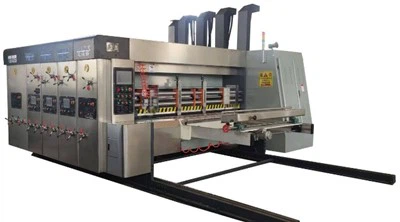
At the end of the day, the weight of a printing press isn’t just a number in a spec sheet. It’s a detail that can make or break your budget, your timeline, and your ability to take on new jobs. I’ve seen shops make bad decisions because they picked a press based on weight alone, without considering the other factors, and I’ve seen other shops thrive because they took the time to get the full picture. If you’re ready to talk through what press weight makes sense for your shop, or if you have questions about any of this, feel free to reach out to our team to discuss your needs and get a customized quote.
Corrugated Carton Box Making Machine References
Printing Industries of America. (2022). Commercial Printing Machinery Specification and Safety Standards.
Rigging, Moving, and Installation Association. (2021). Heavy Machinery Handling Guidelines for Commercial Printing Presses.
Smith, J. (2020). The Small Business Owner’s Guide to Choosing and Installing Printing Machinery. Small Business Press.
International Organization for Standardization. (2019). ISO 12636: Graphic Technology – Printing Machinery – Safety Requirements for Offset Lithography Presses.
Guangzhou HS Machinery Co., Ltd.
We’re well-known as one of the leading printing press machinery manufacturers and suppliers in China. Please feel free to buy cheap printing press machinery for sale here from our factory. Quality products and low price are available.
Address: Xiaowu 1st Industrial Area, Xiaowu Village, Dongchong Town, Nansha, Guangzhou, China
E-mail: vipmachinery@126.com
WebSite: https://www.cartonboxsolutions.com/
