If you’re a factory owner or ops manager reading this, chances are you’re still tired of those old, flickering fluorescent lights that drain your energy bills and make your team’s eyes burn by shift’s end. I’m from a factory lighting supply company, and let me cut to the chase: upgrading your entire facility to LED isn’t just a trendy upgrade—it’s the single smartest move you’ll make for your bottom line, your team, and even your equipment. But it’s not just swapping a tube here and there (trust me, I’ve seen a hundred factories mess that up and waste thousands). Let me walk you through exactly how to do it right. Factory Lighting
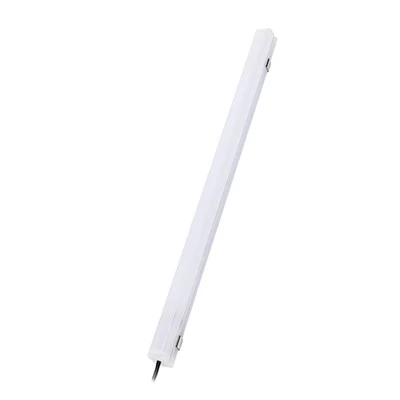
First, stop thinking “one size fits all.” I get it, you’re busy, and you just want someone to send over a box of LEDs and be done. But factories aren’t offices. You’ve got assembly lines with delicate parts, loading docks where visibility can mean the difference between a safe shift and an accident, and even storage bays stacked 20 feet high where dim corners turn into lost inventory. When I first started working with a car parts factory last year, they tried to swap every old bulb for a generic LED tube and saved like 10% on electricity. But 6 months later, their line workers were complaining of glare on their precision drill jigs, and the loading dock team was tripping over pallets they couldn’t see. They came back to me, and we redid the whole setup: high bay LEDs for the 30-foot warehouse, dimmable linear LEDs for the assembly line (so we could dial back glare during close-up work), and motion-sensor low-bay lights for the rarely used utility closet. That second upgrade cut their energy bill by 42% and dropped safety incidents in those high-risk areas by 28%. So first step: map every zone in your factory. Don’t skip this. Grab a tape, a pen, and walk every inch—no shortcuts. Note what each space is used for, how big it is, and any unique needs (like cold storage, where regular LEDs don’t handle -20°F temps, or chemical plants, where you need explosion-proof housings).
Next, calculate the numbers beyond just “per bulb cost.” I know LED bulbs are pricier upfront, but let’s do the math like we’re both standing there with a calculator (no spreadsheets, promise). Old fluorescents last about 10,000 hours, right? LEDs last 50,000+ hours. That’s 5x longer. Then there’s energy: a standard 4-foot fluorescent is 32W, a comparable LED is 18W. That’s 43% less energy per bulb. Multiply that by how many bulbs you have, and how many hours a day they’re on (factories run 24/7 for some, so that’s 8760 hours a year), and you’re looking at thousands saved on electric bills alone. Then add less maintenance: no more changing bulbs every 6 months, no more that annoying buzz from old fluorescents that makes your team grumpy. Wait, don’t forget rebates! Most utility companies will give you $0.50 to $1.50 per LED bulb installed for factories—last quarter, a packaging plant I worked with got $12,000 back from their provider just for swapping 8,000 bulbs. So that $2 per bulb you thought was too much? Now it’s $0.50 with the rebate. That’s a no-brainer. But here’s the mistake I see all the time: buying cheap LEDs off Amazon. They’ll die in 6 months, and you’ll have to change them anyway, which ends up costing more. Go with LEDs that have a 5-year minimum warranty, at least. I only sell ones with 7-year warranties, and that’s non-negotiable for me with factory clients.
Now, installation: you don’t have to shut down the whole factory for a weekend. That’s the biggest fear for most ops managers. I get it, downtime costs money. So we do installations in phases, during shifts when lines are slow, or at night when only a skeleton crew is there. Last month, a food processing plant wanted to upgrade but couldn’t stop their production line. We installed 100 high bay lights in 4 hours during their midnight shift, with two electricians per 50 lights, and not a single line stop. Pro tip: if you have in-house electricians, make sure they know factory wiring—some old factories have weird, mismatched wiring from the 90s that generic LED bulbs won’t work with. If you don’t have that expertise, hire a lighting supplier that does installation, or at least partners with licensed electricians you can trust. I always include a free lighting check before we install, too—sometimes we find faulty wiring that could make your new LEDs blow out, so why waste the money?
Wait, one more thing: light quality isn’t just a “nice to have.” A lot of factories use LEDs that are too blue, which makes metal parts look dull, or causes eye strain that makes workers take more breaks. The right LED color temperature for factories is between 3500K and 4500K—warm enough that it doesn’t hurt your eyes, bright enough that you can spot a tiny scratch on a car door or a loose screw on a conveyor belt. Color rendering index (CRI) matters too. Stick to a CRI of 80 or higher. Lower than that, and you’ll start misidentifying parts, which leads to defects and rework. The car parts factory I worked with originally used a CRI 70 LED, and their defect rate went up 5% at first—until we switched to CRI 85, and it dropped back down. That’s not a small number; rework costs them $50,000 a month, so fixing that alone paid for half their LED upgrade.
Oh, and what about old waste? You can’t just throw those old fluorescent bulbs in the trash—they have mercury, which is a hazard. A good lighting supplier will take your old bulbs for proper disposal, or at least tell you where to bring them. I partner with a local e-waste company that does it for free for all my clients, so that’s one less thing you have to deal with. No more hauling 500 mercury bulbs to the dump yourself.
Let me wrap this up straight: upgrading your factory to LED isn’t a “maybe later” project. I’ve seen businesses save between 30% and 50% on lighting costs, cut maintenance time by 70%, and even improve production quality just by getting the right light. The worst thing you can do is put it off because you think it’s too expensive, or too much work. If you’re not sure where to start, just reach out to someone who knows factory lighting inside and out—no generic office lighting guys, no big box stores. We get how factories work, we know the zones, we know the math, and we don’t make you jump through a bunch of hoops. Want a free, no-obligation walkthrough of your facility to map the best plan? Hit me up. Let’s stop letting your old lights drain your money and your team’s energy.
Electrical Cabinet Light References:
- U.S. Department of Energy. (2022). LED Lighting for Industrial Facilities: Savings and Performance Guidelines.
- Illuminating Engineering Society. (2021). Lighting Recommendations for Manufacturing and Warehouse Spaces.
- Electric Power Research Institute. (2023). Utility Incentives for Industrial LED Retrofits: Best Practices.
- Occupational Safety and Health Administration. (2022). Light Exposure and Workplace Safety in Manufacturing Settings.
Suzhou Pouge Lighting Electrical Appliance Co., Ltd.
As one of the most professional factory lighting manufacturers and suppliers in China, we also support customized service. Please feel free to wholesale advanced factory lighting made in China here and get quotation from our factory. For price consultation, contact us.
Address: Building 6-501, No.1330, Jinfeng South Road, Mudu Town, Wuzhong District, Suzhou City, China
E-mail: xduanlyy@126.com
WebSite: https://www.pouge-light.com/
