If you’ve ever stood next to an industrial production line—whether that’s a factory churning out car parts, a power plant cranking electricity, or even a wastewater treatment facility cleaning up our local water supply—you’ve probably seen a tiny, round piece of rubber (or other elastic material) sitting between two metal or plastic parts, looking totally unremarkable. Let me cut to the chase: that’s an O ring, and if you’ve ever wondered, “do these things actually get used in industrial machinery?” the short answer is yes—constantly. As someone who’s run an O ring supply business for 12 years, I see this play out every single week, and most people outside our industry have no clue how much these tiny rings keep entire operations from grinding to a halt. O Ring
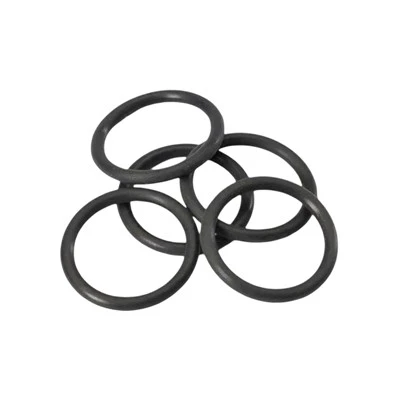
Let’s start with the basics, because even regular folks who’ve heard of O rings don’t always grasp their core job. An O ring is a doughnut-shaped seal, right? It’s usually made of rubber, silicone, Viton, EPDM, or some other elastic polymer, and its whole thing is to block fluids (liquids or gases) from leaking out of a joint or keep contaminants (dirt, dust, water) from seeping into a system. When you bolt two flat metal flanges together, like the ones on a pipe that carries hot coolant through a generator, there’s a tiny gap between them—way too small to see with the naked eye. If you don’t fill that gap with something, coolant would spray out, air would get in, and the whole machine would overheat and shut down. O rings fill that gap, and they work because when you compress them just the right amount, they squish into that tiny space, creating a tight, flexible barrier.
Now, I know what you’re thinking: “This is obvious—so why does every industrial machinery maker swear by O rings?” Because industrial environments are brutal, and most other seal types can’t hold up. Let’s take a common industrial use case: hydraulic cylinders. You see these on construction equipment like excavators, but they’re also everywhere in factories—think of a robot arm that lifts heavy car chassis in an auto plant, or a press that stamps out metal parts. A hydraulic cylinder uses pressurized oil to push a rod in and out, and if that oil leaks, the cylinder doesn’t move. O rings are the seal between the cylinder’s barrel and its piston, and they have to handle extreme pressure (we’re talking thousands of psi, enough to shoot a small object through a wall) and constant friction from that moving rod. If we used a cheaper seal, it would wear out in a week, but a good O ring? It can last years, even in 24/7 operation.
I see this so often with our clients: a new auto parts plant will come to us and say, “We used a generic seal supplier, but our line went down every other day last month.” We’ll sit down with their maintenance team, ask them about the exact conditions their O rings have to handle—like, do they deal with hot motor oil? Does their line use brake fluid, which is super corrosive? Is there a lot of water exposure? Then we match them to the right O ring material. For example, if their hydraulic line runs at 300°F with synthetic oil, we send Viton O rings. If they need something for a food processing line (super common—think of the pumps that move soda syrup or meat processing solutions), we send food-grade EPDM, which is FDA-approved, so it won’t leach weird stuff into the product. No, you don’t want O rings in your soda, but you do want them sealing the pump that moves that syrup so none of it leaks out mid-production.
Wait, let’s talk about power plants, because that’s a huge O ring market and most people don’t think about it. Thermal power plants (coal, natural gas, even nuclear) rely on steam turbines to make electricity. Steam is generated at super high pressure and temperature—like 1,000°F and 2,000 psi, to give you an idea. The pipes that carry this steam from the boiler to the turbine are connected with flanges, and each joint needs an O ring that can handle that extreme heat and pressure. If that O ring fails, steam leaks, which is not just a waste of energy—it’s a safety hazard. Our team has supplied O rings to a few local power plants over the years, and their maintenance crew will stock up on our Viton and high-temperature silicone O rings by the pallet. They do scheduled shutdowns every 18 months, and replacing O rings is one of the first things they check, because if one slips up, it can take the whole unit offline, costing them tens of thousands of dollars an hour.
Another big industrial sector: oil and gas. This is probably the harshest environment for O rings, hands down. Drilling rigs, pipelines, and refineries deal with crude oil, natural gas, salt water (which is super corrosive), and extreme pressure deep underground. O rings here don’t just seal—they have to survive exposure to chemicals that would eat through regular rubber in hours. We supply a lot of Kalrez O rings to oil and gas clients; Kalrez is a perfluoroelastomer, basically the tough guy of O ring materials. I remember a client a few years back who was dealing with a leak on a subsea pipeline connector at 5,000 feet below sea level. Their previous O rings were failing every 6 months, leading to costly repairs and production delays. We sent them custom-sized Kalrez O rings, and they’ve been running for 4 years without a single leak. That’s the kind of win that makes this job worth it.
But it’s not just heavy, loud industrial stuff. A lot of people are surprised to learn that O rings are in the machines that make everyday products. Think of a factory that makes your phone’s battery, or the packaging for your favorite cereal. The pumps that move the plastic resin that makes cereal boxes, for example, need O rings that can handle the heat of molten plastic. If that seal leaks, you get a mess of resin all over the line, and you have to shut down, which is a huge loss because those lines run 24/7, no breaks. We’ve had food packaging clients call us at 2 a.m. when their line’s O ring failed, and we get a rush order out—because if that line is down, they can’t ship their product for a day, which means they lose shelf space at the grocery store. That’s the part of the job that’s not just about selling rubber rings—it’s about keeping people’s businesses running.
Now, let’s bust a common myth: O rings aren’t “one size fits all.” A lot of new maintenance techs or small business owners I talk to think, “I just need an O ring that fits the diameter, right?” No way. Size is only part of it. You have to match the material to the application, the hardness (O rings come in different durometers—think of that as how squishy they are), and even the finish of the parts they’re sealing. For example, if you bolt two metal parts that have rough, scratched surfaces, you need a slightly harder O ring to resist tearing. If the surfaces are super smooth, a softer, more flexible O ring will conform better to fill tiny gaps. I’ve had clients order the wrong O ring a dozen times: they get the size right, use a rubber that works for general use, but their machine deals with hot water, so the rubber swells up and stops moving the rod. Or they use silicone O rings for a hydraulic line, and silicone doesn’t hold up to petroleum-based oil—so the ring breaks apart in weeks. That’s why we don’t just ship O rings blind; we ask specific questions about their application, and if we’re not sure, we send them samples to test first. It might take an extra day, but it saves them from a huge headache later.
Wait, let’s talk about maintenance, because that’s where O rings make the biggest difference in preventing downtime. Most industrial machinery maintenance schedules include checking and replacing O rings as a standard step, but a lot of teams wait until the O ring fails, which is exactly when it causes a breakdown. For example, if you have a conveyor system in a mining plant that uses O rings to seal the rollers, if that O ring fails, the roller seizes up, the conveyor stops, and all the material on it piles up, which takes hours to clear. But if you replace the O ring every 6 months during a scheduled shutdown, you avoid that. Our team actually puts together free cheat sheets for our clients: like, “For your 2-inch hydraulic cylinder running on synthetic oil, replace O rings every 12,000 cycles,” or “For your steam line flange, check O rings at every shutdown.” Small steps, but they add up to a lot less downtime and a lot more money saved.
I want to make this real for anyone who’s ever worked in industrial settings, or is a small business owner trying to keep their machines running. Last year, a guy who owns a small metal stamping shop in Ohio called me panicking. His press line (the one that cuts out metal parts for car frames) had a hydraulic leak, and his maintenance tech said they needed 8 Viton O rings right away. He’d ordered from a big online supply site, but his order was delayed because of a shipping mix-up, and his line was supposed to run that week to fill an order for a local auto maker. We had a local warehouse stocked with that exact size and material, so we loaded them up in a truck and drove 2 hours to his shop, dropped them off that same day. He told me later that was a $50,000 order he almost lost because of a wrong O ring and a bad supply chain. That’s the kind of situation our team lives for—because we’re not just O ring suppliers; we’re the people who help our clients avoid those stressful, costly mistakes.
So, to circle back to the original question: Are O rings used in industrial machinery? Hell yeah—they’re the unsung heroes of almost every industrial process you can name. From the 2 a.m. rush to fix a food packaging line, to the scheduled shutdowns of a power plant, to the subsea pipelines that carry oil and gas across the ocean, O rings are there, quiet, keeping everything moving. The best part is that they’re simple, effective, and way cheaper than fixing a machine that’s shut down because of a tiny, $2 rubber ring.

If you’re dealing with industrial machinery, whether you’re a maintenance manager, a plant owner, or a tech who’s tired of dealing with O ring failures that cause downtime, we can help. Reach out to us to talk through your O ring needs—we don’t do pushy sales stuff, we just ask about your application, recommend the right materials, and get you what you need fast, no hidden fees. We’ve worked with small shops and huge corporations alike, and we’re here to make O ring headaches a thing of the past.
Crankshaft Oil Seal References
- Hunter, J. (2018). O-ring Seals: A Guide for Industrial Applications. Industrial Press.
- American Petroleum Institute. (2020). Recommended Practice for Subsea O-ring Sealing Systems. API Publishing Services.
- National Sanitation Foundation. (2021). Standard 51: Food Equipment Materials. NSF International.
- ASME B16.20. (2022). Metallic Gaskets for Pipe Flanges. American Society of Mechanical Engineers.
Hebei Jinwo Machinery Technology Co., Ltd.
Hebei Jinwo Machinery Technology Co., Ltd. is one of the most professional o ring manufacturers and suppliers in China, featured by quality products and good price. Welcome to buy bulk advanced o ring in stock here and get pricelist from our factory. We also accept customized orders.
Address: Room 2109, Tower A, Meidong International, No.16 Guang’an Avenue, Chang’an District, Shijiazhuang City, Hebei Province, China
E-mail: info@jinwoseal.com
WebSite: https://www.jinwoseal.com/
