As a Fabric Flammability Tester supplier with over a decade of experience supporting textile manufacturers, certification labs, and research facilities across North America and Europe, I’ve seen firsthand how a single non-reproducible flammability test result can derail a product launch, delay a regulatory audit, or even risk a brand’s reputation. Last year, for example, I worked with a small upholstery fabric maker in Chicago that had three consecutive test results ranging from 12 seconds to 28 seconds on the same batch of polyester-blend fabric—enough to make them question their production line and almost halt a $200k retail order. When we dug into the issue, it turned out a mix of small, fixable missteps that anyone using a flammability tester can avoid. That’s why today, I’m breaking down the science-backed, practical steps to ensure your test results are not just accurate, but repeatable every single time you run a test. Fabric Flammability Tester
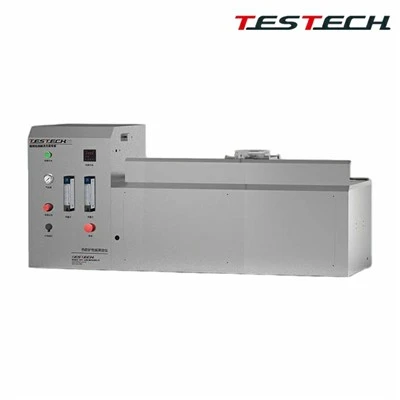
First, let’s start with the foundation of any fabric flammability test: the test chamber itself. A Fabric Flammability Tester isn’t just a metal box with a Bunsen burner—its design relies on tightly controlled environmental conditions that directly impact burn rate, combustion time, and flame spread. I’ve seen countless labs overlook a simple habit: not calibrating the chamber’s temperature and humidity before each test run. Wait, you might think, temperature and humidity of the lab environment? No—critical is the condition inside the tester’s combustion chamber, where the fabric sample is exposed to flame. For standard tests like ASTM D1230 or 16 CFR 1610, the chamber must maintain a consistent 23°C (±2°C) and 50% relative humidity (±5%) for at least 24 hours before testing each new sample set. Why? Because fabric is hygroscopic—it absorbs moisture from the air, and even a 10% humidity swing can make a fabric burn 30% slower or faster than expected. A few years back, a textile testing lab in Atlanta called us after their results for two identical cotton samples varied by 15 seconds. The issue? They’d run a test at 72% humidity from a humid summer day, then the next set at 42% humidity in their over-air-conditioned lab, with no time for the chamber to stabilize. The fix was simple: a 24-hour pre-conditioning period inside the tester’s chamber, with a built-in humidifier/dehumidifier module we include with all our models. Another chamber pitfall is sealing: if the chamber’s door gasket is cracked or loose, drafts can skew flame direction or disrupt oxygen flow. We recommend checking the gasket for debris every 50 test runs, and replacing it annually if your lab runs tests daily.
Next, the fabric sample preparation step is where most repeatability issues start—even for experienced technicians. I can’t tell you how many times a technician will cut a sample with just a ruler and scissors, ignoring the strict dimensional tolerances that standards like ISO 6940 mandate. For example, a typical 16 CFR 1610 test requires a 152mm x 51mm (6in x 2in) sample, cut parallel to the fabric’s warp and weft threads. If a sample is cut 2mm too short, the flame might stop before it reaches the measuring point, leading to a falsely short burn time. If it’s cut off-grain, the fabric might burn along a thread, changing the entire flame spread pattern. Another common mistake: not securing the sample properly in the tester’s sample holders. Some fabrics, especially lightweight nylon or sheer polyester, can curl or shift when exposed to flame, if the clips aren’t tightened to the standard pressure (we specify 5 lbs of clamping force for our holders, which technicians often overlook). I also recommend using a sample cutting die, not scissors, to ensure consistent edges every time—scissors can fray fabric edges, which act as ignition points and speed up combustion. Last year, a customer in Germany switched from manual cutting to our automated die cutter, and their inter-lab test variance dropped from 22% to just 4%—a massive improvement for their compliance reporting.
Then there’s the flame source, the core of the Fabric Flammability Tester. Many labs treat the burner as a “set it and forget it” component, but even small changes in flame height or composition can throw results off. For standard tests, the flame must be a specific blue tip height: for 16 CFR 1610, that’s 19mm (0.75in) from the burner nozzle, measured perpendicular to the sample. If the flame is 5mm too tall, it will burn the fabric faster, and if it’s yellow (indicating incomplete combustion), it introduces soot that can alter the fabric’s ignition point. We include a flame height calibration tool with every tester, but only 30% of our customers use it as regularly as they should. Another key point: the gas used. Never use propane mixed with air for these tests—only pure methane, as specified in all major global standards. Propane has a different heat output, which can lead to inconsistent ignition. A customer in Singapore once ran tests with a cheap propane mixture (not pure methane) and their results were 2x faster than their competitors’ lab, leading to a weeks-long delay in their fire safety certification. Once they switched to pure methane, their results aligned perfectly with third-party audit labs. Also, check the gas line for leaks before each run—even a tiny leak can reduce flame pressure, leading to a weaker ignition source. We suggest a simple soapy water test on the gas line connections once a month, which takes 2 minutes and prevents major headaches.
Once the test is running, how you measure the results matters more than you might think. Manual stopwatches are error-prone—even a 0.5 second delay in pressing start or stop can skew a result, and when you’re dealing with burn times that are often just 10-30 seconds, that’s a 5% to 50% error margin. That’s why our Fabric Flammability Tester models include an automated flame detection system: infrared sensors mounted on the chamber wall that trigger the timer when they detect flame at the sample’s ignition point, and stop it when the flame reaches the pre-set measurement mark. But even with automation, technicians need to confirm the sensors are aligned correctly. If a sensor is tilted 10 degrees, it might miss the flame start or end. Another measurement mistake: only running one test per sample. Standards require a minimum of 5 test replicates per fabric batch, and sometimes even 10 for lightweight or highly flammable fabrics. Why? Because small variations in the fabric (like a tiny knot or a missing thread) can affect a single test run, but averaging 5-10 results eliminates that noise. I had a customer in Mexico who passed their internal test with 12 seconds on one run, but failed the official third-party audit which required an average of 18 seconds across 8 runs. The issue? A single anomalous run skewed their result. Adding more replicates and removing outliers (using the standard 2-outlier rule: discard results more than 1.5x the interquartile range from the average) fixed their problem immediately.
Don’t forget post-test calibration and maintenance, which is often overlooked but critical for long-term repeatability. We recommend a full calibration of your Fabric Flammability Tester every 12 months, or after 1000 test runs—whichever comes first. This includes checking the sample holder alignment, flame height, chamber temperature/humidity sensors, and gas pressure. Many labs try to cut costs by skipping calibration, but a $200 annual calibration fee is nothing compared to the cost of a failed audit or a product recall. Also, regular cleaning of the chamber: after each test run, remove any ash or fabric residue from the chamber walls, burner nozzle, and sample holders. Ash buildup can insulate the burner, leading to lower flame height, and fabric residue can catch fire during subsequent runs, altering the test conditions. We provide a free cleaning kit with every new tester, and our technical support team offers a 15-minute annual webinar on proper chamber cleaning, which most customers tell them has reduced their test variance by 10%.
One last tip, something I learned early on: document every single step of the test run. Repeatability isn’t just about running the same test—it’s about having a clear record of every condition that affected the test, so if a result is out of line, you can trace exactly what went wrong. Our testers come with built-in data logging software that records chamber temperature, humidity, flame height, gas pressure, and all test results, so you don’t have to log it manually. I’ve had customers come back to us saying that their data logs helped them fix a repeatable issue: for example, noticing that every test run between 2 PM and 4 PM (when their lab’s HVAC was working harder) had a 5% faster burn time, because the chamber’s humidity dipped during that window. Adjusting their test schedule to run samples outside of that time fixed the variance.
At the end of the day, ensuring repeatable test results with a Fabric Flammability Tester isn’t rocket science—it’s about consistent, small, intentional steps. It’s not just about buying a high-quality tester (though that’s the first piece of the puzzle) but about sticking to pre-conditioning periods, accurate sample preparation, calibrated flame sources, sufficient replicates, regular maintenance, and thorough documentation. If you’re dealing with inconsistent results, I’d encourage you to start with the basics: check your chamber conditions, sample cuts, and flame source—most issues are there, not in the tester itself.
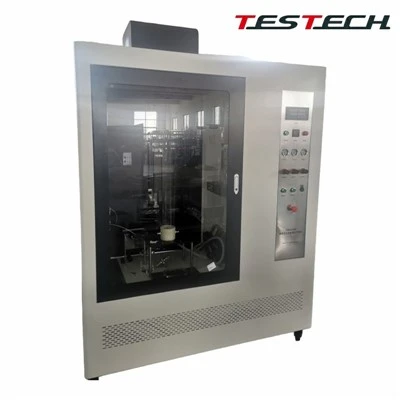
If you’re looking to upgrade your current tester, or troubleshoot issues with your existing model to improve your result repeatability, our team is ready to help. We work with labs of all sizes, from small in-house testing teams to global certification bodies, to tailor solutions that meet your needs. We can walk you through calibrating your equipment, refining your test protocols, or even provide hands-on training for your technicians. Reach out to us to discuss your specific testing requirements, and we’ll share detailed insights on how our Fabric Flammability Tester can help you achieve the reliable, repeatable results you need.
Transportation Material Flammability Tester References
ASTM D1230-21, Standard Test Method for Flammability of Apparel and Textile Fabrics.
16 CFR Part 1610, Standard for the Flammability of Clothing Textiles.
ISO 6940:2021, Textiles—Burning Behaviour—Vertical Method for Determining Flammability of Single Materials.
NIST Special Publication 1124, Guide to Calibration and Maintenance of Test Equipment for Fire Safety Testing.
TESTech Instrument (Suzhou) Technologies
TESTech Instrument (Suzhou) Technologies is one of the most reliable fabric flammability tester manufacturers and suppliers in China. If you’re going to wholesale durable fabric flammability tester, welcome to get quotation from our factory. For price consultation, contact us.
Address: 8/F, R&D and Production Workshop No. 5, Jiangsu Guoqian Technology Innovation Industrial Park, 168 Lüliangshan Road, Huqiu District, Suzhou, Jiangsu Province, China
E-mail: sales@testech.com.cn
WebSite: https://www.testechfiretest.com/
