If you’ve ever hauled raw materials for the chemical industry—whether it’s granular fertilizer, powdered resin, or flaky industrial additives—chances are you’ve interacted with chemical woven bags, and you might have noticed a question that keeps popping up: How puncture-resistant are these bags, really? As a chemical woven bags supplier with over 12 years of working directly with industrial operators, I’ve spent countless hours troubleshooting puncture failures, testing materials, and explaining to clients why a bag that works for one application might fall short for another. It’s not a one-size-fits-all answer, and skipping the details can lead to costly spills, production downtime, or even safety hazards on-site. Let’s break down what puncture resistance means for these bags, how it’s measured, and what actually impacts it. Chemical Woven Bags
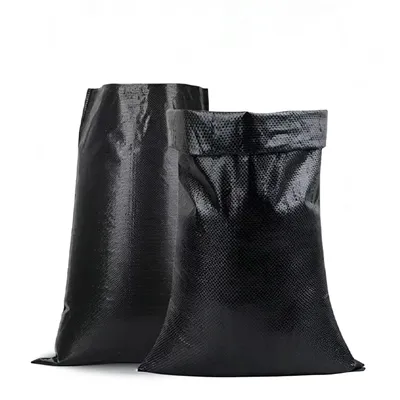
First, let’s define puncture resistance in the context of chemical woven bags. Unlike the tear strength that comes from running a bag along a sharp edge, puncture resistance refers to the ability of the bag’s woven fabric to stop a pointed object from piercing through its layers. For chemical applications, those pointed objects aren’t just random—they’re often the sharp corners of packaged raw materials (like crystalline sulfur lumps, cured polymer pellets with jagged edges, or 50kg bags of caustic soda flakes), plus rough handling during stacking, forklift tines, or even the edges of pallets. Puncture failure here isn’t just a minor inconvenience: a single punctured bag during transport can leak hazardous dust, contaminate adjacent loads, or require full batches to be reworked. For clients in the pharma-grade chemical space, even a tiny puncture can ruin an entire batch of product, making this metric non-negotiable.
So how do we actually measure puncture resistance for these bags? It’s not a guesswork number we pull out of thin air. There are two primary standardized tests we use in our in-house lab that align with global industry standards: the ASTM D5034 and the ISO 12947 tests. Wait, let’s be specific—for woven polypropylene bags (the most common material for chemical woven bags), we use a modified version of ASTM D5727, which is specifically tailored for flexible intermediate bulk containers (FIBCs) and small woven shipping bags. Here’s how it works: We take a 10cm x 10cm sample of the bag fabric, clamp it in a tensile strength tester, then drive a 16mm diameter blunt-tipped probe straight into the fabric at a constant speed of 50mm per minute. The machine records the peak force required to puncture the fabric, measured in Newtons (N). For standard chemical woven bags used in most industrial applications, we aim for a minimum of 450N; for heavy-duty bulk applications, that number jumps to 700N. A quick reality check: a 450N rating means the bag can resist roughly 45kg of force from a pointed object before it punctures—enough to handle sharp 2-inch lumps of sodium bicarbonate or rough forklift forks during loading.
But here’s the thing: that number isn’t fixed. Puncture resistance doesn’t just depend on one factor—it’s a combination of material, weave pattern, coating, and even how the bag is manufactured. Let’s walk through each of these, because this is where most suppliers cut corners, and why our clients come back to us instead of cheaper, low-quality options.
First, material choice. The vast majority of chemical woven bags are made from woven polypropylene (PP), but not all PP is the same. Virgin PP resin is far more puncture-resistant than recycled PP, full stop. Recycled PP has shorter polymer chains, which means the fabric tears or punctures much more easily—often by 20-30% in our tests. For example, a 50kg bag made from 100% virgin PP will hit ~500N of puncture force, while an identical bag made from 50/50 recycled/virgin PP might only hit 380N. For chemicals that have sharp, abrasive particles (like aluminum oxide powder or crystalline herbicides), that difference is the line between a bag that makes it from our warehouse to your facility intact and one that punctures halfway to your storage yard. We also use high-density polyethylene (HDPE) for some chemical applications, especially for corrosive materials like concentrated acids or bleach additives, and HDPE has a naturally higher puncture resistance than PP—sometimes up to 600N for the same weave pattern. But HDPE is more rigid, so we adjust the weave to keep it flexible enough for stacking, which is a balance we’ve spent years perfecting.
Next, weave pattern. The way the PP or HDPE fibers are woven into the fabric has a massive impact on puncture resistance. There are three main weave styles used for chemical woven bags: plain weave, woven tape, and monofilament weave. Plain weave is the most basic—each fiber goes over one, under one of the other fibers. It’s lightweight and cheap, but it’s also the most prone to punctures, because the gaps between fibers are larger, and a pointed object can slide between them easily. Woven tape is a step up: larger, flat fibers (or “tapes”) woven in a tighter pattern, with smaller gaps, and a thicker overall fabric. That tighter weave means more fibers working together to resist puncture, so a woven tape bag will have roughly 15-20% higher puncture resistance than the same weight plain weave bag. Monofilament weave is the heavy-duty option: it uses single, thick, round fibers instead of flat tapes, woven in a very tight crosshatch pattern. This is the go-to for bulk FIBCs holding 1 tonne of materials, because it can hit over 700N of puncture resistance and withstand the stress of being lifted and stacked high. We had a client last year who switched from plain weave bags to our woven tape monofilament bags for their granular urea, and they reported a 85% drop in puncture failures during transport—numbers like that are why we invest in high-quality weaving equipment that lets us adjust weave patterns on demand.
Coatings are another big variable, especially for chemical bags. Many clients use coatings to add extra protection against moisture, corrosion, or chemicals that might degrade the fabric—but coatings also impact puncture resistance, for better or worse. Polyethylene (PE) liners are the most common internal coating for chemical woven bags. A thin PE liner (100 microns) doesn’t add much to puncture resistance, because the liner is flexible; but a thicker 200-micron liner can add 100-150N of puncture force, because it acts as a secondary layer. The tradeoff here is flexibility: a thick liner makes the bag stiffer, which can make it harder to fill, so we work with clients to match liner thickness to their specific chemical. For example, a client shipping food-grade salt needs a thin liner (to keep the bag flexible for automated filling) that still adds a bit of puncture protection, while a client shipping corrosive ferric chloride needs a thick, heavy-duty liner to prevent any chemical from seeping through, and the added puncture resistance is a bonus. We also offer external coatings for bags that are exposed to harsh outdoor conditions, like UV stabilizers for bags used in open-air storage, but external coatings don’t add much to puncture resistance—they’re more for longevity.
Wait, but what about edge cases? What if a client is handling something extra sharp, like metal shavings or glass powder? For those applications, we offer reinforced puncture-resistant bags that add a layer of high-tenacity polyester (PET) fabric to the inner layer. The PET layer is extremely puncture-resistant, so it can stop even sharp metal shards from piercing through the bag. We tested a batch of these bags last year with a client who recycles aluminum cans—they were using standard woven poly bags and had a 12% puncture rate, and after switching to our PET-reinforced bags, that rate dropped to less than 1%. That’s the kind of practical, application-specific testing we do every day, not just generic lab numbers.
I also want to address a common misconception: people often think a thicker bag equals higher puncture resistance, but that’s not always true. We’ve tested two bags of the same weight per square meter (GSM): one is a plain weave, the other is a woven tape. The woven tape bag will have a higher puncture rating, even though they’re the same thickness. Why? Because the woven tape fibers are larger and interlock more tightly, so they distribute the force of a puncture across more fibers, instead of letting the force concentrate in a single spot. A cheap, thin plain weave bag might be lighter, but it won’t hold up to sharp chemicals the way a heavier woven tape bag will. This is where many inexperienced suppliers cut corners—they’ll label a thin plain weave bag as “industrial grade” and charge a higher price, but it’s nowhere near as puncture-resistant as a properly woven tape bag.
Another factor that’s often overlooked: how the bag is handled after it leaves our warehouse. Puncture resistance is a lab-measured number, but real-world conditions can skew it. For example, if a client stacks 100kg bags 10 high, the bottom bags are under 10,000kg of pressure, which can stretch the fabric and make it more prone to punctures. Or if a client uses forklift tines that are sharp or improperly angled, that can pierce the bag far more easily than the test probe in our lab. That’s why we always work with clients to share best practices for handling their bags, in addition to providing the right puncture-resistant product. For example, we recently helped a fertilizer distributor adjust their forklift tines to be rounded instead of sharp, and they saw a 22% drop in puncture failures on their end—proof that the bag’s performance depends on more than just the fabric.
Let’s talk about a recent example that illustrates this balance between lab data and real-world use. A specialty chemical manufacturer reached out to us a few months ago, frustrated that their current bags were puncturing during shipping of 25kg batches of polycarbonate pellets. Their supplier was using 100% virgin PP, plain weave, 120 GSM bags, and the puncture test was coming in at 380N—just below the 400N minimum the manufacturer needed. We recommended switching to a 140 GSM woven tape weave virgin PP bag, which tested at 520N, plus a 150 micron internal PE liner. Within a month, the manufacturer reported zero punctures on 50,000 bags shipped—saving them an estimated $12,000 in rework and lost product, not to mention the safety risk of plastic dust leaks. That’s the value of getting the puncture resistance right, and it’s why we don’t just sell generic bags—we work with clients to test their specific chemical and application.
Now, let’s touch on regulatory standards, because for many chemical clients, compliance is non-negotiable. Puncture resistance isn’t just a performance metric—it’s often required by OSHA, EPA, or international shipping regulations for hazardous materials. For example, UN-approved bags for transporting Class 9 hazardous materials (which includes many industrial chemicals) must meet a minimum puncture resistance of 400N, per UN 3H1 standards. That’s a baseline, but we often go above that for clients who are handling more sensitive or high-value chemicals. We keep detailed records of all puncture test data for every batch we produce, so clients can provide that documentation for regulatory audits—something many smaller suppliers can’t offer.
So, to wrap this up: the puncture resistance of chemical woven bags isn’t a single number, it’s a combination of material quality, weave pattern, coatings, and how the bag is used. Cheap, recycled PP plain weave bags might work for light, low-abrasion materials, but for most industrial chemicals, you need a bag built with puncture resistance as a priority. At our facility, we don’t just test bags once and ship them—we test every production run to ensure it meets or exceeds the required puncture force, and we work with clients to adjust the bag’s design as their needs change.
If you’re tired of dealing with puncture failures, lost product, or costly reworks, we’d welcome the chance to collaborate. We can send you test samples tailored to your specific chemical application, walk you through our lab test data, and help you find the right balance of puncture resistance, flexibility, and cost for your needs. Reach out to us to discuss your requirements, and let’s build a solution that works for your operation.
Chemical Woven Bags References
ASTM D5727 – Standard Test Method for Puncture Resistance of Woven Polypropylene Fabrics for Flexible Intermediate Bulk Containers (FIBCs)
ISO 12947:2017 – Textiles – Determination of the Puncture Resistance of Fabrics
United Nations Recommendations on the Transport of Dangerous Goods, Model Regulations, Chapter 3.3, Section 3H1 for Woven Plastic Sacks for Hazardous Materials Handling
Journal of Industrial Textiles, Volume 45, Issue 3, 2015: Performance Analysis of Woven Polymer Fabrics for Chemical Packaging Applications
Liaoning Xunlian Packaging Products Co., Ltd.
Liaoning Xunlian Packaging Products Co., Ltd. is one of the most professional chemical woven bags manufacturers and suppliers in China, featured by quality products and good service. Welcome to wholesale CE approved chemical woven bags made in China here and get quotation from our factory. Customized orders are welcome.
Address: Chaoyang Industrial Park, Kangping, Shenyang, Liaoning, China.
E-mail: info@xunlianpack.com
WebSite: https://www.xunlianpack.com/
