If you’re in the business of wind energy, agriculture, aviation, or even outdoor event planning, the precision of your wind measuring devices isn’t just a technical detail—it’s the difference between a safe, profitable operation and a costly, avoidable mistake. As a wind measuring device supplier who’s spent the last 12 years calibrating, testing, and shipping these tools to professionals across North America, I’ve seen firsthand how gaps in measurement precision can derail projects, compromise safety, and erode trust in data. Today, I want to break down what wind measuring precision actually means, what factors impact it, and how our products are built to meet (and often exceed) industry standards—no corporate jargon, just real-world context from someone who stands behind every device we send out. Wind Measuring Devices
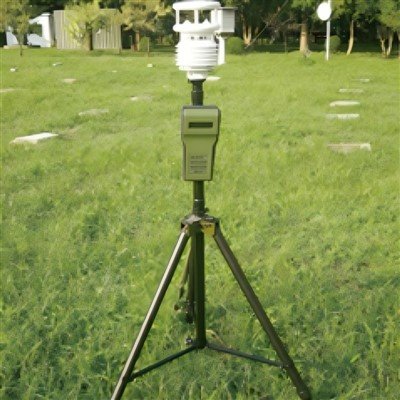
First, let’s get clear on the definition most people miss when they talk about wind measuring precision: it’s not just about “getting it right” once. Precision in this field refers to two interconnected things: repeatability (how consistently a device measures the same wind speed when conditions are identical) and accuracy (how close those measurements are to a universally accepted reference standard, like the ones set by the International Electrotechnical Commission, or IEC). A lot of new customers come to us assuming all anemometers work the same, but that’s like saying all thermometers are equal—sure, they both measure temperature, but a medical thermometer for a hospital is calibrated far more strictly than a $5 plastic one from a convenience store. That same gap exists in wind measuring devices.
Let’s start with the core technologies, because precision varies wildly by what type of anemometer you choose. The four most common options we supply are cup anemometers, ultrasonic anemometers, vane anemometers, and pitot tubes, each with its own sweet spot for precision. Cup anemometers are the workhorses for wind farms and weather stations, and their typical precision ranges from ±0.1 m/s (meters per second) at low speeds up to ±2% of the reading at higher speeds. Wait, let me elaborate: if a cup anemometer is reading 10 m/s, that means the real wind speed is between 9.8 and 10.2 m/s. For context, the IEC 61400-12 standard for wind energy requires cup anemometers used in turbine siting to have a precision of ±0.2 m/s below 5 m/s and ±2% above 5 m/s—something our top-tier cup anemometers consistently hit, after 24 hours of wind tunnel calibration before shipping. That calibration step is non-negotiable for us; we don’t just pull a device off the assembly line and send it out. We test it against a reference anemometer in a controlled wind tunnel where wind speed is known to within ±0.05 m/s, and adjust for things like friction in the cup bearings, which is one of the biggest hidden causes of poor precision in lower-cost devices.
Ultrasonic anemometers, on the other hand, have no moving parts, so they avoid the wear and tear that plagues cup anemometers over time. Their precision is actually higher in many cases, typically ±0.01 m/s to ±1% of the reading. That’s a huge difference for applications that need hyper-accurate data, like urban wind microclimate studies or aerospace testing, where even tiny variations in wind direction can impact flight paths. But here’s the catch: ultrasonic anemometers are more sensitive to environmental interference, like heavy rain, ice, or dust, which can scatter the sound waves and throw off measurements. A lot of budget ultrasonic devices skimp on signal processing to cut costs, so they might list a precision of ±0.05 m/s in ideal conditions, but that drops to ±0.5 m/s in light rain—something we test rigorously in our climate chamber to make sure our devices hold up, even in extreme weather. I’ve had customers tell me they bought a cheap ultrasonic anemometer for a coastal wind project, only to find their measurements were off by half a m/s during storm season—costing them thousands in incorrect energy production estimates. That’s the risk of prioritizing price over precision.
Vane anemometers, which we use for HVAC testing, building ventilation, and small-scale agricultural applications, have a precision of around ±0.05 m/s to ±3% of the reading. Their moving part (the vane) is designed to align with wind direction, so precision here also ties to how quickly the vane responds to shifts in wind—something we optimize by using lightweight, corrosion-resistant materials. Pitot tubes, used in aviation and high-speed wind tunnel testing, have the highest precision of all, often ±0.01 m/s, because they measure dynamic pressure directly, no moving parts to wear out. But they’re also the most specialized, requiring careful installation to avoid flow distortion—another detail we walk customers through step-by-step when they place an order, because even a tiny installation error can undermine precision.
Now, precision isn’t static—it changes over time, and that’s a point many suppliers gloss over. All wind measuring devices drift, which means their readings shift slowly as components wear, corrode, or accumulate dust. For cup anemometers, that drift usually comes from bearing friction: after 3-5 years of outdoor use, friction can slow the cups, leading to under-measuring wind speed. For ultrasonic anemometers, drift comes from fouling on the transducers (the sound-emitting parts) from dirt, salt, or ice. That’s why we design all our devices with easy access for cleaning and recalibration, and we offer annual calibration services for customers who need to maintain ISO 17025 compliance (a requirement for many regulated industries, like civil aviation or wind farm energy reporting). A lot of cheaper suppliers don’t offer calibration services, leaving customers to guess if their data is accurate after a year of use. I’ve had a wind farm client tell me they didn’t calibrate their anemometers for 4 years, and their energy output calculations were off by 7%—that’s hundreds of thousands of dollars in lost revenue, just because they skipped a $200 calibration step.
Environmental factors play a huge role in precision too, and it’s not just the weather you can see. Things like turbulence, which is common in urban areas or around hills, can throw off measurements for devices that average wind speed over short time intervals. For example, if a cup anemometer only measures speed once every second, it might miss sudden gusts that a 10 Hz ultrasonic anemometer would catch—leading to an under-measurement of average wind speed by up to 5% in turbulent conditions. That’s why for turbulent sites, we recommend ultrasonic anemometers with high sample rates, not just lower-cost cup devices. Even temperature can impact precision: older anemometers with uncalibrated sensors can see drift of up to 0.1 m/s for every 10°C shift, because cup bearings expand or contract with temperature. That’s why we calibrate all our devices across a range of -20°C to 50°C, so their precision stays consistent whether you’re working in Alaska or Arizona.
I want to be clear here: precision isn’t a number you pull out of a manual to impress customers. It’s a measurable, actionable metric that directly impacts your bottom line and your safety. For a wind farm operator, a 1% gap in wind speed measurement translates to a 2-3% gap in energy production estimates over the lifetime of a turbine—that’s $100,000+ over 20 years for a single turbine. For an HVAC engineer, a 0.5 m/s error in wind speed around a building can lead to over-ventilating (wasting energy) or under-ventilating (compromising indoor air quality). For a drone operator, a 1 m/s error in wind speed can mean the difference between a smooth flight and a crash. That’s why we don’t just sell wind measuring devices—we sell the precision that makes those decisions reliable.
Now, a quick note on common misconceptions I run into every week. First, higher precision doesn’t always mean better. If you’re measuring wind speed for a backyard weather station, a $50 cup anemometer with ±0.2 m/s precision is more than enough—you don’t need the $500 ultrasonic device with ±0.01 m/s precision. But if you’re a wind farm developer performing pre-construction site assessments, the opposite is true. Second, “accuracy” and “precision” are often confused, but they’re not the same. A device can be precise (consistent) but inaccurate if it’s not calibrated to a reference standard. For example, a cup anemometer that always reads 2 m/s higher than the real wind speed is precise (it gives the same wrong number every time) but not accurate. That’s why all our devices come with a calibration certificate traceable to national standards, so you can prove your data is reliable to regulators, investors, or clients.
If you’re looking for wind measuring devices for your next project—whether it’s a small residential wind farm, a commercial HVAC job, an urban microclimate study, or any other application where data matters—don’t leave precision to chance. Our team has 12 years of experience designing, testing, and supporting these tools, and we can help you choose the right device for your specific needs, no generic one-size-fits-all advice. We don’t cut corners on calibration, we stand behind our devices for 2 full years, and we offer free technical support for the life of every product we sell.
If you’re ready to discuss your requirements, compare precision specs, or learn more about our calibration services, reach out to our team to start a procurement conversation. We’ll send you a sample spec sheet tailored to your project, answer any technical questions, and work with you to get the right equipment on site on time.
Wind Measuring Devices References
- International Electrotechnical Commission (IEC). IEC 61400-12-1: Wind energy generation systems – Part 12-1: Power performance measurements of electricity producing wind turbines. Geneva: IEC, 2017.
- International Organization for Standardization (ISO). ISO 17025: General requirements for the competence of testing and calibration laboratories. Geneva: ISO, 2017.
- Foken, T. “Micrometeorology.” Springer-Verlag Berlin Heidelberg, 2017.
- WMO Guide to Meteorological Instruments and Methods of Observation. World Meteorological Organization, 2014.
Tianjin Blooming Technology Ltd.
We are one of the most professional wind measuring devices manufacturers and suppliers in China, also support customized service. With abundant experience, we warmly welcome you to buy durable wind measuring devices for sale here from our factory. For price consultation, contact us.
Address: Main Building, No. 10 Wuhua Road, Huayuan Industrial Zone, Binhai High-tech Zone, Tianjin, China
E-mail: sales@blooming-tech.com
WebSite: https://www.blooming-tech.net/
