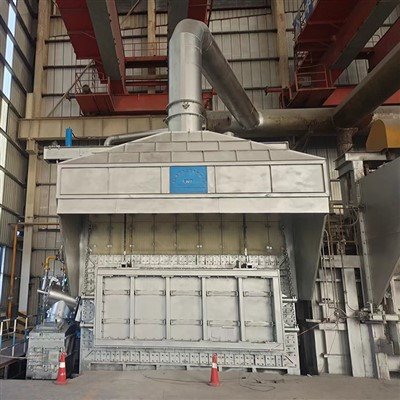
Tempering is a crucial heat treatment process that significantly influences the properties of materials, especially their toughness. As a supplier of tempering furnaces, I’ve had the privilege of witnessing firsthand how different tempering times can transform the characteristics of various materials. In this blog, I’ll delve into the intricate relationship between tempering time and material toughness, exploring the scientific principles, practical implications, and real – world applications. Tempering Furnace
Understanding the Basics of Tempering
Tempering typically follows quenching. When a material, such as steel, is quenched, it is rapidly cooled from a high temperature. This rapid cooling results in a hard but brittle microstructure, often characterized by the presence of martensite. The high hardness can be beneficial for applications where wear resistance is crucial, but the brittleness makes the material prone to cracking, which is a critical concern in many engineering scenarios.
Tempering comes to the rescue. It involves reheating the quenched material to a specific temperature, usually below the lower critical temperature, and holding it there for a certain period. This process allows for the controlled decomposition of martensite and the formation of more stable microstructures, such as tempered martensite and bainite. The key factor here is the balance between the hardness inherited from quenching and the toughness that needs to be introduced through tempering.
Effects of Increasing Tempering Time on Material Toughness
Microstructural Changes
As the tempering time increases, the microstructural evolution in the material becomes more pronounced. In the initial stages of tempering, the supersaturated carbon in martensite begins to precipitate out as fine carbide particles. These carbides act as obstacles to dislocation movement, which initially can lead to a slight increase in hardness or at least a slow decrease.
However, as tempering continues over a longer period, the carbides grow and coarsen. The coarsening of carbides reduces their effectiveness in pinning dislocations. At the same time, the residual stresses within the material are gradually relieved. The relief of residual stresses is a vital factor in improving toughness because these stresses can act as stress raisers, promoting crack initiation and propagation.
For example, in medium – carbon steels, short tempering times may result in a mixture of finely dispersed carbides in a martensitic matrix. This microstructure provides a good balance of hardness and toughness for many applications, such as automotive components. But if the tempering time is extended further, the carbides will become coarser, and the toughness will increase at the expense of some hardness.
Impact on Fracture Mechanisms
The fracture mechanism of a material is closely related to its toughness. Materials with low toughness typically fail in a brittle manner, with minimal plastic deformation before fracture. As the tempering time increases, the material’s fracture mode gradually shifts from brittle to ductile.
In a brittle fracture, the cracks propagate rapidly through the material along grain boundaries or other weak planes. However, in a ductile fracture, the cracks are arrested or at least extend more slowly due to the presence of plastic deformation zones. The increase in tempering time helps to create more favorable conditions for plastic deformation by reducing the internal stresses and allowing for more uniform dislocation movement.
For instance, in high – strength alloy steels used in aerospace applications, a properly controlled increase in tempering time can ensure a ductile fracture mode. This is essential because it provides a warning before catastrophic failure, allowing for timely maintenance and replacement of components.
Effects of Decreasing Tempering Time on Material Toughness
Incomplete Microstructural Transformation
If the tempering time is too short, the microstructural transformation from martensite to a more stable and tougher structure will be incomplete. The material will retain a significant amount of martensite, and the carbon in the martensite will not have enough time to precipitate out as carbides.
This incomplete transformation leaves the material with high internal stresses and a relatively high hardness. While the hardness may be desirable in some applications, the lack of toughness can be a major drawback. For example, in cutting tools, if the tempering time is too short, the tool may be hard enough to cut through materials but may also be prone to chipping or fracturing during use.
Residual Stress Retention
Short tempering times also mean that the residual stresses induced during quenching are not effectively relieved. Residual stresses can significantly reduce the toughness of a material by acting as a driving force for crack growth. Even a small defect or flaw in the material can be amplified by these residual stresses, leading to premature failure.
In precision engineering applications, such as turbine blades, where the components are subjected to high – stress levels during operation, the retention of residual stresses due to insufficient tempering time can lead to catastrophic failures. The blades may crack under the combined action of the high – operating stresses and the residual stresses, posing a serious safety risk.
Practical Considerations for Selecting Tempering Time
Material Composition
The chemical composition of a material plays a crucial role in determining the optimal tempering time. Different alloying elements have different effects on the microstructural transformation and the kinetics of carbide precipitation. For example, steels containing chromium, molybdenum, and vanadium tend to form more stable carbides during tempering. These alloying elements can slow down the coarsening of carbides, which means that a longer tempering time may be required to achieve the desired toughness.
On the other hand, plain carbon steels may have a relatively simpler tempering behavior and may require shorter tempering times to reach an acceptable level of toughness. As a tempering furnace supplier, I always recommend that our customers provide detailed information about the material composition so that we can help them optimize the tempering process parameters.
Application Requirements
The intended application of the material also dictates the choice of tempering time. For applications where high hardness and wear resistance are the primary requirements, such as in the manufacturing of dies and punches, a shorter tempering time may be selected to maintain a relatively high hardness. However, the trade – off is that the toughness will be lower compared to a more thoroughly tempered material.
In applications where toughness is of utmost importance, such as in structural components of bridges and buildings, a longer tempering time is necessary. These components need to withstand dynamic loads and environmental stresses over an extended period, and a high level of toughness ensures their long – term reliability and safety.
Real – World Applications and Success Stories
We’ve had many customers in different industries who have benefited from optimizing the tempering time using our tempering furnaces. One of our customers in the automotive industry was manufacturing engine crankshafts. Initially, they were experiencing a high rate of failure due to cracking. After a detailed analysis, we found that the tempering time was too short, resulting in high residual stresses and low toughness in the crankshafts.
We worked with them to adjust the tempering process, increasing the tempering time while closely controlling the temperature. This adjustment led to a significant improvement in the toughness of the crankshafts. The failure rate dropped dramatically, and the overall performance of the engines also improved.
Another customer in the tool – making industry was producing high – speed steel cutting tools. They were struggling to balance the hardness and toughness of the tools. By fine – tuning the tempering time in our advanced tempering furnaces, they were able to achieve a perfect balance. The tools became more resistant to chipping and cracking, while still maintaining their cutting edge sharpness, which led to increased productivity and cost savings for their business.
Conclusion
In conclusion, the tempering time has a profound impact on the toughness of materials. An appropriate tempering time is essential for achieving the desired balance between hardness and toughness, which is critical for the performance and reliability of materials in various applications.
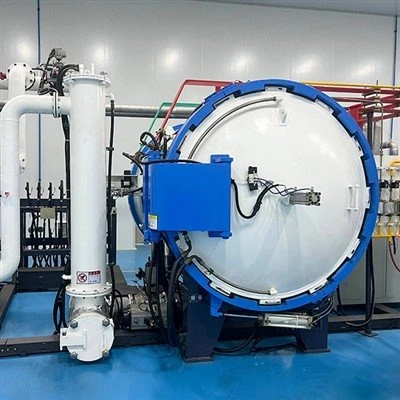
As a professional tempering furnace supplier, I understand the importance of providing our customers with not only high – quality tempering furnaces but also comprehensive technical support. Our furnaces are designed to offer precise temperature control and uniform heat distribution, which are essential for achieving consistent and reproducible tempering results.
Crucible Furnace If you’re looking for a reliable solution for your tempering needs or want to learn more about how to optimize the tempering time for your specific materials and applications, I encourage you to reach out to us. We’ll be more than happy to have a detailed discussion with you and develop a customized tempering solution that meets your requirements.
References
- Boyer, H. E. (Ed.). (1985). Metals Handbook: Properties and Selection: Irons, Steels, and High – Performance Alloys. ASM International.
- Porter, D. A., & Easterling, K. E. (1992). Phase Transformations in Metals and Alloys. Chapman & Hall.
- Reed – Hill, R. E., & Abbaschian, R. (1992). Physical Metallurgy Principles. PWS – Kent Publishing Company.
Danyang Dingfeng Industrial Furnace Co., Ltd.
Danyang Dingfeng Industrial Furnace Co., Ltd. is one of the most experienced tempering furnace manufacturers and suppliers in China, also supports customized service with low price. Please feel free to wholesale high quality tempering furnace made in China here from our factory. For pricelist, contact us now.
Address: Lizhuang Economic Development Zone, Danyang City
E-mail: saleszk@dffurnace.com
WebSite: https://www.dffurnace.com/
