EDI (Electrodeionization) modules are at the heart of modern water purification systems, offering a reliable and efficient way to produce high – purity water. As a leading supplier of EDI modules, I’ve witnessed firsthand how these innovative devices have revolutionized the water treatment industry. In this blog, I’ll delve into the key features of EDI modules that make them an indispensable choice for various applications. EDI Modules
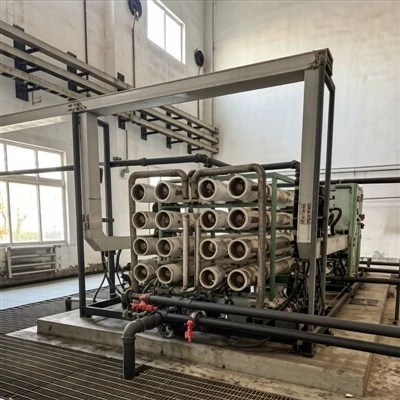
Continuous and Stable Water Purification
One of the most significant features of EDI modules is their ability to provide continuous and stable water purification. Unlike traditional ion – exchange processes that require periodic regeneration with chemicals, EDI modules operate continuously without the need for chemical regeneration. This is achieved by using an electric current to remove ions from the water, which are then continuously flushed out of the system.
The continuous operation of EDI modules results in a consistent quality of purified water. This is crucial for industries such as pharmaceuticals, electronics manufacturing, and power generation, where even minor fluctuations in water quality can have a significant impact on product quality and production processes. For example, in the semiconductor industry, high – purity water is used to clean and rinse silicon wafers. Any impurities in the water can cause defects in the wafers, leading to reduced yields and increased production costs.
High Purity Water Production
EDI modules are capable of producing water with extremely high purity levels. They can effectively remove various ionic impurities, including cations (such as sodium, calcium, and magnesium) and anions (such as chloride, sulfate, and carbonate) from the water. In addition, EDI modules can also remove weakly ionized substances such as carbon dioxide and silica.
The high – purity water produced by EDI modules typically has a resistivity of 15 – 18 MΩ·cm, which meets the strict water quality requirements of many high – tech industries. For instance, in the pharmaceutical industry, high – purity water is used as an ingredient in drug manufacturing, and it must meet the standards set by regulatory agencies such as the United States Pharmacopeia (USP) and the European Pharmacopoeia (EP). EDI modules can consistently produce water that meets these stringent standards.
Energy Efficiency
Another key feature of EDI modules is their energy efficiency. Compared to traditional water purification methods such as distillation or reverse osmosis followed by ion – exchange, EDI modules consume less energy. The energy used in EDI modules is mainly for driving the electric current that facilitates the ion – removal process.
The energy efficiency of EDI modules is due to their unique design. They use a combination of ion – exchange resins and ion – exchange membranes to selectively remove ions from the water. The ion – exchange resins act as ion – carriers, and the electric current helps to regenerate the resins in – situ, eliminating the need for external chemical regeneration. This not only reduces energy consumption but also minimizes the environmental impact associated with chemical waste disposal.
Low Maintenance Requirements
EDI modules are designed to be low – maintenance devices. Since they do not require chemical regeneration, there is no need to handle and store large quantities of chemicals, which reduces the risk of chemical spills and environmental pollution. In addition, the maintenance of EDI modules mainly involves regular inspection and cleaning of the module components.
The long – term stability of EDI modules also contributes to their low maintenance requirements. The ion – exchange membranes and resins used in EDI modules have a long service life, and they can maintain their performance over an extended period. This means that users can expect fewer breakdowns and less frequent replacement of parts, resulting in lower overall maintenance costs.
Compact and Modular Design
EDI modules have a compact and modular design, which makes them easy to install and integrate into existing water treatment systems. The modular design allows users to customize the water purification system according to their specific requirements. For example, multiple EDI modules can be connected in series or parallel to increase the water production capacity.
The compact size of EDI modules also saves valuable floor space in industrial facilities. This is particularly beneficial for industries with limited space, such as laboratories and small – scale manufacturing plants. Moreover, the compact design makes EDI modules easier to transport and install, reducing the installation time and costs.
Environmental Friendly
As more and more industries are becoming environmentally conscious, the environmental – friendliness of EDI modules is a major advantage. Since EDI modules do not use chemicals for regeneration, they produce little to no chemical waste. This reduces the environmental impact associated with water purification processes.
In addition, the energy – efficient operation of EDI modules helps to reduce greenhouse gas emissions. By consuming less energy, EDI modules contribute to the overall energy conservation efforts of industries. This makes EDI modules an ideal choice for industries that are committed to sustainable development.
Compatibility with Reverse Osmosis Systems
EDI modules are often used in conjunction with reverse osmosis (RO) systems. RO systems are used to pre – treat the water by removing the majority of dissolved solids, organics, and microbiological contaminants. The water produced by the RO system is then further purified by the EDI module to achieve the desired high – purity level.
The compatibility between EDI modules and RO systems is excellent. The RO system provides a relatively clean feed water for the EDI module, which prolongs the service life of the EDI module components. And the EDI module can effectively remove the remaining ionic impurities in the RO – treated water, ensuring the production of high – purity water.
Monitoring and Control Capabilities
Modern EDI modules are equipped with advanced monitoring and control capabilities. These features allow users to closely monitor the operating parameters of the EDI module, such as water flow rate, pressure, temperature, and resistivity. By continuously monitoring these parameters, users can detect potential problems early and take appropriate measures to ensure the normal operation of the EDI module.
In addition, many EDI modules can be integrated with a control system, which enables automatic operation and adjustment of the module. For example, the control system can adjust the electric current applied to the EDI module based on the water quality requirements, ensuring the stable production of high – purity water.
High – Quality Materials and Construction
As a supplier of EDI modules, we understand the importance of using high – quality materials and construction in the manufacturing process. Our EDI modules are made of durable and corrosion – resistant materials, such as high – performance ion – exchange membranes and high – quality ion – exchange resins.
The construction of our EDI modules is also carefully designed to ensure reliable operation. The internal structure of the module is optimized to ensure uniform water flow and efficient ion – removal. In addition, our EDI modules are rigorously tested before leaving the factory to ensure that they meet the highest quality standards.

In conclusion, the key features of EDI modules, including continuous and stable water purification, high – purity water production, energy efficiency, low maintenance requirements, compact and modular design, environmental friendliness, compatibility with RO systems, monitoring and control capabilities, and high – quality materials and construction, make them an ideal choice for a wide range of water purification applications.
Membrane Modules If you are looking for a reliable and efficient water purification solution, our EDI modules are the perfect option. We are committed to providing high – quality products and excellent customer service. Whether you are a small laboratory or a large industrial plant, we can offer you the most suitable EDI module according to your specific requirements. Don’t hesitate to contact us for more information and to start the procurement process. We are looking forward to working with you to meet your water purification needs.
References
- "Water Treatment Handbook", Edited by Perry’s Chemical Engineers’ Handbook.
- "Advanced Water Purification Technologies", Published by Desalination Publications.
- Manufacturer’s data sheets and technical documents related to EDI modules.
Shandong Jinzhimo Environmental Protection Technology Co., Ltd.
As one of the most professional EDI modules manufacturers and suppliers in China, we also support customized service. Please feel free to wholesale advanced EDI modules in stock here from our factory. For pricelist, contact us now.
Address: Room 101, Building 9, Shangri-La, Jinlong Road, Zhaoyuan City, Yantai City, Shandong Province
E-mail: zhanglina0778@126.com
WebSite: https://www.sdjzmhb.com/
