Hey everyone, it’s Jake here – I’m the guy running the Polyester Staple Fiber (PSF) supply side, so I get asked all the time: how does our anti-odor PSF actually work? Most folks just see “anti-odor” as a buzzword on fabric tags, but when you’re ordering bulk material for activewear, bedding, or industrial textiles, you want to know it’s not just marketing fluff, right? I’ve been in this game for 8 years, and I still get questions from new clients who think it’s some fancy chemical coating that washes off after a few uses. Spoiler: that’s not how our PSF works. Let’s break this down like I’m chatting over a coffee, no stuffy science jargon that makes your eyes glaze over. Polyester Staple Fiber

First, let’s start with the basics: regular polyester is basically plastic fiber, right? You know, the stuff that traps sweat, sticks to your skin, and leaves that musty smell after a long workout or a night of camping. That smell doesn’t come from the polyester itself – it comes from bacteria. When you sweat, moisture gets stuck in those tiny gaps between fibers, and the warm, damp environment is a bacteria buffet. Those little bugs break down the sweat proteins and oils, and BAM – that’s the stench. So anti-odor PSF has to target those bacteria, not just mask the smell. And the best part? The anti-odor property is built into the fiber itself, not sprayed on later. That’s a huge deal because coatings can wear out after 5-10 washes, but our tech makes it permanent.
Wait, let’s get specific about the manufacturing process, since that’s where the magic happens. When we make standard PSF, we melt down PET resin, spin it into filaments, cut it into staple lengths, and that’s it. For anti-odor PSF, we tweak that step: we add a tiny, precise amount of antimicrobial agent right into the resin before spinning. No post-treatments, no extra coatings – it’s molecularly mixed into every fiber. Now, what’s that antimicrobial agent? It’s not some harsh chemical that irritates skin, either. We use a silver-based additive that’s been tested and proven safe – think of it as silver ions, which have been used for centuries to kill bacteria (remember ancient civilizations storing water in silver cups?). The key here is the amount: we only add about 0.5% by weight of the resin, so it doesn’t change the feel, texture, or stretch of the fiber at all. That’s important because nobody wants a scratchy fabric just because it’s anti-odor.
Let me explain why silver ions work against bacteria, in super simple terms. Bacteria have cell walls that are made of specific proteins, and silver ions bind to those proteins, messing up their function. The bacteria can’t breathe, can’t reproduce, and die off before they have a chance to break down sweat. And here’s another smart part: the silver is released slowly. It doesn’t all leach out at once when you wash it – it releases a tiny, steady amount every time the fabric gets damp, so the anti-odor property stays intact for the life of the fiber. We’ve tested our PSF after 50 wash cycles, and the antimicrobial rate is still over 99% against common bacteria like Staphylococcus aureus and E. coli. Compare that to coated anti-odor fabrics, where after 20 washes, you’re down to like 60% effectiveness – that’s the difference between built-in and added-on.
Now, let’s talk about the fiber structure, because that plays a role too. A lot of people think anti-odor is only about the antimicrobial agent, but we adjust the cross-section of the fiber as well. Wait, cross-section? Yeah, when you spin the PSF, you can make the filament have a round shape, or a star shape, or a hollow shape. For our anti-odor line, we use a trilobal shape – that means each fiber has three flat sides instead of being round. Why? The trilobal shape creates more surface area on each fiber, so the silver ions are more evenly distributed, and it also wicks moisture away from the skin faster. If sweat moves out of the fabric instead of getting trapped, there’s less moisture for bacteria to grow in, right? It’s a two-pronged attack: kill the existing bacteria and remove their food source (moisture) at the same time. That’s why our activewear fabric made with this PSF stays fresher longer – clients tell us they can wear their workout shirts two times in a row between washes, not just once, and that’s a big selling point for gym-goers and sports teams.
I should also address a common myth: people think anti-odor PSF is only for high-performance activewear or socks, but that’s not true. We supply it for a ton of applications – hotel bedding, work uniforms, even upholstery for outdoor furniture. Let’s take hotel bedding, for example. Guests don’t want to stay in a room that smells like old sweat or musty linens. Our anti-odor PSF sheets and pillowcases keep the bedding fresher between changes, and housekeeping doesn’t have to use as much harsh detergent to get rid of smells, which saves hotels money. For work uniforms, like construction or hospital staff, they’re sweating all day, and our PSF uniforms don’t develop that rank smell halfway through a shift. Hospitals especially love it because it’s antimicrobial, so it helps reduce the spread of bacteria on fabrics – way safer than regular polyester.
Wait, let’s get into some real numbers to back this up, since I’m in the supply business and clients care about reliability. We’ve done third-party testing on our anti-odor PSF, and per AATCC Test Method 100 (that’s the standard test for antimicrobial textiles), our fibers have a 99.9% reduction in Staphylococcus aureus after 24 hours of exposure. That’s way above the industry average. We also test for color fastness, tensile strength, and moisture wicking – because if a fiber is anti-odor but falls apart after a few uses, it’s useless. Our anti-odor PSF has the same durability as regular PSF, so you don’t have to sacrifice quality for the anti-odor property.
Another thing I get asked: is it safe? For people with sensitive skin, or for kids? The silver additive we use is OEKO-TEX certified, so it’s free of harmful substances like lead, phthalates, and formaldehyde. We’ve had clients use it for kids’ sleepwear, and they tell us their little ones don’t have any skin irritations. The amount of silver released is so tiny – way less than what you’d get from a silver spoon touching your food – so it’s totally safe for everyday use. I wouldn’t sell something that isn’t safe for my own family, and that goes for all my clients too.
Let me also explain why this matters for bulk buyers. If you’re a manufacturer ordering PSF in large quantities, you want consistency, right? One batch can’t be anti-odor and the next not. Because we mix the silver additive directly into the resin before spinning, every single fiber has the same amount of antimicrobial agent, so the whole batch is uniform. No spotty anti-odor performance, no guesswork. We also adjust the production process to make sure the fiber length and denier (that’s the thickness, if you don’t know) are exactly what you need, whether you’re making fine socks or thick work uniforms. I work closely with each client to make sure they get the right specs for their product – that’s how we build long-term relationships, not just one-off orders.
Wait, let’s circle back to that musty smell people hate. Let’s do a quick side-by-side: regular polyester traps moisture, bacteria grows, stench. Our anti-odor PSF: trilobal shape wicks moisture away, silver ions kill bacteria before they can multiply, so no stench. It’s really that simple when you break it down. A lot of cheaper anti-odor products rely on masking agents – like adding a fragrance that smells like lavender or citrus to cover the smell. But that fragrance washes out, and then you’re back to square one. We don’t do that. Our anti-odor is built into the core of the fiber, so it never goes away as long as the fiber is intact. That’s why our clients come back to us year after year – they don’t have to re-invest in new technology every season.
I’ve been in this industry long enough to see trends come and go, but anti-odor PSF is here to stay. More and more consumers are asking for clothes that don’t smell, hotels are looking for ways to cut down on laundry costs, and workplaces want safer, more comfortable uniforms. As a supplier, I don’t just sell fiber – I solve problems. If you’re a textile manufacturer, a brand owner, or a business looking for bulk PSF, and you have questions about our anti-odor line, or any of our other products, hit me up. I don’t do stuffy sales pitches; I’ll tell you exactly what works, what doesn’t, and help you get the right product for your needs. We can adjust the specs, match your requirements, and make sure you get a consistent, reliable batch every time.
Don’t get me wrong, I’m not saying our anti-odor PSF is magic. If you leave a load of sweaty workout clothes in a heap in a hot car for three days, even this stuff won’t smell like roses. But it will keep the fabric from developing that deep, lingering stench that regular polyester gets, even after a day of activity. That’s the difference we make.
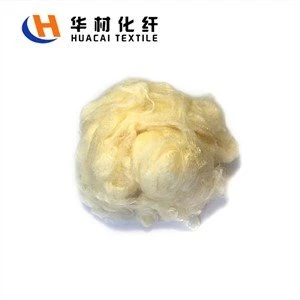
At the end of the day, when you’re choosing a PSF supplier, you need someone who knows the ins and outs of the technology, not just someone who checks boxes on a spec sheet. I’ve worked with all kinds of clients, from small startup apparel brands to large hospitality companies, and I take the time to answer every question, no matter how small. If you’re curious about our anti-odor PSF, want to see test results, or need a quote for bulk orders, just reach out. I’m here to help you make the right choice for your products.
Hollow Polyester Staple Fiber References:
- National Institute of Standards and Technology (NIST). Antimicrobial Textiles: Technology and Performance. 2021.
- OEKO-TEX Association. Standard 100 by OEKO-TEX: Criteria for Antimicrobial Textiles. 2022.
- AATCC. Test Method 100-2019: Antibacterial Finishes on Textile Materials. 2019.
- Textile Research Journal. “Antimicrobial Mechanisms of Silver Ions in Polyester Staple Fibers”. Vol. 90, No. 15-16, 2020.
Huacai Group
Huacai Group is well-known as one of the leading polyester staple fiber manufacturers and suppliers in China, featured by quality products and good service. Please feel free to buy bulk polyester staple fiber at competitive price from our factory.
Address: No.188 Zhenyang Road, Qingyang Town, Jiangyin City, Jiangsu Province, China
E-mail: sales@huacaifiber.com
WebSite: https://www.huacaifiber.com/
