Hey guys, let’s cut to the chase — if you’re running a solar setup, whether it’s a rooftop residential system or a commercial array on a warehouse roof, you’ve probably stared at your inverter’s tiny screen and wondered: is that all I’m missing here? What if I told you your multi function meter could be the unsung hero of your solar panel monitoring setup? As someone who’s been supplying these bad boys to solar installers, maintenance teams, and even hobbyists for the last five years, I get all the questions. Most of the time, the confusion boils down to what a multi function meter actually does vs. what people think solar-specific monitoring needs. Let’s break this down real, no jargon, no fluff. Multi Function Meter

First off, let’s define terms so we’re not talking past each other. A multi function meter (MFM, like we call ‘em in the industry) is a device that measures way more than just voltage or current — it tracks real-time power, energy used, power factor, harmonics, even current imbalance. I see a lot of folks mix them up with basic multimeters or fancy solar monitoring portals, and that’s where the gap lies. Solar-specific monitors, yeah, they track panel-level output and overall system yield, but here’s the thing: most of them only give you the big picture. If you want to catch tiny issues before they blow up your system’s efficiency, or figure out why your solar setup is underperforming on a cloudy day vs. a system glitch, you need granular, multi-dimensional data — and that’s exactly where an MFM shines.
Let’s start with the hard stuff: why would a generic MFM work for solar? Wait, hold on — I’m not saying grab the $20 multimeter from your garage and go. We’re talking industrial-grade multi function meters, the ones we supply that are calibrated for AC and DC loads (critical for solar, which runs on DC panels and converts to AC for grid tie). Let’s get into actual use cases, because that’s where the proof is. For grid-tied solar systems, your MFM sits between the inverter and the grid, right? It tracks how much power your panels are producing (real-time and daily totals), how much you’re feeding back to the utility, and how much you’re pulling from the grid when the sun isn’t shining. That’s core monitoring, right? But wait, there’s more. What if one of your panels is dirty, or a microinverter is misfiring? That might not show up as a big drop in overall output, but it will throw off current imbalance. MFMs measure phase current for three-phase systems, so if one phase is running 10% lower than the others, you can spot that and troubleshoot before it cuts your annual yield by hundreds of kWh. I had a customer last month — a small business owner with a 50-panel setup — who thought his system was broken because his electricity bill stayed high even in summer. We sent a tech to install one of our MFMs, and they found that two of his 20-panel strings had failed diodes, which was bringing down the entire string’s output. The inverter screen only showed total output, not per-string current, so he would have lost thousands over a year before noticing. That’s not an edge case — that’s exactly what MFMs are made for.
Now, what about off-grid solar systems? Way bigger challenge there, because you’re not tied to the grid, so every watt counts. Off-grid setups need to track battery state of charge, charge controller output, and loads all at once. A lot of MFMs we supply have DC inputs, so you can wire them directly to the solar array and the battery bank. I’ve got a hobbyist customer who built a 10kW off-grid setup for his remote cabin. He was using a basic battery monitor before, but it only told him battery voltage. After switching to our MFM, he realized his battery bank was being overcharged on hot days — the charge controller was working, but the MFM’s power factor and temperature sensors caught that the charging current was too high, even though the voltage was in the normal range. He adjusted his charge settings, and his battery lifespan went from projected 5 years to over 8, saving him $2,000 on a replacement. That’s concrete, real value, not just “monitoring data.”
But wait, let’s be honest — there are limits here. No MFM replaces a dedicated panel-level monitor if you need super fine-grained, panel-by-panel data for a large commercial array. For a 1MW solar farm with 10,000 panels, you’d want string-level monitoring to pinpoint a single faulty panel, not just overall array output. But that doesn’t mean MFMs are useless there — they work as the system’s “master monitor” to track total yield, grid interaction, and power quality, which is way more than dedicated panel monitors usually offer. Dedicated solar monitors often only measure AC power from the inverter, not the DC side or power factor, which is huge for utilities that penalize poor power quality. Most utilities require commercial solar systems to have a device that tracks power factor and harmonic distortion, and that’s exactly what an MFM does. So you’re killing two birds with one stone: meeting utility compliance and getting monitoring data.
Another big point people miss: data accessibility. A lot of MFMs these days connect to Wi-Fi or modbus, so you can pull data to your phone or laptop, same as a dedicated solar monitor. Our models sync to cloud platforms, so you can check your solar output, grid feed-in, and power quality from anywhere, not just the inverter’s local screen. I’ve had customers who run vacation rental properties with solar — they use the MFM to make sure the guest’s loads aren’t draining the system at night, and that the panels are producing enough to cover daytime use. No need to pay for a separate monitoring subscription, either — that’s a big cost saver. Most dedicated solar monitors charge a monthly fee for their platform, but our MFMs’ data is accessible for free, either through the built-in app or a simple API if you want to integrate it with your own tools.
Now, let’s talk about the common myths I hear all the time. Myth #1: “MFMs are too generic for solar.” No, they’re standardized for all electrical systems, and solar is just a specific type of electrical load. The only requirement is that your MFM can handle DC voltages up to the maximum your panels produce, and that it has the right current transformers (CTs) for your system size. We supply MFMs pre-calibrated for common solar system voltages (12V, 24V, 48V for off-grid, 240V, 480V for grid-tied), so you don’t have to do any extra work. Myth #2: “Dedicated solar monitors are more accurate.” Wait, let’s test that. A good industrial MFM has a class 0.5 accuracy rating, meaning it’s within 0.5% of the actual value — that’s more accurate than most entry-level solar monitors, which are usually around 2% accuracy. So you’re getting better data, not worse. Myth #3: “You can’t troubleshoot issues with an MFM.” Last quarter, a customer with a commercial 200kW grid-tied system noticed a 15% drop in output one month. The inverter’s monitor said everything was fine, but the MFM showed that power factor was 0.8 instead of the normal 0.98, and that one phase was drawing 20% more current than the others. We had an electrician check the transformer feeding the array, and they found a loose connection that was causing harmonics, dragging down the system efficiency. If he’d only been using his solar monitor, he never would have caught that.
Wait, let’s circle back to my side of this — I’m a multi function meter supplier, so I’m not just shilling my product here. I actually think the best solar monitoring setup is a combination: use a dedicated panel-level monitor for granular panel data, and an MFM for system-level monitoring, power quality checks, and compliance. That’s the sweet spot. But if you’re a small business owner, a residential solar user, or a remote site operator who doesn’t want to pay for extra monitoring gear, an MFM is more than enough. It’s not a replacement, but it’s a way more versatile tool than most people give it credit for.
I’ll wrap this up with some quick takeaways so you don’t have to re-read the whole thing. First, yes, a multi function meter works for solar panel monitoring — but only if you get one designed for industrial electrical use, not a cheap hobbyist model. Second, it’s great for system-level yield, grid interaction, power quality, and troubleshooting hidden issues that dedicated solar monitors miss. Third, it’s more cost-effective than adding a separate monitoring device, especially if you need to meet utility compliance requirements. Fourth, for large commercial solar farms, pair an MFM with string-level monitors for full visibility.
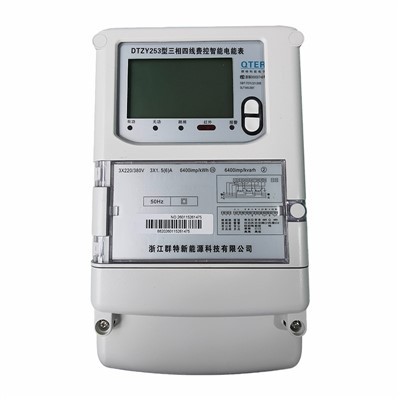
If you’re a solar installer, maintenance tech, or property owner looking to upgrade your monitoring setup, or if you’re not sure if an MFM is right for your system, don’t hesitate to reach out to us. We’ve helped hundreds of customers size and install MFMs for solar, and we can give you a tailored recommendation no matter what your system size is. Whether you’ve got a 10-panel residential setup or a 1MW commercial array, we’ve got the multi function meter that fits your needs.
Prepaid Energy Meter References:
- International Electrotechnical Commission. IEC 62053-21: Electricity metering equipment (a.c.) – Particular requirements – Static meters for active energy (classes 0.2 S and 0.5 S). Geneva, Switzerland: IEC, 2003.
- Solar Energy Industries Association. Best Practices for Solar System Monitoring and Maintenance. Washington, D.C.: SEIA, 2022.
- North American Electric Reliability Corporation. Reliability Standards for Distributed Energy Resources Interconnection. Princeton, N.J.: NERC, 2021.
- Timbus, A., et al. Power Quality Monitoring for Grid-Tied Solar Photovoltaic Systems. IEEE Transactions on Sustainable Energy, vol. 5, no. 4, 2014, pp. 1216-1224.
Zhejiang Qunte New Energy Technology Co., Ltd.
As one of the most professional multi function meter manufacturers in China, we’re featured by quality products and good price. Please rest assured to buy discount multi function meter made in China here from our factory. We also accept customized orders.
Address: No. 56, Fengxi Road, Tang’ao Yu Village, Liushi Town, Yueqing City, Wenzhou City, Zhejiang Province
E-mail: 251951196@qq.com
WebSite: https://www.zjqtmeter.com/
