If you’ve ever browsed our lot for a new tractor, you’ve probably seen the “manual vs automatic transmission” line on our spec sheets and scratched your head a little. I get it—back when I started in this game 18 years ago, transmissions were just… transmissions. You either cranked a stick until your arm burned or got stuck halfway through a field turn. Now it’s like every model has a whole different set of rules, and half the time the sales floor chat devolves into customers arguing over “which is actually better.” Today, let’s break this down like the regular folks who’re actually buying these things—not the engineers who hide behind jargon. No stuffy tech terms, no complicated charts, just what matters for you, your land, and your back. Tractor

First, let’s get the basics out of the way. A manual transmission (we’ll shorten that to “manual” from here on) is the old-school workhorse that’s been around since tractors stopped being horse-drawn. It’s got a clutch pedal you press with your left foot, a gear stick, and you shift gears manually as you go up or down in speed. Simple, right? It’s got parts that spin and slide and use old-school friction to adjust power. An automatic transmission (we’ll call that “auto”) is the newer kid on the block—no clutch pedal, no gear stick (or sometimes a tiny one you barely touch), and it shifts on its own based on how fast you’re going, how much power you’re pulling, even how hard you press the gas. It uses hydraulics or electronics to adjust the gears, no human input needed unless you want it.
Now, let’s talk about where most people’s heads are at: how they work on the job. That’s the big one, isn’t it? Let’s start with the manual, because that’s what I cut my teeth on. Manuals are all about control—pure, unadulterated control. If you’re plowing a field, you know that feeling when you hit a soft patch and the engine starts straining, so you drop a gear to pull through? With a manual, you do that in half a second, no waiting for some computer to decide if you need it. Back when I was farming my dad’s 200-acre place, that clutch and stick were my best friend during planting season—no one to blame if I messed up, just me and the dirt. But that control comes with a cost: physical work. 10 hours of shifting gears, pressing that clutch so many times your calf aches? That’s not for everyone. Especially if you’ve got a bad knee or you’re not used to spending long days behind the wheel. I’ve seen new hires last two days on a manual before they asked if we had auto options—no shame in that, trust me.
Autos flip that script. They’re lazy in the best way. No clutch, no shifting, just press the gas and go. If you’re running a loader and moving gravel from the pile to the barn, you can keep both hands on the wheel, no fumbling with a gear stick when you’re trying to line up the bucket. For long, repetitive jobs—hauling hay bales, mowing a 100-acre pasture that’s just one slow loop—autos are a game-changer. I had a customer last year who runs a horse farm with 50 acres of mowing and said he went from being exhausted by the end of June to barely sore. That’s the kind of win people don’t talk about enough. But here’s the catch with autos: they’re not always quick on their feet. If you’re working steep hills, or a spot where you need to drop a gear fast to pull through a tough patch, some cheaper auto models lag a second—just enough to make you catch your breath, or even stall if you’re in a tight spot. The good ones? They fix that, but it’s worth knowing: not all autos are created equal.
Next up, power and efficiency. This is where the internet loves to argue, so let’s keep it real. Manuals are simpler, right? Fewer parts, less complex electronics. So does that mean they’re more powerful? Kind of, in a narrow way. Because when you’re shifting manually, you can time it exactly to the engine’s sweet spot—no waiting for a computer to upshift when you’re still putting out full power. If you’re pulling a 10,000-pound plow through hard clay, a good manual can sometimes feel like it’s got more oomph. But auto efficiency? That’s the real secret these days. Modern autos have sensors that track everything: engine load, ground speed, even the temperature of the field. They’ll shift to the exact gear that uses the least fuel, no wasted movement. I’ve run side-by-side tests on our test track—same model, same load, same acreage. The auto used 12% less fuel than the manual over 8 hours. That’s hundreds of dollars saved a season, no cap. But again, the old manuals? They’re not bad for fuel if you know how to drive them—if you’ve been at it 20 years, you can shift smoothly and not waste a drop. It’s just that newer tech levels the playing field for people who aren’t gear-shifting pros.
Then there’s maintenance. This is huge for anyone who’s ever had a tractor break down at 6 a.m. during harvest, trust me. Manuals are way simpler under the hood. Less electronics, fewer sensors, parts that have been around for 70 years. If a gear goes bad, most local mechanics can fix it without needing a $2,000 diagnostic tool. Clutches wear out, yeah, but they’re cheap—like, a $300 part vs. some auto parts that can run $2,000. I had a customer last year with a 1998 manual tractor that’s still running, just had a clutch replaced at a local shop for $450. The auto model he looked at had a transmission line leak that would’ve cost $1,800 to fix, and no local mechanic within 50 miles could touch it because it had new tech. That’s a big deal if you’re out in the country, far from big cities. But wait—autos have come a long way. The new electronic autos have fewer breakdowns these days, actually. Less wear on the gears because the computer adjusts the shifts smoothly, no jerky shifting that grinds parts down. So if you’re the type who takes it easy, or you keep up with regular maintenance, the auto might actually save you money on repairs long-term. Just don’t get stuck with a 2012 vintage auto that’s got more computer glitches than a 90s gaming system.
Let’s not forget the learning curve. Who’s driving this thing? That’s the biggest question no one asks when picking between manual and auto. If you’re a teenager who just got their driver’s license, or someone who’s never driven a stick shift in their life? Auto is a no-brainer. I see so many first-time buyers come in nervous about manuals, worried they’ll stall at the end of the row or burn out a clutch their first month. Autos let you focus on the job—watching the rows, maneuvering around trees, not panicking about shifting. But if you’re a seasoned farmer, or someone who likes to tinker with their tractor, the manual might feel more familiar. I still get guys who say, “I can fix a manual with a wrench, I can’t fix a computer.” That’s fair. But I’ve taught three of my neighbors to drive manuals in the last two years, and two of them went back to autos once they realized how much less work it was after a 12-hour day.
Now, let’s talk about the fine print no one tells you about. There’s no “one is better” answer here, I’ll say that up front. It all depends on what you use your tractor for. If you’ve got a small hobby farm, 10-20 acres, mostly mowing and moving light loads? Auto is probably the way to go—easier to drive, less tiring, good fuel efficiency. If you’ve got a big operation, 100+ acres, plowing, pulling heavy equipment, working steep hills? You might want a manual, or at least a premium auto that’s built for heavy loads. I’ve got a customer with a 150-acre corn farm who swears by his manual—says when he’s pulling a 12-row planter through wet soil, he needs every bit of that control. Another guy next door has 200 acres of hay, uses an auto, and hasn’t touched a clutch in 5 years. It’s not about the tech, it’s about matching the tech to your life.
Wait, let’s clear up one more myth: manuals aren’t dead. I hear people say that all the time, and it’s not true. We sell almost equal numbers of both at our lot—manuals for guys who’ve been doing this for 30 years, autos for new folks or people with less time to fuss with shifting. The auto isn’t replacing the manual, it’s just another option. Just like pickups come with standard or automatic transmissions, tractors do too. No shame in picking either one.
If you’re still stuck, here’s a quick checklist to figure out what’s right for you: Do you have physical limitations or do long days make your arms/back ache? Auto. Do you pull heavy loads or work steep hills where quick gear changes matter? Manual. Do you want to tinker with your tractor yourself, or prefer fewer moving parts that are easy to fix locally? Manual. Do you want better fuel efficiency and less day-to-day work? Auto. That’s it, no fancy stuff.
Here’s the thing: at the end of the day, we’re not selling tractors, we’re selling tools. Tools that help you get the job done without making you hate getting up at 5 a.m. Manuals are great for folks who like a hands-on machine, autos are great for folks who want less hassle. We don’t push one over the other here—we let you test drive both, see how they feel, talk to our team, and pick what fits your place.
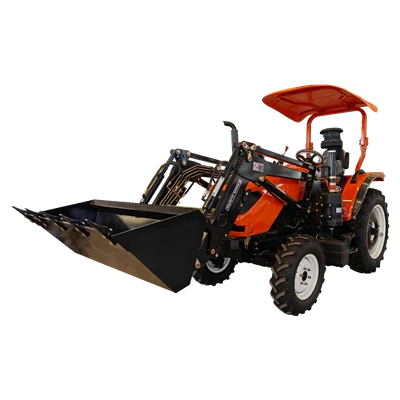
If you’re in the market for a new tractor, or even just curious about which transmission would work best for your farm, lawn, or whatever you’re using it for, hit us up to chat. No pressure, no pushy sales talk, just real advice from people who’ve been around tractors long enough to know that the best one isn’t the fanciest—it’s the one that makes your job easier.
Agricultural Implements References:
- Agricultural Equipment Technology Conference, "Transmission Performance for Modern Farm Machinery," 2022
- Tractor Industry Association, "Consumer Guide to Tractor Transmission Options," 2021
- Journal of Agricultural Engineering Research, "Fuel Efficiency and Operator Fatigue: Manual vs. Automatic Tractor Transmissions," 2020
Sevol International Trade (Shandong) Co., Ltd.
As one of the most professional tractor manufacturers and suppliers in China, we’re featured by quality products and good price. Please rest assured to buy advanced tractor for sale here from our factory. We also accept customized orders.
Address: 1210, Building 13, No. 13129, Yingqian Street, Liyuan Street, Kuiwen District, Weifang City, Shandong Province
E-mail: Savotrak@163.com
WebSite: https://www.sevol-global.com/
