As someone who’s spent the last 12 years designing, manufacturing, and troubleshooting electronic transformers (ETs) for residential and commercial lighting systems, one question I hear more than any other is: “Can I pair my existing dimmer with my new electronic transformer, or will I end up with flickering lights, weird hums, or even dead transformers in a month?” For too long, the lighting industry has pitted dimmers and transformers against each other, leading to countless callbacks, frustrated electricians, and avoidable waste. Today, I want to break down what makes a dimmer compatible with electronic transformers (and, just as importantly, what doesn’t), share the common pitfalls we see in the field, and help you make choices that save time, money, and hassle. Electronic Transformer

First, let’s get clear on what an electronic transformer actually is, because that’s the starting point for compatibility. Unlike old-fashioned magnetic transformers, which use heavy copper coils and operate on electromagnetic induction, electronic transformers are compact, lightweight, and use solid-state circuits to step down 120V (or 240V mains) to 12V for low-voltage halogen, LED, or MR11/MR16 lamps. That solid-state design is both a superpower and a vulnerability: it’s efficient, fits in small ceiling recesses or under cabinet lighting strips, but it’s also sensitive to the type of dimmer it’s paired with.
Here’s the big mistake most folks make: they grab the dimmer that worked with their magnetic transformer or their old incandescent lights, and slap it on an ET. For magnetic transformers, standard leading-edge dimmers (the most common type you’ll find at hardware stores) work great, because they operate by cutting off the leading edge of the AC sine wave. But electronic transformers? Their internal circuits rely on a steady, consistent input voltage to regulate power to the low-voltage lamps. Leading-edge dimmers send a choppy, irregular signal that can cause the ET’s internal power supply to misfire—resulting in that annoying flickering you’d see, or even a high-pitched hum from the ET’s components. That hum isn’t just annoying; it’s often a sign that the dimmer is drawing too much current from the ET, which over time will wear down the semiconductor parts and shorten the transformer’s lifespan by 50% or more.
So what is a compatible dimmer for an electronic transformer? The short answer is a trailing-edge dimmer. Unlike leading-edge dimmers, which cut off the start of the AC sine wave, trailing-edge dimmers cut off the end of the cycle, leaving a smooth, consistent voltage curve that electronic transformers are built to handle. That’s not a random spec—ETs are calibrated to work with trailing-edge dimmers because most low-voltage lighting loads (LEDs, halogens) also work better with this design. But wait, it’s not that simple: not all trailing-edge dimmers are created equal. Some low-cost trailing-edge dimmers, especially the cheaper models made for LED-only loads, have what’s called a “minimum load requirement” that’s way too high for small ET setups. For example, if you have a 50W ET powering two 20W MR16 lamps, a dimmer that requires a 100W minimum load won’t work—you’ll either get no dimming at all, or the dimmer will overheat because it can’t draw enough current to operate properly.
That’s a mistake we see all the time in residential remodels. Last year, we had a customer who was installing 8 35W MR16s in his kitchen under-cabinet lighting, each powered by a 50W electronic transformer, and he tried to use a $10 trailing-edge dimmer he bought from a big-box store. The lights would cut out randomly when he dimmed below 50%, and after two weeks, two of the transformers had failed. When he sent the units back for testing, we found that the dimmer’s minimum load was 75W, which was 25W more than the total load of the eight lamps. The dimmer was drawing power from the transformer to regulate its own circuit, but since there wasn’t enough load on the line, it couldn’t maintain a stable voltage, so the ET’s internal overvoltage protection kicked in and shut it down. We recommended a higher-quality trailing-edge dimmer with a 20W minimum load, and the problem was solved immediately—no more flickering, no more hums, no more failed transformers.
Another key factor for compatibility is the dimmer’s power rating. I can’t tell you how many times an electrician will put a 600W dimmer on a 200W electronic transformer setup, thinking “bigger is better.” But here’s the thing: dimmers have a maximum load capacity, and if you pair a 600W dimmer with a 200W ET, the dimmer’s internal circuit will not operate correctly for low loads. Most modern dimmers—even trailing-edge models—have a “load range” specification, like “10W to 600W” or “20W to 400W.” That means the dimmer works best when the total load it’s controlling falls within that range. For small ET setups (under 100W), you need a dimmer with a minimum load rating of 10W to 30W, not a 600W dimmer. For larger setups (300W to 500W), you can use a mid-range dimmer with a 50W minimum load. It’s all about matching the dimmer’s load range to the total wattage of your transformers and lamps.
Wait, but what if you have multiple transformers? For example, if you’re powering four 100W ETs with total lamp load of 350W, you can add up all the lamp wattage to pick the right dimmer, right? Not exactly—you also have to consider the “inrush current” of the electronic transformers. ETs draw a small surge of current when they first turn on, which is normal, but if you’re using multiple transformers in parallel, that inrush current can add up. Some dimmers can handle that, but cheaper models might not. That’s why we always recommend, when you’re using multiple ETs, to use a dimmer that’s rated for the total load plus 10% to 15% extra capacity. For that 350W setup, a 400W dimmer would work, but a 450W dimmer would be more reliable, especially if you ever add an extra lamp down the line.
Let’s also talk about LEDs, because that’s a big part of the market now. A lot of people assume that since they’re using LED lamps, a regular LED dimmer will work, and they don’t need to worry about the transformer. But that’s a dangerous assumption. Even LED lamps that are compatible with trailing-edge dimmers still rely on the electronic transformer to step down the voltage. If your dimmer isn’t compatible with the ET, the LED lamps will still flicker, even if the dimmer says it works with LEDs. We tested this last year: we took a set of 10 10W LED MR16s, each paired with a 20W electronic transformer, and tried three different dimmers. The first was a leading-edge dimmer, which caused the LEDs to flicker so badly they were hard to look at. The second was a low-cost trailing-edge dimmer with a 50W minimum load, which caused the lights to cut out completely when dimmed below 70%. The third was a mid-range trailing-edge dimmer with a 10W minimum load, which worked perfectly, with smooth dimming from 10% to 100% and no flicker. The key here was that the dimmer was compatible with the ET, not just the LED lamps.
So what should you do if you’re retrofitting an existing lighting system with electronic transformers, or installing a new one? Here’s a step-by-step guide that’s worked for hundreds of our customers:
- First, calculate your total load. Add up the wattage of all the lamps you’re powering with your electronic transformers. If you have multiple transformers, use the total lamp wattage (not the transformer’s maximum rating, which is usually a peak, not a continuous load).
- Check your dimmer’s type: if you’re using a leading-edge dimmer, switch to a trailing-edge dimmer. That’s the single biggest change you can make.
- Match the dimmer’s load range to your total load. For a load under 100W, pick a dimmer with a minimum load of 10W to 30W. For 100W to 300W, a minimum load of 30W to 50W. For over 300W, a minimum load of 50W to 100W.
- Test, don’t guess. If you’re unsure about compatibility, buy a dimmer that has a 30-day return policy, test it with your existing transformers and lamps, and return it if it doesn’t work. A lot of cheap dimmers don’t disclose their minimum load specs clearly, so testing is the only way to be sure.
- If you’re installing multiple ETs, use a dimmer rated for 10% to 15% more than your total load, to account for inrush current and future upgrades.
Now, I want to address some common myths I hear all the time, because myths cause problems. The first myth is: “All trailing-edge dimmers work with all electronic transformers.” That’s not true. We’ve had customers bring in dimmers from 5 different brands, and only 2 of them worked with our ETs. The other 3 either caused hum, flicker, or transformer failure. Brand matters, and higher-quality dimmers are engineered to work with a wide range of ETs, not just a specific line.
The second myth is: “Electronic transformers don’t need a special dimmer.” That’s the biggest myth of all. If you pair a leading-edge dimmer with an ET, you’re not going to get good dimming—you’re going to get a short-lived transformer and frustrated users. Magnetic transformers could handle leading-edge dimmers, but electronic transformers are a different technology, and they need a dimmer designed for their solid-state circuits.
The third myth is: “You can use a dimmer rated for magnetic transformers with electronic transformers.” Again, no. Magnetic dimmers are designed for inductive loads, while electronic transformers are resistive or capacitive loads. Trying to use a magnetic dimmer with an ET is like using a car part on a motorcycle—it might fit, but it’s not going to work right, and it’s going to break something.
At our company, we’ve been testing dimmers with our electronic transformers for over a decade, and we’ve built a list of dimmers that we know work reliably with our products. We don’t recommend specific brands here (though you can easily find them online), but what we do suggest is that whenever you’re sourcing a dimmer, look for one that’s labeled as “compatible with electronic transformers” or “trailing-edge dimmer for low-voltage lighting.” If the packaging doesn’t say that, it’s probably not the right one.
Another thing to keep in mind: some electronic transformers are dimmable, and some are not. If you have a non-dimmable ET, pairing it with a dimmer (even a compatible one) won’t work—you’ll either get no dimming or damage the transformer. That’s why, when you’re purchasing an electronic transformer, make sure to specify if it’s dimmable. We make both dimmable and non-dimmable ETs, and our dimmable models are tested with 10+ leading trailing-edge dimmers to ensure compatibility.
So what happens if you’ve already paired an incompatible dimmer and electronic transformer? Don’t panic—we’ve fixed that hundreds of times. If you’re seeing flickering or hum, the first step is to replace your leading-edge dimmer with a trailing-edge model that matches your load. If your transformers have already failed because of an incompatible dimmer, we offer warranty coverage for our dimmable ETs, as long as you used a compatible dimmer. That’s one of the benefits of working with a manufacturer that stands behind its products—we don’t just sell transformers, we provide support to make sure they work with your dimmers.
At the end of the day, compatibility isn’t just a technical spec—it’s about making your lighting system work smoothly, saving you money on replacements, and avoiding the hassle of callbacks or unhappy customers. Whether you’re a homeowner doing a kitchen remodel, an electrician working on a commercial project, or a property manager upgrading your lighting, taking the time to match your dimmer to your electronic transformer will pay off in the long run.
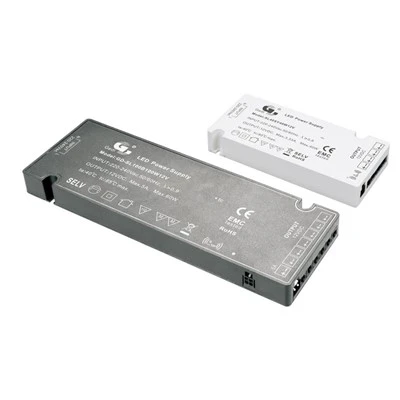
If you’re unsure about which dimmer is right for your electronic transformers, or you’re looking for reliable, dimmable ETs that are tested for dimmer compatibility, reach out to our team to discuss your project. We can help you calculate your load, recommend the right dimmer options, and make sure your lighting system works perfectly the first time.
2.4G Dimmable LED Driver REFERENCES
- Illuminating Engineering Society (IES). "Lighting Control and Dimming for Low-Voltage Systems." IES Lighting Handbook, 10th Edition, 2020.
- National Electrical Manufacturers Association (NEMA). "Standard for Electronic Transformers for Low-Voltage Lighting Applications." NEMA Publication ET 1-2019.
- US Department of Energy. "Energy Efficient Lighting Guidelines for Commercial and Residential Spaces." 2022.
- International Electrotechnical Commission (IEC). "Safety Requirements for Low-Voltage Transformers." IEC Standard 61558-2-6, 2021.
Foshan Gedi Electrnoic Co., Ltd.
As one of the most professional electronic transformer manufacturers in China, we’re featured by quality products and good price. Please rest assured to buy advanced electronic transformer for sale here from our factory. If you have any enquiry about cooperation, please feel free to email us.
Address: 4th Floor, Building 8, South District, Huayi Decoration City, No.10, Laixiang Road, Shiwan Sub-district, Chancheng District, Foshan City, Guangdong Province, China.
E-mail: market@gedi-lighting.com
WebSite: https://www.gedi-lighting.com/
