Hey everyone, welcome back to the LED breakdown, your go-to spot for all things RGB strips and power supplies. Today we’re diving into a question we get every single day from our customers, and honestly, it’s one of the most common, most confusing ones: Can I use a Slim LED Power Supply for my RGB LED strips? Let’s cut to the chase first—yes, you can, but there’s a ton of stuff you need to know before you plug it in, and that’s exactly what we’re here to cover. Slim LED Power Supply
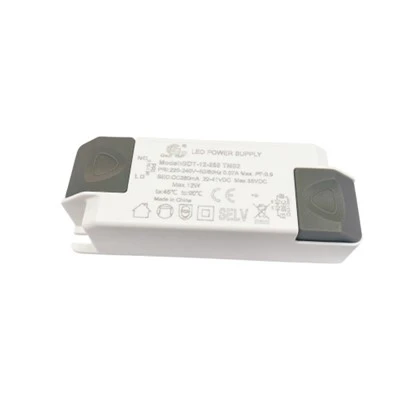
First, let’s get on the same page about what we’re talking about here. For anyone new to the game, RGB LED strips are those flexible, adhesive-backed tape lights that come with red, green, and blue LEDs you can mix to make millions of colors. They’re everywhere—under kitchen cabinets, behind TVs, in gaming setups, even for small retail displays. Now, a Slim LED Power Supply? That’s our bread and butter (since we’re a supplier of these bad boys). They’re called “slim” because they’re way thinner and smaller than the chunky power bricks you might’ve used in the past. Perfect for tight spaces—like if you’re tucking a power supply behind a vanity or inside a desk frame where there’s barely an inch to spare. Most of our slim ones are 12V or 24V, that’s standard for most RGB strips, so that’s a good start.
Wait, but why would you even consider a slim power supply instead of a regular one? Let’s be real—no one wants a bulky brick sticking out under their cabinets. If you’re doing a custom install, every inch counts. Slim power supplies fit right into those tight spots without making your setup look messy. They’re also way lighter than traditional power supplies, so less risk of them pulling free from a shelf or something over time. But here’s the catch: just because it’s slim doesn’t mean it’s the right fit for every RGB strip. So let’s break down the non-negotiables you have to check before you make the call.
First up—voltage matching. This is the #1 mistake people make. RGB LED strips run on either 12V or 24V, period. If your strip is 12V, you can’t use a 24V power supply—way too much voltage will blow out the LEDs instantly, no takebacks. And if your strip is 24V, a 12V supply will make it dim and sad, like a TV with no picture. Our slim power supplies are built to work with both, so that part is easy, but you have to double-check your strip’s label. It’ll say “Input: 12V DC” or “24V DC” right on the packaging or the strip itself. Don’t guess—pull out your phone and snap a pic of that label before you even reach for a power supply. That’s one of our top tips we give every customer who hits us up.
Next, and this is huge: wattage. Wattage is all about how much power your strip needs, and your power supply has to handle that (with a little buffer, trust us). Let’s do a quick math lesson that’s way simpler than high school algebra. RGB LED strips typically use about 1.44 watts per foot for 12V strips, or 4.8 watts per foot for 24V strips. Wait, let’s confirm that: yeah, a standard 5050 RGB strip is ~1.44W/ft at 12V, 2835 is a little less, but don’t get bogged down in the numbers. Let’s say you have a 10-foot 12V RGB strip: that’s 10 x 1.44 = 14.4 watts. So your power supply needs to be at least 15W, but here’s the buffer part: always add 20-25% extra. Why? Because if you ever add another strip later (we know you will—no one stops at one strip), you don’t have to go running for a new power supply. Also, some power supplies lose a little power as heat, so that buffer keeps things running smooth. Our slim power supplies come in sizes from 10W all the way up to 200W, so we’ve got you covered. If your 10ft strip is 14.4W, a 20W slim power supply is perfect. If you’ve got a 30ft strip, that’s 43.2W, so a 50W or 60W slim one is the way to go. Cut corners here, and you’ll get flickering LEDs, dim colors, or even a power supply that overheats and shuts off mid-party.
Then there’s current, but honestly? If you get voltage and wattage right, current will work itself out. Current is just wattage divided by voltage, so if you do the first two, you’re golden. No need to memorize another formula—we’ve already done the math for you when we size our slim power supplies.
Wait, but what about dimming or RGB controllers? A lot of people forget that if you’re using a controller (which you probably are, to change colors), the power supply has to work with the controller’s signal. Most RGB controllers for residential use are 12V or 24V, same as the strips, so as long as you match voltage, you’re good. But if you’re using a high-end smart controller—like Wi-Fi or Bluetooth ones for whole-home automation—double-check that the power supply is compatible with PWM (pulse-width modulation) dimming, which is what 99% of RGB strips use. All our slim power supplies are PWM-compatible, so that’s not an issue here. We built them to work with every common residential controller out there, so you don’t have to worry about weird compatibility issues.
Now, let’s talk about the stuff that makes slim power supplies different from regular ones, because that’s where most people get tripped up. Slim power supplies are designed for indoor use, right? Most of them aren’t weatherproof. So if you’re using your RGB strips outside—like under a patio awning, on a fence, or in a pool cage—you can’t use a standard slim power supply. You need an outdoor-rated one with an IP65 or higher rating, which we also sell, but that’s a separate product. If you stick a non-waterproof slim power supply outside, moisture will get in, it’ll short out, and that’s not just a waste of money—it’s a fire hazard. We always make that clear to customers who ask about outdoor installs, so don’t skip that part.
Another thing: heat dissipation. Slim power supplies are thinner, so they have less space for internal cooling than bulky ones. That means they can overheat faster if you cram them into a tiny, enclosed space with no ventilation. If you’re tucking your slim power supply into a cabinet, make sure there’s at least half an inch of space around it for air to flow. Don’t shove it into a closed box with no gaps—we’ve seen customers do that, and within a few months the power supply dies because it couldn’t cool down. Our slim models have built-in thermal protection, so they’ll shut off automatically if they get too hot, but that’s a temporary fix, not a long-term solution. Give them some breathing room, and they’ll last for years.
Let’s talk about some real-world examples to make this concrete. Let’s say you’re setting up a 15ft RGB strip behind your TV for movie nights. That’s a 12V strip, right? 15ft x 1.44W/ft = 21.6W. Add 25% buffer: 27W. So a 30W slim power supply is perfect. It’s small enough to tuck behind your TV stand, no bulky brick taking up space, works with your existing Bluetooth controller, and will run that strip for years. Another example: a small retail display, like a 20ft 24V RGB strip around a store window. 20ft x 4.8W/ft = 96W. Add 20% buffer: 115W. So a 120W slim power supply is ideal. It’s thin enough to mount to the back of the window frame without sticking out, handles all the power the strip needs, and doesn’t cost an arm and a leg.
Wait, what if someone says, “But I have a 50ft strip, that’s 72W, do I need two slim power supplies?” Yes, actually. Even though our slim power supplies go up to 200W, it’s better to split long strips. RGB strips have a “max run length” because the voltage drops along the strip—if you run a 50ft strip off one power supply, the end of the strip will be dimmer than the start. We usually recommend running strips no longer than 16ft for 12V and 32ft for 24V from a single power supply. So if you have a 50ft strip, you’ll need three power supplies for 12V, or two for 24V. That’s another common mistake—people think a bigger power supply can run a longer strip, but voltage drop is a real thing. Our slim power supplies work perfectly for those split runs, so you don’t have to deal with uneven lighting.
Now, let’s bust some myths we hear all the time. Myth #1: “Slim power supplies are less reliable than bulky ones.” Nah, not anymore. Modern slim power supplies use high-quality components, same as traditional ones. The only difference is the form factor. We test every single one of our slim power supplies for 1000+ hours of continuous use, so they’re just as reliable, if not more, because we don’t waste material on extra bulk. Myth #2: “I can use a lower wattage power supply to save money.” Don’t do it. Running a power supply at 100% capacity all the time shortens its lifespan by half, minimum. That 10W power supply you save $5 on will die in a year, while the properly sized 15W one will last 5+ years. Spend a little more upfront to avoid replacing it later. Myth #3: “All slim power supplies are the same.” Nope. Cheaper slim power supplies from no-name brands might skip the thermal protection or use low-quality wiring. Ours are UL-listed, which means they’ve been tested for safety, so you don’t have to worry about fire risks. That’s a big one—always look for safety certifications when buying a power supply, especially for indoor use.
Wait, what about if you’re using LED strips with individual addressable LEDs? Like WS2812B strips, those ones where each LED can be a different color. Can you use a slim power supply for those? Absolutely, but you have to be extra careful with wattage. Addressable strips use way more power—some can be up to 20W per foot, depending on how many LEDs are on. A 10ft addressable strip might need 200W, so you’ll need a 250W slim power supply, and you’ll still need to split runs because of voltage drop. We sell slim power supplies that work for addressable strips too, just make sure to calculate the total wattage of the entire strip (all LEDs, not just the running ones) before you buy. That’s a super common question from gamers who use addressable strips for PC builds—we get it, those setups need a lot of power, and slim power supplies fit right in under the PC case.
Let’s circle back to the original question: Can I use a Slim LED Power Supply for RGB LED strips? The short answer is yes, 100%—as long as you match the voltage, size the wattage correctly with a buffer, pick one rated for indoor (or outdoor, if that’s your setup), and give it some ventilation. If you skip any of those steps, you’re setting yourself up for issues. But when you get it right, it’s a game-changer. No more bulky bricks ruining your clean install, no more dealing with messy wiring in tight spaces, and your RGB strips will run smoothly for years.
Now, if you’re still not sure what size or type of slim power supply you need, or you have questions about compatibility with your specific RGB strips, controllers, or setup, hit us up. We’re a slim LED power supply supplier, and we’re here to help. We don’t just sell products—we help you pick the right one for your project, no pushy sales, no confusing jargon. Just real, straight-up advice from people who know LED strips inside and out.
When you’re ready to grab a slim power supply, or if you want to ask more questions, get in touch with our team. We’re here to make your RGB setup as easy and stress-free as possible.
Electronic Transformer References
- LED Lighting Manufacturer’s Association. (2022). Voltage and Wattage Guidelines for RGB LED Strips.
- UL Solutions. (2023). Safety Standards for Low-Voltage Power Supplies for LED Applications.
- DIY LED Lighting Collective. (2021). Common Mistakes in RGB Strip Power Supply Installations.
- LEDpro. (2022). Slim Power Supply Performance Testing for Tight-Space Installations.
Foshan Gedi Electrnoic Co., Ltd.
As one of the most professional slim LED power supply manufacturers in China, we’re featured by quality products and good price. Please rest assured to buy advanced slim LED power supply for sale here from our factory. If you have any enquiry about cooperation, please feel free to email us.
Address: 4th Floor, Building 8, South District, Huayi Decoration City, No.10, Laixiang Road, Shiwan Sub-district, Chancheng District, Foshan City, Guangdong Province, China.
E-mail: market@gedi-lighting.com
WebSite: https://www.gedi-lighting.com/
