If you’ve ever stepped into a metal foundry at 2 a.m., the hum of induction furnaces is impossible to miss—low, steady, and as vital to melting metal as a blacksmith’s hammer once was. As someone who’s spent 12 years selling induction furnaces to foundries across North America, I’ve heard more confused questions about core vs. coreless induction furnaces than I can count. New owners often call me at 9 a.m., frazzled, because they thought buying “an induction furnace” meant picking one piece of equipment—no so. The choice between these two isn’t just a technical detail; it can make or break their operating costs, production speed, and even the quality of the steel or aluminum they cast. Today, I’m breaking down the real, workday differences between core and coreless furnaces, straight from the guy who’s installed more of these than I can count. Induction Furnace
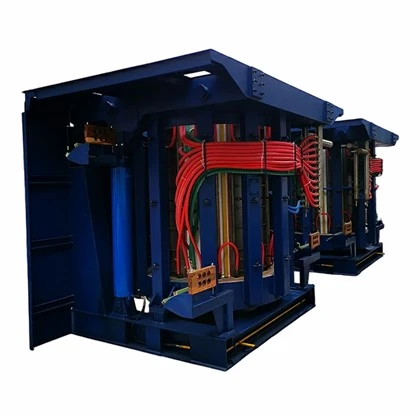
Let’s start with the basics, because skipping this part leads to bad choices. Both induction furnaces use electromagnetic induction to generate heat inside the metal, not from an external flame. Here’s how that works, in simple terms: you run an alternating current through a copper coil around the furnace cavity, which creates a moving magnetic field inside. That field pushes free electrons in the metal (once it’s molten) to move, and the resistance of the metal to that movement generates heat. No burners, no fuel lines, just electricity and metal. The big split comes from what’s inside that coil, and that changes everything for how they perform.
Core induction furnaces have a solid, iron core running straight through the middle of the coil. Think of it as a big, thick iron rod that ties the two ends of the copper coil together, making the magnetic circuit closed. Coreless furnaces, on the other hand, have no core at all—just the coil, and the metal sitting inside it. That one difference is the root of every other contrast, from power draw to what they can melt.
First, let’s talk about power efficiency, because this is non-negotiable for foundries that run 10+ hours a day. Core furnaces are far more efficient when they’re working at consistent, full power. Why? The closed iron core reduces magnetic energy loss—most of the electricity goes directly to heating the metal, not escaping as stray magnetic field. A well-maintained core furnace can hit 95% energy efficiency at full load. Coreless furnaces? They’re usually around 85-90% efficient, even at their best. But here’s the catch: core furnaces hate partial loads. If you only need to melt 100 lbs of steel, and your core furnace is sized for 5,000 lbs, that efficiency drops like a stone. The iron core loses a lot of energy when it’s not surrounded by enough molten metal, and you’ll end up wasting hundreds of dollars in electricity a month. Coreless furnaces are just the opposite—they’re efficient at any load, whether you’re melting 50 lbs of aluminum or 5,000 lbs of brass. That’s why core furnaces often make sense only for foundries that run large, consistent batches, day in and day out.
Next, melt capacity and material type. Core furnaces are workhorses for large-volume, low-to-moderate alloy melting. You’ll see them in places like big steel mills or foundries that make tons of standard carbon steel parts, like engine blocks or construction rebar. Their closed core creates a strong, uniform magnetic field that circulates the molten metal evenly, so you don’t get cold spots. But they’re limited here: core furnaces can only hold so much—most top out around 10 tons, and many smaller core units are hard to find these days, because they’re less flexible. Also, they’re not great for materials that melt at very high temperatures, like some specialty steels or nickel alloys. The iron core can get hot, and if you’re working with metal over 1,800°C, the core starts to degrade faster, shortening its lifespan.
Coreless furnaces? They’re the flex players, which is why we sell more of these to small to mid-sized foundries, job shops, and even custom metal casters. Their capacity ranges from tiny 50 lb units for prototype work all the way up to 50 tons for large production runs. No core means no heat limitation from a metal core, so you can melt high-grade alloys, stainless steel, copper, brass, even precious metals like gold and silver. Job shops that take custom orders—like making a small batch of stainless steel medical parts one week, then aluminum bike components the next—love this flexibility. You just swap the lining (the refractory material that lines the cavity) and switch materials, no core to damage or replace. That’s a huge plus for anyone who doesn’t run the same exact product 24/7.
Wait, let’s talk about linings, because that’s a big part of maintenance costs that most new foundry owners don’t think about. Both furnaces use refractory linings—heat-resistant brick or cast material that lines the cavity holding the metal. But core furnace linings have a unique quirk: the iron core means the lining has to be thick enough to not only hold the molten metal, but also protect the core from heat. Replace a core lining, and you have to inspect the core for damage too, which adds time and cost. Coreless linings? They’re simpler, but they have a shorter lifespan in some cases. Wait, no—let me correct that: coreless linings last longer if you don’t frequently switch materials with very different melting points. But core linings can crack if the power is inconsistent, which happens if a foundry only runs small batches. I had a client last year, a small custom shop, who bought a used core furnace for a steal because he thought he’d save money. Within six months, he had to replace the core lining and repair the core, and the total cost was 30% more than buying a new coreless furnace would’ve been. He called me crying, admitting he didn’t look at the maintenance side beyond the upfront price.
Then there’s startup and shutdown flexibility, which is make-or-break for foundries that can’t afford to let production stop. Core furnaces are terrible here. If you shut a core furnace down, the metal cools, and you have to completely re-melt the entire charge to use it again. The core is too heavy and too sensitive to quick temperature changes—you can’t just reheat a small batch; you have to melt all the metal inside to avoid damaging the core. Coreless furnaces? You can shut them down mid-batch, keep a small amount of molten metal (called a heel) inside, and restart in minutes. That’s a game-changer for job shops that have rush orders or unexpected downtime. If a mold breaks at 3 p.m., you can shut the coreless furnace down, fix the mold, and be melting again by 3:30. With a core furnace, you’d have to let all the metal cool, then reheat it for hours, costing you half a day in lost production. That’s the story of a client I worked with in Detroit—he does custom aluminum parts for the auto industry, and last year he had a rush order for 2,000 parts that needed to be done in 12 hours. His core furnace would’ve taken 8 hours just to reheat, but his coreless unit (which he bought after the first core furnace mistake) let him get the metal ready in 45 minutes, and he made the deadline. That’s when he realized the difference isn’t just technical—it’s about keeping your customers happy.
Wait, let’s address the elephant in the room: cost. Upfront price vs. long-term operating cost. Core furnaces are cheaper to buy initially, especially large ones. A 5-ton core furnace might be $15,000 less than a same-capacity coreless unit. But then you have to factor in electricity costs, maintenance, and downtime. Let’s say a foundry runs 200 days a year, melting 5 tons of steel at a time. The core furnace uses 10% more electricity than the coreless unit, so over a year, that’s $12,000 in extra power bills. Add lining replacements, core repairs, and the occasional downtime for full melts, and that $15,000 upfront savings disappears in a year and a half. For small foundries or custom shops, core furnaces are almost never worth it—their low capacity, inflexibility, and high operating costs eat into profits fast.
But that doesn’t mean core furnaces are obsolete. They still have a place. Big foundries that run 24/7, making identical large batches of steel rebar or engine blocks? Core furnaces are perfect for them. They’re efficient at full load, have a long core lifespan when used consistently, and can handle large volumes without the startup cost of a big coreless unit. I sell both, so I’m not here to push one over the other—just to tell you the truth from someone who installs and services these every day.
Let me wrap this up with a real example, because numbers are useless without context. Last year, I worked with two foundries in Ohio. One is a large steel producer, running 10 tons of carbon steel every day, no variation. They bought two new core furnaces last year, because their old ones were 30 years old and couldn’t keep up with demand. Their energy bills dropped by 12% after installation, and their downtime is down to 1% a year—they never shut them down, just keep melting. The other is a 10-person job shop that does custom stainless steel and aluminum parts, with orders ranging from 50 lbs prototypes to 2-ton batches. They tried a core furnace for six months, struggled with partial load efficiency, high maintenance, and missed two rush orders because they couldn’t restart mid-batch. They upgraded to a coreless unit, and within six months, their profits were up 22%—lower energy costs, no downtime, and they can take any order, big or small.
So, to sum up, the key differences that matter to you are:
- Efficiency: Core = better at full load, worse at partial; Coreless = consistent efficiency at any load.
- Flexibility: Core = large, fixed batches only; Coreless = works for small, custom, or large runs.
- Material Compatibility: Core = best for standard, lower-temperature alloys; Coreless = works for high-grade, specialty metals.
- Maintenance & Downtime: Core = higher risk of damage, can’t restart mid-batch; Coreless = easier maintenance, flexible startup/shutdown.
If you’re sitting here thinking, “Which one is right for me?” let me save you the hours of research I did when I first started in this business. If you run a large, consistent production line making the same product 24/7, core might be your guy. If you’re a job shop, custom caster, or small to mid-sized producer with varying batch sizes or material types, coreless is almost always the better bet.

That said, every foundry is different. I’ve seen core furnaces work great for small operations that only melt large batches, and I’ve seen coreless units struggle when a shop tries to run 100 small batches a day (though that’s usually a sizing issue, not the furnace itself). If you’re tired of guessing, want to cut your energy bills, or stop missing orders because your furnace won’t restart mid-shift, reach out. I’ve been in this industry long enough to know that the right furnace doesn’t have to be the most expensive—it’s the one that fits how you work, not the other way around. Whether you need a small coreless unit for prototypes or a large core furnace for high-volume production, we can help you pick the right size, model, and setup that matches your production needs and budget. No sales pitch, just straight talk about what works and what doesn’t, from someone who’s spent years working side-by-side with foundry teams like yours.
Slab Heating Furnace References:
- Campbell, J. S. (2015). Induction Furnaces: Design, Operation, and Maintenance. Industrial Press.
- Korobov, A. A., & Sokolov, V. I. (2018). Energy Efficiency of Induction Melting Systems. Journal of Industrial Heating Engineering, 42(3), 112-119.
- American Foundry Society. (2020). Induction Melting Guide for Small and Medium Foundries. AFS Press.
Xi’an Aobang Technology Co., Ltd.
As one of the most professional induction furnace manufacturers and suppliers in China, we’re featured by quality products and good price. Welcome to buy durable induction furnace for sale here and get quotation from our factory. Customized orders are welcome.
Address: No.268, Caotan 6th Road, Economical and Technological Development Zone, Xi’an, Shaanxi, China.
E-mail: alicezhang@xaabfurnace.com
WebSite: https://www.xaabfurnace.com/
