If you’ve ever worked in industries like food and beverage, pharmaceutical manufacturing, or medical device production, you know how non-negotiable FDA compliance is. A question I hear weekly from engineers, plant managers, and procurement teams at my company—where we design and manufacture custom sintered metal material and filter elements—is: Are our sintered metal parts compliant with FDA standards? It’s not a trivial question. Cutting corners here can delay production, lead to costly recalls, or even put public safety at risk. Over the past 12 years, I’ve walked hundreds of clients through this exact inquiry, so I’m not here to give a generic, one-size-fits-all answer. Let’s break this down with the kind of practical, on-the-ground context you won’t find in a quick regulatory search. Sintered Metal Material and Filter Element
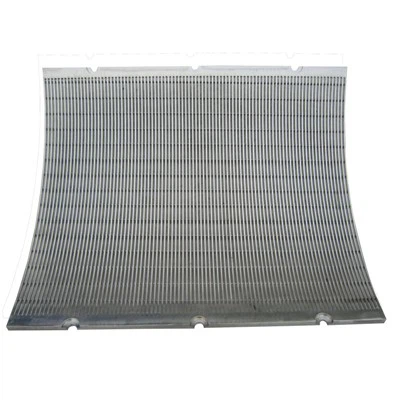
First, I need to clarify what “FDA compliance” actually means when it comes to sintered metals. The FDA doesn’t have a standalone rule titled “Sintered Metal Compliance”—that’s a common misconception. Instead, regulation falls into two core categories: 21 CFR Parts 170–199, which govern food contact substances (FCS), and 21 CFR Parts 862–1299, which cover medical devices. The other key framework is the FDA’s Food Contact Notification (FCN) process or Threshold of Regulation (TOR) exemption, which determines if a material is safe to interact with food or human biological materials. Sintered metals, which are made by compressing metal powder and heating it to fuse the particles without melting the base material, are a mix of raw metal chemistry, porosity level, and surface treatment—all of which dictate whether they meet these rules.
Let’s start with food contact applications, because that’s where we see the most confusion. The FDA has already pre-listed several metals that are approved for FCS use, including 300-series stainless steel (304, 316L), titanium, and certain grades of aluminum. But here’s the catch: the base metal being approved is only the first step. Sintered metal elements have tiny, interconnected pores, and during the sintering process, we use binders (most commonly wax or polymer binders that burn out during heat treatment) and sometimes lubricants to help the powder flow during compression. If those binders aren’t fully removed during the sintering cycle—usually via a two-step process of binder burnout in an inert atmosphere followed by high-temperature sintering—they can leave residual organic compounds that don’t meet FDA migration limits. That’s a mistake we see from lower-cost sintered metal suppliers who cut corners on heat treatment to save time and money. I’ve had a client in craft brewing bring us a batch of cheap sintered metal filter disks they’d bought online that left a faint chemical aftertaste in their beer; when we tested them, the residual binder had migrated into the wort at levels exceeding FDA’s 0.5 parts per billion limit for food contact organic contaminants.
Porosity is another critical factor for food-grade sintered metals. The FDA doesn’t set a formal porosity limit, but it does require that the material doesn’t leach substances at levels that pose a risk. For example, a sintered stainless steel filter used for filtering sugar syrup in a confectionery plant has a much higher porosity (for faster flow) than a sintered element used for filtering infant formula—infant formulas are considered “low acid foods” under FDA 21 CFR 113, which has stricter migration limits. That’s why, when we work with food clients, we first ask for the specific food product they’re working with, the contact time between the sintered element and the product, and the temperature of the process. A sintered element for a cold juice filter is a different material than one for a hot tomato paste filter, even if both use 316L stainless steel.
Now, moving to medical device applications—this is where FDA compliance gets even more stringent, and where our sintered metal parts are most commonly used. Sintered metal elements are ubiquitous in medical devices: think of fluid filters for IV lines, oxygen concentrator components, implantable devices (like vascular stents coated with sintered metal), and surgical instrument parts. For medical devices, compliance falls into two paths: if the sintered element is a component of a Class I or Class II device, it’s usually governed by 21 CFR 820 (Quality System Regulation, or QSR), and if it’s part of an implantable Class III device, it’s subject to pre-market approval (PMA) processes.
A key FDA standard for metals used in medical applications is 21 CFR 878.3150, which covers “metallic surgical implants.” For sintered titanium elements used in orthopedic implants, for example, the FDA requires proof that the titanium is of medical-grade (ASTM F136, not just generic titanium), has no residual toxic metals (like lead or cadmium) from the sintering powder, and passes biocompatibility tests. That means not just our raw powder suppliers are required to provide documentation (COAs) confirming their metal powder meets medical-grade standards, but our own sintering process must be validated to ensure no cross-contamination from equipment used for non-medical materials. Last year, we had a client who switched from a competing sintered metal supplier for their implantable bone graft filters; the competitor was running medical-grade titanium on equipment that also processed lower-grade titanium for industrial filters, leading to trace iron contamination. Our in-process testing caught that, and we were able to provide full documentation for their PMA submission, which cut their approval timeline by three months.
Wait—there’s also a lot of confusion about third-party testing, which is a big part of FDA compliance for sintered metals. The FDA doesn’t test every sintered metal part itself; it relies on manufacturers to validate their own processes and submit test data when required. That means, as a sintered metal supplier, it’s our responsibility to generate the correct test data, not just tell a client our parts are “FDA-compliant.” For example, for food contact parts, we conduct migration testing per FDA’s methods in 21 CFR 175.300, testing with simulants for aqueous, acidic, fatty, and alcoholic foods, at the temperatures the parts will actually be used. For medical parts, we do biocompatibility testing per ISO 10993 (which the FDA recognizes) and extractable/leachable testing in line with USP <85> or USP <1207> standards. I always tell clients: if a sintered metal supplier can’t provide a full test report showing these results, and documentation of their sintering process controls, don’t trust that supplier. We keep all our test records on file for 10 years (per FDA requirements for device manufacturers) and make them available to clients before they even place a bulk order—no hoops to jump through.
A common myth I want to bust right now is that all “stainless steel sintered metal” is automatically FDA-compliant. That’s simply not true. We’ve seen suppliers use 400-series stainless steel for food or medical parts, which contains higher levels of chromium but also has higher levels of carbon and other impurities that can leach over time. 400-series is fine for industrial filtration (like water well pre-filters), but it’s not approved for food or medical use because it fails migration tests for toxic metals. Another mistake is surface treatment: sometimes suppliers will electroplate sintered metal to improve corrosion resistance, but that plating can peel or flake in use, introducing foreign particles into food or medical fluids. We offer two FDA-accepted surface treatments for our sintered elements: electropolishing, which smoothes the pore walls to reduce particle shedding and improve corrosion resistance, and passivation, which removes free iron from the metal surface to prevent rust. We never use electroplating for any parts destined for FDA-regulated applications.
What about exceptions? Are there any sintered metal elements that aren’t FDA-compliant, even if they use approved raw materials? Absolutely. For example, if a sintered metal element is coated with a polymer that hasn’t been cleared by the FDA, that coating can violate FCS or medical device standards. Or, if the sintered part is used in an application that involves contact with pharmaceuticals intended for injection (which have zero tolerance for particulate matter), we have to add a final validation step to confirm the parts don’t shed particles larger than 0.2 microns, the standard for injectable drugs. That’s a step we don’t always take for food-grade parts, so it’s important to specify your end application when you’re working with a supplier.
Over the years, we’ve also worked with clients who thought they could “self-certify” sintered metal parts without involving a supplier that has regulatory expertise. That rarely works. Last year, a small pharmaceutical startup tried to source sintered metal filters on their own from an overseas supplier; they saved 20% on the parts, but when they went to submit their IND (Investigational New Drug) application to the FDA, the agency rejected their submission because the supplier couldn’t provide traceability for the metal powder or migration test data. They ended up switching to us, and we helped them compile all the required documentation, but the delay cost them six months of clinical trials. That’s the kind of avoidable mistake that makes our role as a sintered metal supplier more than just selling parts—it’s guiding clients through the red tape to make sure their process is compliant from start to finish.
Now, let’s talk about how to actually confirm if a sintered metal element is FDA-compliant for your use. It boils down to four steps: first, define your application clearly—what product is the sintered part contacting, what’s the temperature, pressure, and contact time? Second, ask your supplier for: 1) raw material COAs confirming the metal grade (e.g., 316L SS meets ASTM A240 or F136 for medical), 2) sintering process documentation (including binder burnout and heat treatment cycles), 3) third-party migration/biocompatibility test data, and 4) traceability records (so you can track every batch of metal powder from the raw material to the final part). Third, confirm that the supplier’s quality system is registered to ISO 9001 (and, for medical parts, ISO 13485, which the FDA recognizes as equivalent to QSR). Fourth, if you have unique application requirements, like contact with highly acidic food or implant use, ask the supplier to run a custom test to validate compliance for your specific case.
At our company, we don’t just manufacture sintered metal material and filter elements—we provide regulatory support as part of every order. For example, a craft distiller we work with recently needed sintered copper filters for their new single malt whiskey line; copper is actually approved for food contact under FDA 21 CFR 182.50, but they were worried about copper leaching into their high-proof whiskey. We ran migration tests specifically for 95% ABV ethanol (the simulant for high-proof alcohol per FDA standards) and confirmed that copper levels were well below the 1 ppm limit, so we were able to supply the filters with a full test report the distiller could share with state alcohol regulators.
For medical device clients, we even have a regulatory specialist on staff who works directly with their quality teams to align our documentation with FDA PMA or 510(k) requirements. Last year, a client making a portable dialysis machine asked us to develop custom sintered titanium fluid chambers; our specialist helped them write a cross-reference of our test data to the FDA’s requirements for medical device components, which made their 510(k) submission go through without additional requests for information.
The bottom line is this: sintered metal elements can absolutely be FDA-compliant for food, beverage, and medical applications, but only if they’re manufactured with careful control over raw materials, sintering processes, and testing. There’s no shortcut to compliance, and choosing a supplier that cuts corners on heat treatment, raw material traceability, or testing will only lead to problems down the line. If you’re working on a project that requires FDA compliance for sintered metal parts, don’t rely on generic claims—ask for the documentation, ask about their process controls, and work with a supplier that has experience navigating FDA regulations for sintered materials.

If you have questions about FDA compliance for your sintered metal element project, or want to discuss custom parts and validation testing, our team is here to work with you through every step. We can share sample test reports, process documentation, or help you define the right sintered metal material and specifications for your application.
Sintered Metal Powder Filter References:
- U.S. Food and Drug Administration. (2023). Food Contact Substances: Regulations Under 21 CFR Parts 170-199.
- U.S. Food and Drug Administration. (2022). Medical Device Quality Systems Regulation (21 CFR Part 820).
- American Society for Testing and Materials. (2021). Standard Specification for Wrought Austenitic Stainless Steel Plates, Sheets, and Strips (ASTM A240).
- International Organization for Standardization. (2019). Biological Evaluation of Medical Devices (ISO 10993 Series).
- U.S. Food and Drug Administration. (2020). Extractables and Leachables in Pharmaceutical Products: Guidance for Industry.
Henan Easy Filter Equipment Co., Ltd.
As one of the leading sintered metal material and filter element manufacturers and suppliers in China, we offer a wide range of products with superior quality. Please rest assured to buy advanced sintered metal material and filter element from our factory. We also accept customized orders.
Address: Apartment No.1, Building No.2, Zhengshang Jinyushijia, Xinzhong Street, Xinxiang, Henan, China.
E-mail: vivian@easyfiltertech.com
WebSite: https://www.easyfilter-china.com/
