As a pipe induction heating production line supplier, I’ve spent nearly 15 years on the factory floor—helping customers get lines up and running, and fixing the slip-ups that come with cutting corners on safety. Last month, I visited a small steel fabricator that almost had a disaster: their line’s induction coil had been leaking coolant unnoticed for three days, and a spot welder standing nearby nearly got a 480-volt jolt that could’ve been fatal. That’s not a “oops” story; it’s the kind of mistake that turns a profitable shift into a tragedy. If you’re operating a pipe induction heating line, safety isn’t just a checklist item—it’s the backbone of keeping your team, your equipment, and your business running. Let’s break down what actually works, not the generic stuff you’ll find on OSHA’s one-page sheets. Pipe Induction Heating Production Line
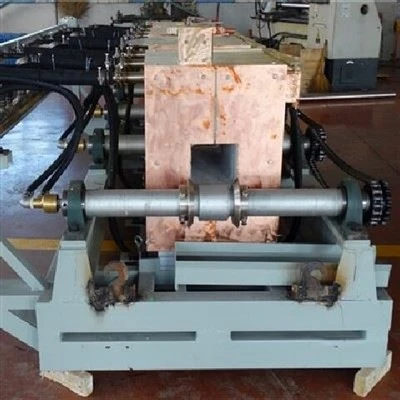
First, let’s ground this in how your line works, because safety can’t be one-size-fits-all. A pipe induction heating line uses high-frequency electromagnetic coils to heat steel pipes (whether for bending, welding, or heat treatment) without direct flame. That means the hazards are specific: high-voltage electricity, hot metal, flammable cutting fluids, and even EMI that can mess with pacemakers or other electronics. I’ve seen 20-year veterans dismiss EMI risks because “it’s just a little buzz” only to have a maintenance tech’s pacemaker reset mid-check—luckily, he was OK, but that’s a wake-up call. Safety here has to start with knowing your line’s unique vulnerabilities, not just guessing.
Let’s start with the foundational stuff: lockout/tagout (LOTO) that actually gets followed, not just taped to a breaker box. I’ve worked with dozens of customers who post LOTO procedures but let line operators bypass them “to save time” during a rush order. Last year, a midwest pipe shop did that: an operator didn’t lock out the induction unit while replacing a coil, and when a coworker flipped the breaker to test a downstream conveyor, the coil arced and burned through his arm. That’s avoidable. Our line’s LOTO system includes a secondary interlock: you can’t start the induction cycle unless the maintenance panel’s lockout has been logged into the line’s HMI (human-machine interface). But even that’s only as good as your training. We don’t just hand operators a 10-page manual and call it training—our hands-on sessions include “simulated mistakes”: we set up a fake unlocked coil and a “coworker” (one of our trainers) pretending to flip the breaker, and we watch how the team responds. Most of the time, they panic—so we drill that LOTO isn’t just for shutdowns, but for every time you reach inside the line, even “just to adjust a guide roller.”
Next, high-voltage safety, because induction heating lines run on 480 to 600 volts—way more than the 120 volts in your wall outlet. I can’t tell you how many times I’ve seen operators standing on concrete floors (which aren’t insulated when wet, especially from coolant leaks) while adjusting the coil. The biggest myth here is that “induction current only flows through metal, so it can’t hurt me” — wrong. The high-frequency field can induce current in your body, and even a small leak can cause ventricular fibrillation. Our lines come with integrated ground-fault circuit interrupters (GFCIs) that cut power in 2 milliseconds, but we always emphasize personal protective equipment (PPE) that’s non-negotiable: rubber-insulated gloves rated for 1,000 volts, safety shoes with dielectric soles, and face shields with anti-fog coating (hot metal sparks are the second most common injury on these lines, after electrical shocks). We also recommend a “buddy system” for any work inside the control panel—no one should be working alone on high-voltage parts. I once had a customer whose electrician tried to troubleshoot a capacitor bank alone; he passed out, and his coworker found him with seconds to spare. That’s a story we tell every new customer—no exceptions.
Then there’s hot pipe safety, which is trickier than it sounds because induction heating is fast. A 6-inch steel pipe can hit 1,000 degrees Fahrenheit in 10 seconds, so by the time an operator sees steam, it’s already too hot. The problem here is that a lot of lines use unguarded exit chutes for hot pipes, which is how burns happen. Our production lines include insulated exit chutes with sensor-activated safety gates—if a pipe isn’t fully cooled before it exits, the gate locks open, and the line shuts down until a sensor confirms it’s at a safe temperature (below 120 degrees, per OSHA guidelines for hot surface contact). But we also teach operators to never reach for a pipe with bare hands, even if it “looks cool” — some grades of steel don’t show visible glow until they’re way hotter than 500 degrees. I once worked with a fabricator that lost a finger because they grabbed a pipe they thought was cool after a heat treatment cycle; the pipe was 700 degrees, and the gloves they were wearing were thin and had a hole from a previous shift. PPE isn’t disposable—inspect gloves every shift, even if they look fine.
Flammable fluids and fumes are another hidden hazard. Most pipe induction lines use water-glycol coolant for the coils, and sometimes mineral oil for transformer cooling. If that coolant leaks onto hot metal, it can flash into steam, or if it’s left on electrical parts, it can cause a short. Last year, a customer’s line had a cracked coolant line; they didn’t notice it until the coolant seeped into the control cabinet, causing a fire that destroyed $200,000 worth of equipment. To prevent that, our lines have a low-level coolant alarm that triggers a line shutdown, and leak detection sensors under every coolant line and control cabinet. We also recommend weekly visual checks for leaks—don’t rely just on alarms. And for the fumes from the heating process (especially if you’re heating steel with coatings or alloys), make sure your line has a local exhaust ventilation (LEV) system right at the coil. I’ve seen shops skip this because “it’s just fumes”—but repeated exposure to zinc or chromium fumes from coated pipes causes long-term lung damage, even if you can’t smell it. The LEV doesn’t have to be fancy; we offer budget-friendly vent systems that attach directly to our lines, and we test them during installation to make sure they capture 95% of fumes at the source.
EMI (electromagnetic interference) is the final hazard that’s easy to overlook, especially for small shops. Induction heating coils emit strong EMFs that can interfere with pacemakers, smartphones, and even the line’s own sensors. That’s why we mark a 5-foot exclusion zone around the entire line—no one with a pacemaker is allowed in that zone without a doctor’s note, and no personal devices (like cell phones or smartwatches) are allowed near the coils. I know that sounds strict, but it’s saved lives. A few years back, a shop worker with an unregulated pacemaker stepped into the exclusion zone to grab a tool, and his pacemaker reset; he fell, hit his head, and needed 10 stitches. We now include portable EMI meters with every line, so you can test the zone yourself after installation—EMF levels can shift if you add new coils or move the line, so don’t just rely on the initial factory setting.
Now, let’s talk about line maintenance, because even the best safety protocols fall apart if equipment is neglected. A lot of customers wait until a coil breaks to replace it, but a worn coil can cause current leaks, uneven heating, and safety risks. We recommend a monthly maintenance schedule: check all electrical connections for tightness, test GFCIs and interlocks, inspect coolant lines for cracks, and clean the induction coils from metal buildup (that buildup can cause arcing and fires, which are a big risk in these lines). We also offer annual safety audits for our customers—we send a technician to your shop, walk through your line, point out hazards you might have missed, and update your safety protocols to match your line’s age and usage. I’ve had customers tell me “we’ve been running this line for 10 years without a problem” but then we find loose transformer connections that could’ve caused a major fire within a month. It’s not about scaring you—it’s about keeping your team safe.
Wait, I need to address something I see all the time: cutting corners on training. A lot of shops pull a guy from the warehouse, give him a 2-hour tour, and call him an operator. Induction heating isn’t a conveyor line—you have to understand how the coil works, how to spot a leak, and what to do if the line shuts down unexpectedly. Our training program is 3 days: 2 days of hands-on work on a test line, 1 day of safety drills. We simulate power outages, coolant leaks, and EMI events so operators know exactly what to do, not just what a manual says. I remember a customer whose line lost power mid-cycle last winter; their new operator panicked and tried to open the coil while the voltage was still residual, which could’ve given him a shock. If he’d gone through our training, he would’ve known to wait 10 minutes for capacitors to discharge, then log a lockout. That’s the difference between a routine event and a disaster.
Also, emergency preparedness—you can’t have too many fire extinguishers. Our lines run on electricity and hot metal, so Class C (electrical) and Class D (combustible metal) extinguishers are mandatory; regular water extinguishers can make electrical fires worse, and Class A extinguishers don’t work on hot metal. We install fire extinguisher mounts at every exit of the line, and we require quarterly fire drills for your team—don’t just do a drill once a year. Last year, a shop had a small coil arcing fire; their team didn’t have a Class C extinguisher nearby, and they tried to use a water hose, which spread the fire to the control cabinet. That’s a preventable mistake.
Let’s wrap this up with what I’ve learned from 15 years in this business: safety isn’t a box to check at the end of a shift. It’s the habit of locking out the breaker before adjusting a coil, the weekly check for coolant leaks, the extra 10 minutes of training for a new operator, and the fire extinguisher that’s never out of reach. If you’re running a pipe induction heating line, you’re moving heavy pipe, working with high voltage, and handling hot metal—small mistakes have big consequences.
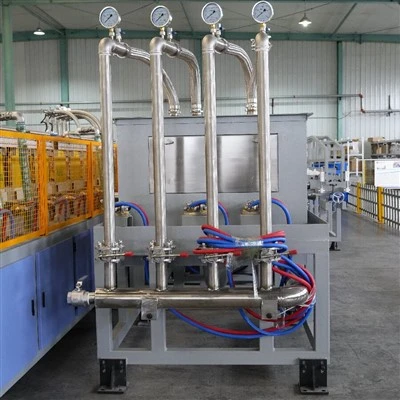
If you’re in the market for a new line, or you want to upgrade your current line’s safety features, I can help. We design each production line with safety built in, not as an afterthought, and our team has helped hundreds of shops reduce safety incidents by 90% after implementing our recommendations. Don’t wait for a near-miss to make changes—reach out to start a conversation about your pipe induction heating production line’s safety needs.
Steel Plate Induction Heating Production Line References
- OSHA. (2023). Electrical Safety in the Workplace. U.S. Department of Labor.
- American National Standards Institute (ANSI). (2022). Safety Standard for Induction Heating Equipment. ANSI Standard C95.1.
- National Fire Protection Association (NFPA). (2022). Standard for Fire Protection in Industrial Occupancies. NFPA 1.
- Center for Devices and Radiological Health (CDRH). (2021). Electromagnetic Compatibility Guidelines for Industrial Equipment. U.S. Food and Drug Administration.
- Steel Manufacturers Association (SMA). (2023). Best Practices for Pipe Heat Treatment Safety. SMA Technical Bulletin 17.
Hebei Yuantuo Electromechanical Equipment Manufacturing Co., Ltd.
As one of the most professional manufacturers and suppliers of pipe induction heating production line in China, our products have good reputation in the market. Please rest assured to buy advanced equipment made in China here and get quotation from our factory. Customized orders are welcome.
Address: Yanshan Street West and Jialingjiang Road North, Economic and Technological Development Zone, Wuqiao County, Cangzhou City, Hebei Province, China
E-mail: yuantuotech01@gmail.com
WebSite: https://www.yuantuoem.com/
