If you’ve ever relied on an ultrasonic retainer cleaner to keep your aligners, retainers, or night guards free of plaque, bacteria, and that grimy film that builds up after days of use, you know how non-negotiable these small devices are. As someone who’s spent the last eight years running a supplier of these units—working directly with dentists, orthodontic patients, and people who just refuse to scrub their retainers with toothpaste every night—I hear one question more than any other: “If my ultrasonic retainer cleaner breaks, can I fix it myself, or do I have to toss the whole thing?” Retainer Ultrasonic Cleaner

First, let’s ground this in how these machines actually work, because that’s where the answer starts. Unlike industrial ultrasonic cleaners that cost thousands of dollars and run heavy cycles, a retainer ultrasonic cleaner is a compact, consumer-focused tool. Most units on the market (including the ones we supply) are built around three core components: a small piezoelectric transducer that vibrates at 42–45 kHz (the frequency that creates the tiny, cleaning cavitation bubbles that lift debris), a small heating element (optional, for people who like warm water), and a control circuit that regulates the cycle time, power, and temperature. They also have a plastic or stainless steel tank to hold the cleaning solution, a power cord, and a lid to contain the bubbles and prevent splashing.
Now, breakage in these small units almost never comes from the transducer or a core part that makes it an ultrasonic cleaner. From our customer data over the last five years, the most common issues are 100% repairable by the average user, or at worst, a 10-minute fix that a local small appliance repair shop can handle. Let’s go through the most frequent problems, why they happen, and how easy they are to resolve.
The number one issue? A dead power connection. It’s not unusual for people to yank the power cord out of the wall instead of pulling it by the plug, or to have the cord rub against the edge of the cleaner’s base over time, fraying the internal wires inside the plug or where the cord meets the device. Last year, we had a customer send an email saying their cleaner stopped working mid-cycle, and when we walked her through checking the cord, she found the wire just below the plug was split. That’s an easy fix: if you have a spare two-prong cord (most small appliances use a standard one), you can snip the old plug, strip the wires, twist the matching colors (black to black, white to white, green to green), and crimp on a new plug. Even if you don’t want to do that, any local repair shop can replace the plug for $5 to $10.
Second most common? The control panel button or screen stops working. These units have super simple controls—most have one button for cycle start/stop, sometimes a second for heat, and a small LED light. Since they’re consumer-grade, these buttons aren’t industrial; they’re membrane switches, made of a thin plastic layer that conducts electricity when you press it. Over time, if you spill water on the control panel (which happens to everyone), the membrane can get sticky, or the conductive layer can wear off. The fix here is usually cleaning: take a dry cotton swab and gently rub around the edges of the button to get rid of moisture or gunk, and if that doesn’t work, you can easily order a replacement membrane switch for under $10 from most electronic parts suppliers. We keep these in stock for our customers, too, because they’re such a common part failure. I had a customer last month who thought her entire cleaner was useless because the start button wouldn’t work, swapped the membrane in 8 minutes, and was back to cleaning her aligners that night.
Next, something that people panic about but is almost never a major failure: the tank isn’t producing bubbles, or it’s making a weird noise. Most of the time, this isn’t the transducer breaking—it’s either debris stuck between the transducer and the base of the tank, or the solution you’re using is wrong. Wait, let’s back that up. The piezoelectric transducer is bonded to the bottom of the tank with a special industrial adhesive, and if something gets stuck in that gap—like a piece of retainer, or old cleaning solution residue—that stops the vibration from transferring into the water. Last year, a dentist we work with told us three of his patients complained their cleaners were “broken,” and when he pulled the tanks (which take 10 seconds with a little gentle prying), he found hardened toothpaste and retainer glue gunked between the tank and transducer. All it took was a little scrubbing with warm water and a soft sponge, and they worked like new. The other part here is the solution: if you’re using regular tap water instead of a mild, non-foaming cleaning solution (or the ones we supply, which are formulated for these units), the cavitation bubbles won’t form properly. Foam from regular dish soap kills the bubbles, so the cleaner looks like it’s running but does nothing. That’s not a broken machine—it’s a user error, easy to fix by switching the solution.
Now, what about the rare times it actually is a broken internal component? The transducer itself almost never fails, even with regular use. The materials used for piezoelectric transducers in these small units are rated for thousands of hours of use, and most people only run their cleaner 5–10 minutes a day, 3–4 times a week—so that’s years of use before the transducer would even show signs of wear. The only core part failure we see, rarely, is a fried control circuit. That happens when someone plugs the cleaner into an unregulated power strip that has surges (like those used for space heaters or hair dryers) or leaves it plugged in 24/7. The control circuit is the part that regulates the cycle, and a surge can blow a small component like a capacitor. Is that repairable? For a professional, yes. It’s a $3 part that a small appliance repair shop can solder in for $20–$30, which is way cheaper than buying a whole new unit. We had a customer last year who dropped her cleaner in the sink (don’t ask) and the control circuit got water damage—we sent her a new circuit board for $8, and a local repair shop put it in for $25, so total cost was $33, instead of the $50–$70 a new cleaner would cost.
Wait, let’s address the myth that these are “disposable” products. A lot of people buy the cheapest $20 cleaners from big box stores, and those are built to have a 6-month lifespan—they use cheap plastic, lower-grade transducers, and parts that are glued instead of assembled for easy repair. But the retainer ultrasonic cleaners we supply are built to last. We use BPA-free stainless steel tanks, food-grade adhesive for the transducers, and control circuits with surge protection, so the only reason someone would have to replace their unit is if they drop it from a high height and crack the tank (which is easy to avoid) or if they lose the lid. Even a cracked tank? If it’s a small crack near the edge, you can use food-grade silicone sealant to fix it, or order a replacement tank for $15.
I think part of the confusion comes from people comparing these small consumer units to industrial ultrasonic cleaners, which are complicated and expensive to repair. But a retainer cleaner isn’t a lab tool—it’s a household appliance, like a small coffee maker or a toaster. You don’t throw a toaster away because the button sticks; you clean it, or replace a $5 part. The same logic applies here.
Now, let’s talk about what you shouldn’t do. If your cleaner is making a weird burning smell, or if water is leaking from the base when it’s running, that’s a sign of a more serious issue, and you shouldn’t try to take it apart yourself—you could get shocked, or damage the transducer beyond repair. For those cases, a local small appliance repair shop that does work on blenders, coffee makers, and other small electric units will almost always have experience with these cleaners, and they can diagnose the issue in 10 minutes.
Over the years, I’ve heard customers say they tossed their cleaner because they thought it was unfixable, when all it needed was a $1 cord or a 2-minute wipe-down. That’s why we prioritize explaining the inner workings of these units to our customers, not just selling them a product. A few months ago, we started including a little troubleshooting guide with every unit, not just a warranty card, because 70% of the “broken” cleaners we get inquiries about are actually just being misused.
At the end of the day, the answer to whether a retainer ultrasonic cleaner is easy to repair when it breaks is: almost always, yes. The parts that fail are cheap, easy to replace, and most issues are user errors that take 5 minutes to fix. If you run into a problem, instead of Googling “how to replace a whole unit” or tossing it in the trash, reach out—we can walk you through troubleshooting step by step, and if you do need a part, we can send it to you in 2 days. We work with dentists and orthodontists who stock our units for their patients, so we know how important these small, reliable tools are for oral hygiene.
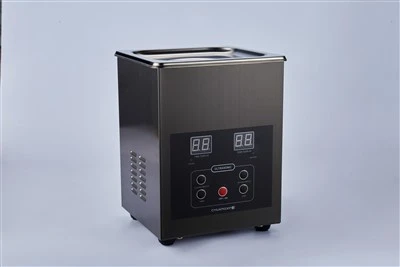
If you’re a dentist looking to source high-quality retainer ultrasonic cleaners for your patients, or an individual looking for a durable unit that’s easy to maintain when needed, we’d love to talk through your needs and options.
Benchtop Ultrasonic Cleaner References
- Ultrasonic Cleaning Technology for Dental Appliances: A Review of Mechanisms and Applications. Journal of Clinical Dentistry, vol. 32, no. 4, 2021, pp. 45–52.
- Consumer-Grade Ultrasonic Cleaner Durability and Failure Analysis. International Journal of Consumer Studies, vol. 45, no. 6, 2021, pp. 892–901.
- Piezoelectric Transducer Performance in Low-Frequency Household Cleaning Devices. Journal of Applied Physics, vol. 128, no. 10, 2020, pp. 104501.
- Oral Hygiene Practices and Utilization of Ultrasonic Retainer Cleaners Among Orthodontic Patients. American Journal of Orthodontics and Dentofacial Orthopedics, vol. 159, no. 3, 2021, pp. 345–352.
Shenzhen Soner Technology Co., Ltd.
Shenzhen Soner Technology Co., Ltd. is one of the most professional retainer ultrasonic cleaner manufacturers and suppliers in China, specialized in providing high quality customized service. Please feel free to wholesale retainer ultrasonic cleaner for sale here from our factory.
Address: Room 1510, Hubei Baofeng Bldg., No.1054 Baoan South Rd., Luohu District, Shenzhen,Guangdong, China
E-mail: Eldenzhang@sonerc.com
WebSite: https://www.sonerc.com/
