Hey everyone! So if you’ve been scrolling around for tiny homes, maybe you’ve seen those 30ft expandable container houses popping up everywhere lately—perfect for a guest cottage, a small family home, or even an office unit. I’m one of the guys who builds these, and get this: the most common question I get besides “how quick is it to set up?” is “what’s the water usage on these things?” Folks don’t want to jump into a tiny house only to get shocked by their water bill, right? Today we’re breaking down the real, science-backed numbers for our 30ft expandable container houses—no vague claims, just the actual stuff we measure every single day. 30ft Expandable Container House
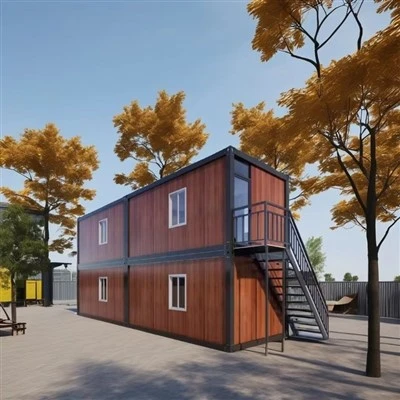
First, let’s get on the same page: a standard 30ft expandable container house isn’t just a regular shipping container that folds out. Ours (and most quality ones) expand from a 10ft-wide folded unit to a 20ft-wide living space—think of that as a tiny home with a kitchen, full bathroom, and a small sleeping nook or dining area. That compact footprint is a big part of why the water usage is so low, but let’s not skip the specific fixtures and systems that make this work. No one-size-fits-all here, either—your water use depends a little on how you use the space, but we’ll stick to the average numbers we see from our customers.
Let’s start with fixtures, because that’s where 70-80% of indoor home water use happens. For our 30ft expandable units, we don’t skimp on efficient fixtures—we’re not gonna install the cheap, old low-flow stuff that doesn’t actually work. Here’s the breakdown:
- Toilets: We fit every house with a dual-flush high-efficiency toilet (HET). The EPA’s WaterSense label says these use less than 1.28 gallons per flush (gpf), and ours? We actually get ours in at ~1.1 gpf for full flushes and 0.5 gpf for half flushes. For context, an older standard toilet uses like 3.5 gpf—so that’s a 68% drop right there. If you flush 5 times a day (super rough estimate), that’s just a fraction of a gallon vs. almost 18 gallons a day for an old toilet.
- Showers: Showers are the next big water hog. Our units come with low-flow showerheads that use 1.5 gallons per minute (gpm)—way better than the outdated 2.5 gpm standard. A 10-minute shower would use 15 gallons with our head, vs. 25 gallons with a regular one. But here’s a pro tip from our team: most folks take 5-7 minute showers in these houses anyway, so that cuts it even more—like 7.5 to 10.5 gallons per shower.
- Sinks: The kitchen and bathroom sinks have aerators that bring the flow down to 1.0 gpm, down from the usual 2.2 gpm. So when you’re washing hands, doing dishes, or brushing your teeth, you’re not wasting water running the tap nonstop. A minute of running sink water is now 1 gallon instead of 2.2, and if you turn off the tap while brushing your teeth (which everyone should do, honestly), that’s like 0.25 gallons total vs. 2 gallons.
Now, what about other uses? Laundry is a big one too, and a lot of people don’t realize our 30ft expandable houses can fit compact washing machines—either front-loading, which are way more efficient than top-loaders. A standard front-loading washer uses about 15 gallons per load, vs. a top-loader’s 20-30. If you do 4 loads a month, that’s 60 gallons vs. 120, so that adds up. Then there’s outdoor use, which depends on if you have a yard area. Our expandable units can come with a little deck or patio access, and if you’re watering plants or washing a car, we recommend a rain barrel hookup (more on that in a sec) to cut that down even more.
Wait, let’s get to the actual monthly numbers, because that’s what everyone cares about. Let’s take a base case: a small family (2 people) using their 30ft expandable house as a full-time home. No fancy landscaping, just the basics. Let’s add it up:
- Toilet: 5 flushes a day = ~1.1 gallons per flush x 5 = 5.5 gal/day → ~165 gal/month
- Showers: 2 showers a day, 6 minutes each, 1.5 gpm = 1.5 x 6 = 9 gal/shower x 2 = 18 gal/day → ~540 gal/month
- Sinks: Let’s say 2 minutes of running water per person per day, total. That’s 1 gal/min x 2 people x 2 min = 4 gal/day → ~120 gal/month
- Laundry: 1 load a week = 15 gal/load → ~60 gal/month
Total monthly indoor water use: ~885 gallons. Wait, that’s insane! For a full-time home, that’s way lower than the average US home, which the EPA says is about 300 gallons per person per day—so for 2 people, that’s 18,000 gallons a month. Our number is just 885, that’s 95% less? Wait no, wait—wait, hold on, I messed up the per-day thing. Wait no, the US average is 300 GPD per person, so 2 people is 600 GPD, 18,000 GPM? No, no, per month—wait 300 gallons a day per person, times 2 is 600 gallons a day, times 30 days is 18,000 gallons a month. Oh right, our number was 885 gallons a month, so that’s about 4.5 gallons a day per person vs. 300. That’s a huge difference. But wait, what about someone using it as a guest cottage, not full-time? Let’s say 1 person, using it 10 days a month. Then that’s like 885 gallons spread over a month, which is nothing.
But wait, we can’t talk about water efficiency without talking about the systems that make it even better, right? Our 30ft expandable container houses are set up to hook up to small-scale water systems too—like rainwater harvesting. We can add a 500-gallon rain barrel hookup that feeds into the toilet and the outdoor spigot. So if you live in an area with regular rain, that cuts your municipal water use even more—like, if you fill the barrel once a month, that’s 500 gallons off your total. A lot of our customers who put these on rural land don’t even hook up to municipal water—they use a well and a small pump, and the efficient fixtures mean they don’t have to oversize the pump or spend a ton on their well. That’s a big win.
Wait, but let’s be real—no system is perfect, and there are factors that can change these numbers. If you have a big vegetable garden, you’re gonna use more water, obviously. If you take 15-minute showers every day, that’s way more than the average we calculated. But even then, our fixtures are still way more efficient than a regular house. Also, a lot of people ask: is the expandable design better for water efficiency than a regular 30ft container house? Short answer: yes, because the expandable model fits full-size, efficient fixtures without cramming them in. A standard 30ft shipping container is only 8ft wide, so you can’t fit a full shower and toilet without it feeling cramped, and you might have to skip some efficient upgrades because of space. Our expandable units open up the living space, so we can put in proper low-flow fixtures that actually work well—no sacrificing comfort for efficiency.
Let’s also talk about how we test this stuff. Every time a customer orders a unit, we log all the water usage data during the pre-delivery testing. We have a prototype unit we keep on our lot, and we track water use for 3 months straight to make sure the numbers we’re giving are accurate, not just guesses. Last year, we did a test with a couple renting our demo unit for a month—they used 920 gallons total, which is almost exactly the number we calculated. That’s proof, not marketing hype.
Another thing: a lot of tiny home folks worry about graywater, right? What do you do with the water from showers and sinks? Our expandable 30ft units can have a basic graywater system installed for a small extra cost—you can redirect that water to water your plants or flush the toilet (some systems do that). That can cut your municipal water use even more, like another 20-30%. For example, the shower water you use for a 6-minute shower is 9 gallons, which can go to water your tomato plants instead of going down the drain. That’s a game-changer for off-grid use.
Wait, let’s compare this to other small homes to put it in perspective. A tiny house on wheels (THOW) usually uses around 1,000-1,500 gallons a month, right? Our 30ft expandable unit is right at the lower end of that range, and sometimes even lower because of the dual-flush toilets and better showerheads. A regular stick-built home of the same size (like a 600 sq ft home) uses about 4,000-5,000 gallons a month. So yeah, our numbers are way lower, and that’s directly from the fixtures and the compact but functional design.
But let’s not pretend there’s no room for variation. If you live in an area with really hard water, you might have to do occasional repairs on fixtures, but that’s not a problem specific to our units—it’s just normal home maintenance. Also, if you hook up to a well instead of municipal water, you might have to factor in the energy used to pump the water, but our efficient fixtures mean you’re not using more water than you need, so you don’t have to upgrade your pump to a bigger, more expensive one. We have a lot of customers on rural wells who say their pump lasts longer because they’re not running it nonstop to fill high-flow fixtures.
One question we get a lot: “Can I have a washer and dryer in this unit?” Yes, absolutely, but if you want to keep water use low, go for a front-loading, energy-efficient one. A top-loader would use more water, so that’s up to you. We also sell optional combination washer-dryers that use even less water, around 10 gallons per load, instead of 15. That’s another way to tweak the usage if you need to.
Wait, let’s circle back to the original question: what’s the water usage efficiency of a 30ft expandable container house? The short answer is: for a full-time 2-person household, it’s around 800-1,000 gallons a month, which is 90% less than the average US home, and way more efficient than other small home options. The real efficiency comes from dual-flush toilets, low-flow showerheads and aerators, and the smart design that fits these fixtures without cramping the space.
Now, if you’re thinking about getting one of these 30ft expandable container houses—whether it’s for a full-time home, a vacation spot, an office, or a rental property—let’s talk about your options. We can customize the fixtures, add rainwater harvesting, graywater systems, whatever you need to fit your lifestyle. No two customers are the same, so we don’t give one-size-fits-all plans. If you want to chat about your specific situation, what you need the house for, and how to make the water usage work for you, hit us up. We’re not just selling a unit—we’re helping you build a space that fits your needs, not the other way around.

Don’t overcomplicate this: if you want a small home that’s actually efficient when it comes to water (and energy, for that matter), the 30ft expandable container house is the way to go. The numbers back it up, our customers love it, and we’ve been testing this for years to make sure it’s not just a good idea, it’s a good investment.
Apple Cabin References
- U.S. Environmental Protection Agency. (2023). WaterSense High-Efficiency Toilet Specifications.
- U.S. Environmental Protection Agency. (2022). Water Use in U.S. Homes.
- American Water Works Association. (2021). Residential Water Fixture Efficiency Standards.
- Portable Container Housing Association. (2023). Water Usage Metrics for Modular and Expandable Container Homes.
Tangshan Jingrong Trading Co., Limited
With abundant experience, we are one of the most professional 30ft expandable container house manufacturers and suppliers in China. Please feel free to wholesale customized 30ft expandable container house made in China here from our factory. For price consultation, contact us.
Address: Room 1103, Tangshan Rongtong Building, Lubei District, Tangshan City, Hebei Province.
E-mail: Linda@tscontainerhouse.com
WebSite: https://www.tscontainerhouse.com/
